
How does dissolved oxygen corrode boilers and how do you stop it?
Dissolved oxygen in boiler feedwater causes pitting of feed lines, economisers and boiler surfaces. Learn the signs, checks and the oxygen scavenger approach.
 Illustration
On this page (12)
Overview
Dissolved oxygen in boiler feedwater attacks steel as localized pitting in feed lines, economisers and the boiler itself, especially when the water is hot and the pH is too low. Control combines mechanical deaeration, a chemical oxygen scavenger that removes the remaining oxygen, a suitable feedwater pH, and regular monitoring of the scavenger residual, pH and iron.
Why is oxygen so damaging in a boiler?
Oxygen reacts with steel to form iron oxides, and the reaction speeds up as temperature rises. The attack is usually localized, forming deep pits beneath small tubercles. Because pits can perforate metal with little overall loss, a system can fail while most of the surface looks sound.
Where does the oxygen come from?
Make-up water carries dissolved oxygen, as does condensate that picks up air through leaks or open receivers. A deaerator removes most of it by mechanical means, but some always remains, and the deaerator may also be bypassed or operate poorly. Idle boilers exposed to air are at risk during standby.
What makes the problem worse?
A low feedwater pH removes protective oxide films, and a scavenger residual that falls to zero leaves nothing to react with the oxygen. Iron released by corrosion can then deposit in the boiler and form scale.
How is a boiler protected during standby?
Corrosion during idle periods can be as serious as corrosion in operation. A boiler kept wet needs a maintained scavenger residual and an alkaline pH, while a boiler kept dry needs to stay dry and sealed. The choice depends on how long the boiler is out of service and how quickly it must return.
Frequently asked questions
What causes oxygen corrosion in boilers and feedwater systems?
Dissolved oxygen in feedwater attacks steel quickly when the water is hot, causing pitting in the feedwater heater, economizer and boiler. Incomplete mechanical deaeration, air leaks into the condensate return and a missing or underfed oxygen scavenger leave the oxygen free to react with the metal.
How do DEHA-based and sulfite-based oxygen scavengers differ?
Both remove dissolved oxygen from boiler feedwater. Sulfite-based scavengers react quickly but add dissolved solids and are usually limited to lower-pressure boilers. DEHA-based scavengers add no dissolved solids and also help passivate metal surfaces, so the choice follows boiler pressure, water quality and feedwater system design.
Why does boiler feedwater pH matter?
Steel is protected by a stable oxide film only in mildly alkaline water. If feedwater or boiler water pH is too low, the film dissolves and corrosion accelerates; if it is too high, caustic attack and carryover become risks. A pH booster adjusts the water into the protective range.
Symptoms
Oxygen corrosion is typically found through its by-products and at inspection:
- Pitting and tubercles in feed lines, economisers, the boiler drum and condensate lines.
- Iron in feedwater or boiler water, sometimes with red or brown discolouration.
- Oxygen scavenger residual that is absent or inconsistent.
- Leaks or thinning in pipes that were considered sound.
- Increased iron deposits in the boiler and in the steam system.
Damage is often worst after periods of low load, standby or shutdown, when oxygen control may lapse.
Look for a pattern linked to operating events. Iron peaks after start-ups, after load changes or after standby are typical of oxygen corrosion, because film protection is weakest at those times.
Repeated replacement of the same section of feed line or economiser tube is a strong sign that oxygen is entering at a specific point upstream.
Cause
Oxygen corrosion in boilers results from a gap in oxygen removal or protection:
- Deaerator operation that is poor, bypassed or overloaded.
- Air ingress through pumps, leaks, vented tanks or open condensate receivers.
- Too little oxygen scavenger, an interrupted feed, or a product unsuitable for the operating conditions.
- Feedwater pH too low to keep a protective film on the steel.
- Poor layup practice, where boilers or lines are left wet with air in contact.
- Contamination from returned condensate, with the oxidising species that it carries.
Sodium bisulfite, DEHA and similar chemicals only remove oxygen they can reach, so consistent feed and good mixing matter as much as the choice of product.
Chemical feed faults are a frequent hidden cause. A feed tank that runs empty, a metering pump that loses prime or a blocked injection line can leave the boiler without protection while the controls appear normal.
Approach in steps
Diagnosis
The checks follow the oxygen from its source to the boiler.
- Review deaerator operation: temperature, venting, level and the oxygen performance under changing load.
- Test feedwater and boiler water for oxygen scavenger residual, pH and iron, and trend the results.
- Inspect feed pumps, tanks and receivers for air ingress.
- Check how standby and layup are managed.
- Examine corrosion coupons or inspection openings for pits, and analyse corrosion products in the condensate and feed.
A scavenger residual that is never found, even at higher feed, suggests that oxygen ingress is larger than the programme can handle and must be found at source.
Verify the chemical feed system itself: tank level, pump stroke, line condition and injection point, together with the residual tests, since a good product cannot protect when the feed fails.
Treatment approach
Treatment removes the remaining oxygen and protects the metal.
- Oxygen scavenger: DEHA-based and sodium bisulfite-based oxygen scavengers react with dissolved oxygen in the feedwater, with the choice depending on the system and its operating conditions.
- pH adjustment: a boiler pH booster keeps feedwater and boiler water in the range where steel forms a protective film.
- Deaeration: mechanical deaeration is kept in good working order so that the chemical removes only the remainder.
- Layup: chemical protection or dry layup limits oxygen attack when the boiler is idle.
The treatment rate is set by our technical team from the water analysis and operating conditions, and it is controlled by regular tests of scavenger residual, pH and iron.
Residual and iron results are reviewed regularly and compared with the load pattern, so that the programme can be adjusted for peaks.
Send your operating data and a recent water analysis to our technical team for a technical review.
Related solutions
Programs
Boiler Water Treatment for Low and Medium Pressure Boilers
Oxygen control in feedwater, pH control in the boiler, internal scale and corrosion inhibition, and neutralizing amines to protect condensate lines.
Related products
Boiler water chemicals
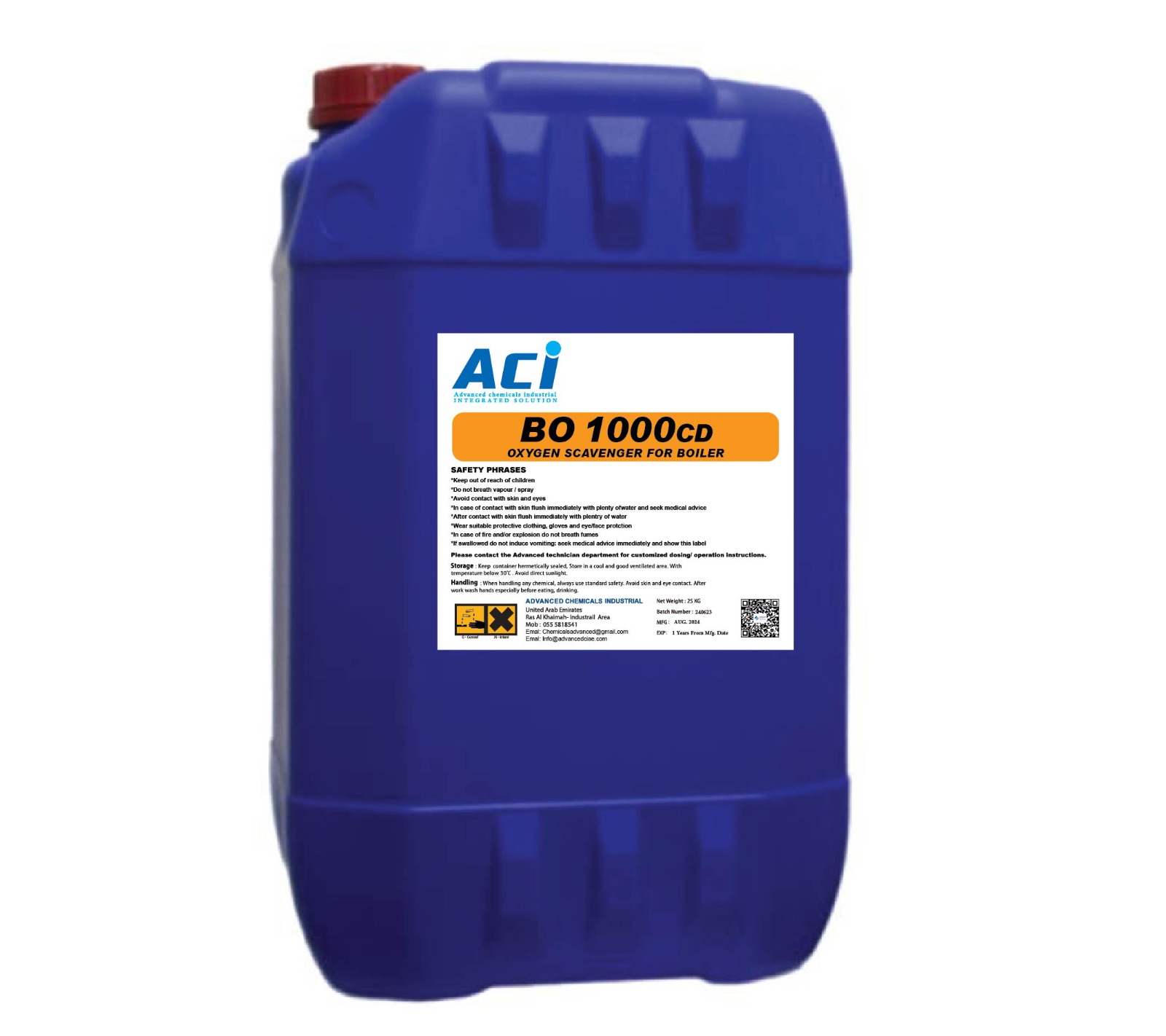
BO 1000 CD Boiler Oxygen Scavenger (DEHA)
DEHA based oxygen scavenger that helps control dissolved oxygen and minimise corrosion in boiler feedwater and condensate systems.
Boiler water chemicals
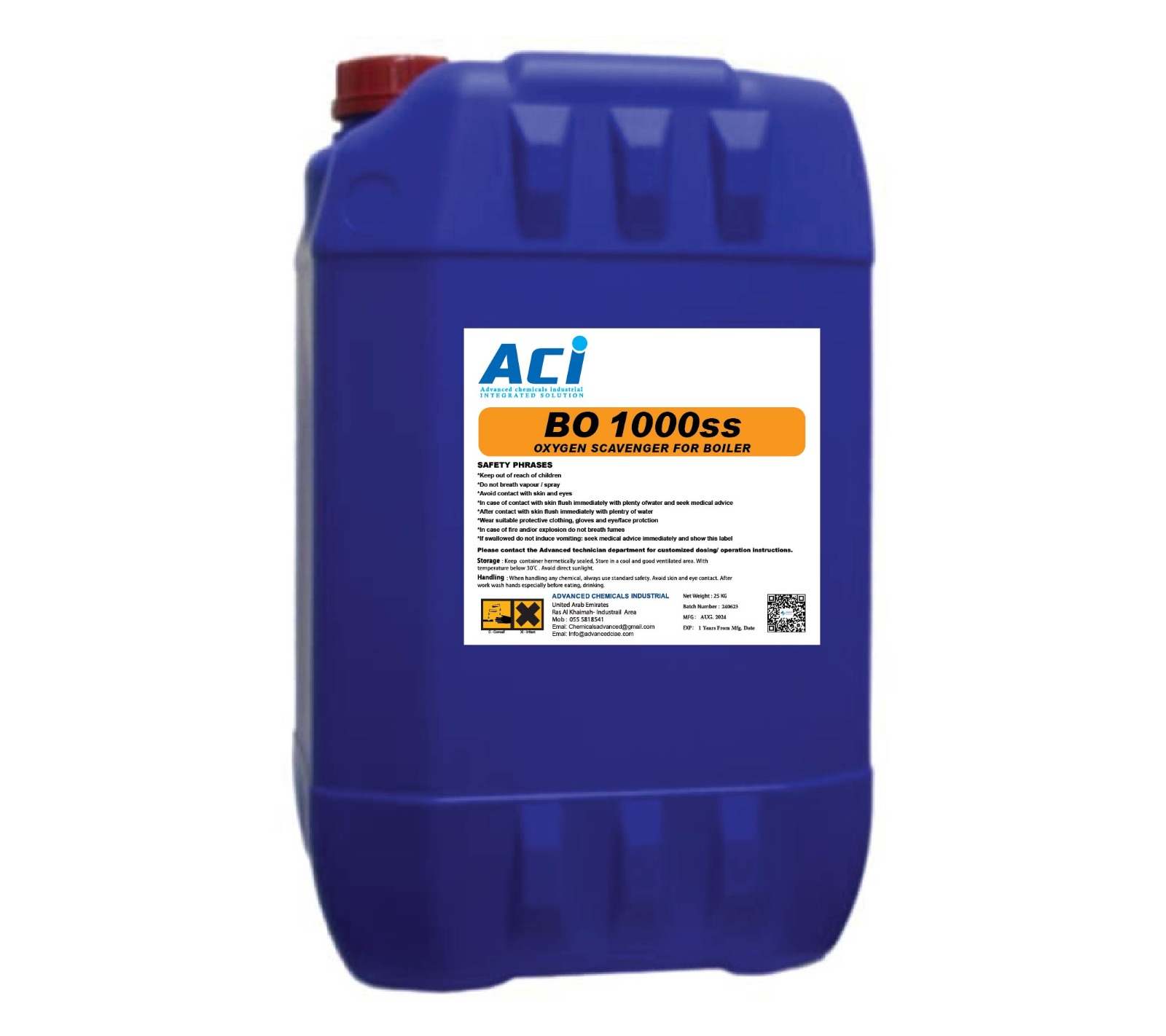
BO 1000 SS Boiler Oxygen Scavenger (Sodium Bisulfite)
Sodium bisulfite based treatment that helps remove dissolved oxygen from boiler feedwater and reduce the risk of oxygen-related corrosion.
Boiler water chemicals
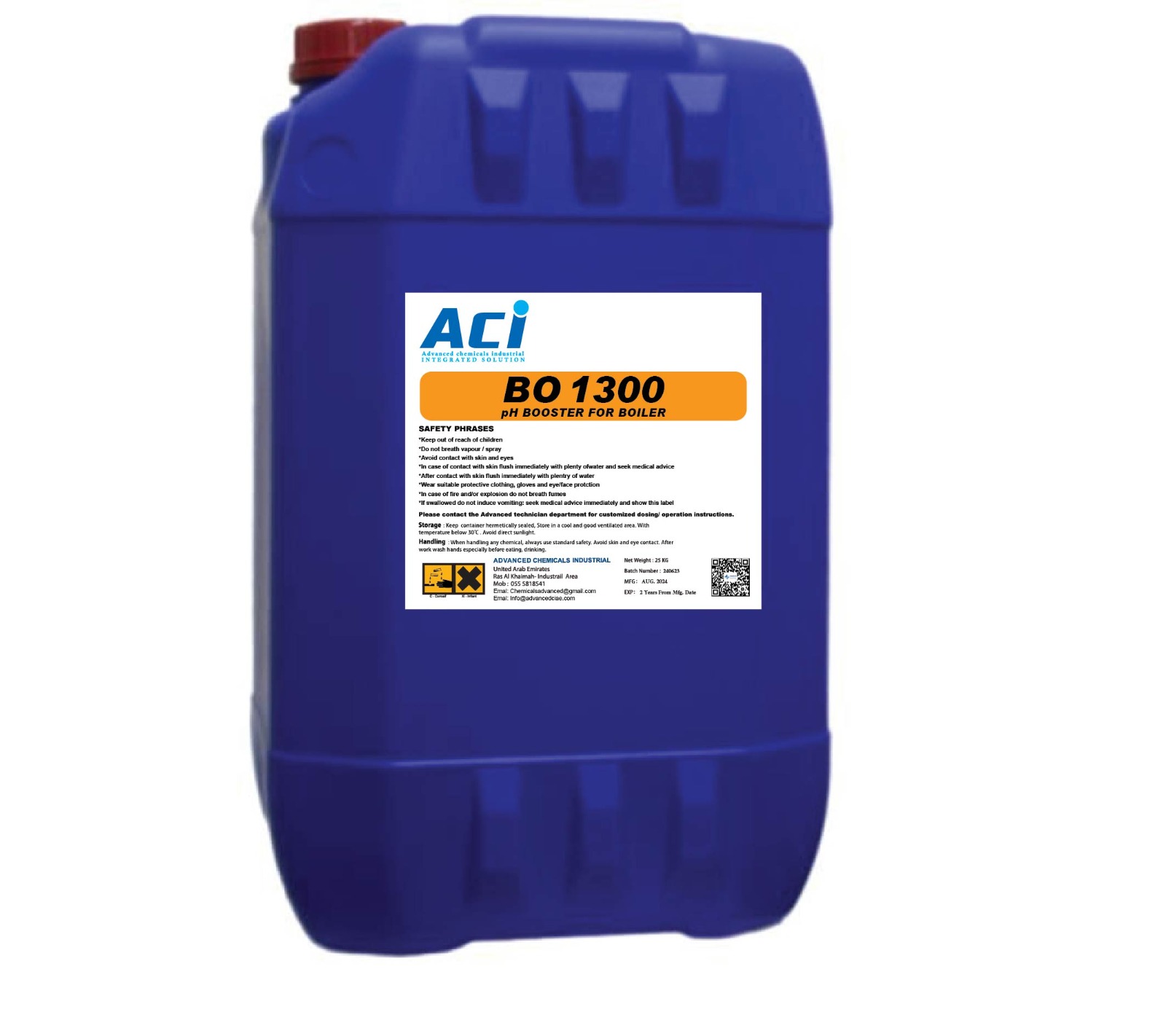
BO 1300 Boiler pH Booster
Boiler water treatment that helps maintain the boiler water pH and supports corrosion control in industrial and commercial boilers.
Let's discuss your water system.
Share the application and operating context to start a technical review.