
RO Chemicals: Antiscalants, Membrane Cleaners and Disinfectant
A treatment program for seawater and brackish RO plants: antiscalants to control scale, membrane cleaners to restore performance, and a disinfectant to limit biological growth.
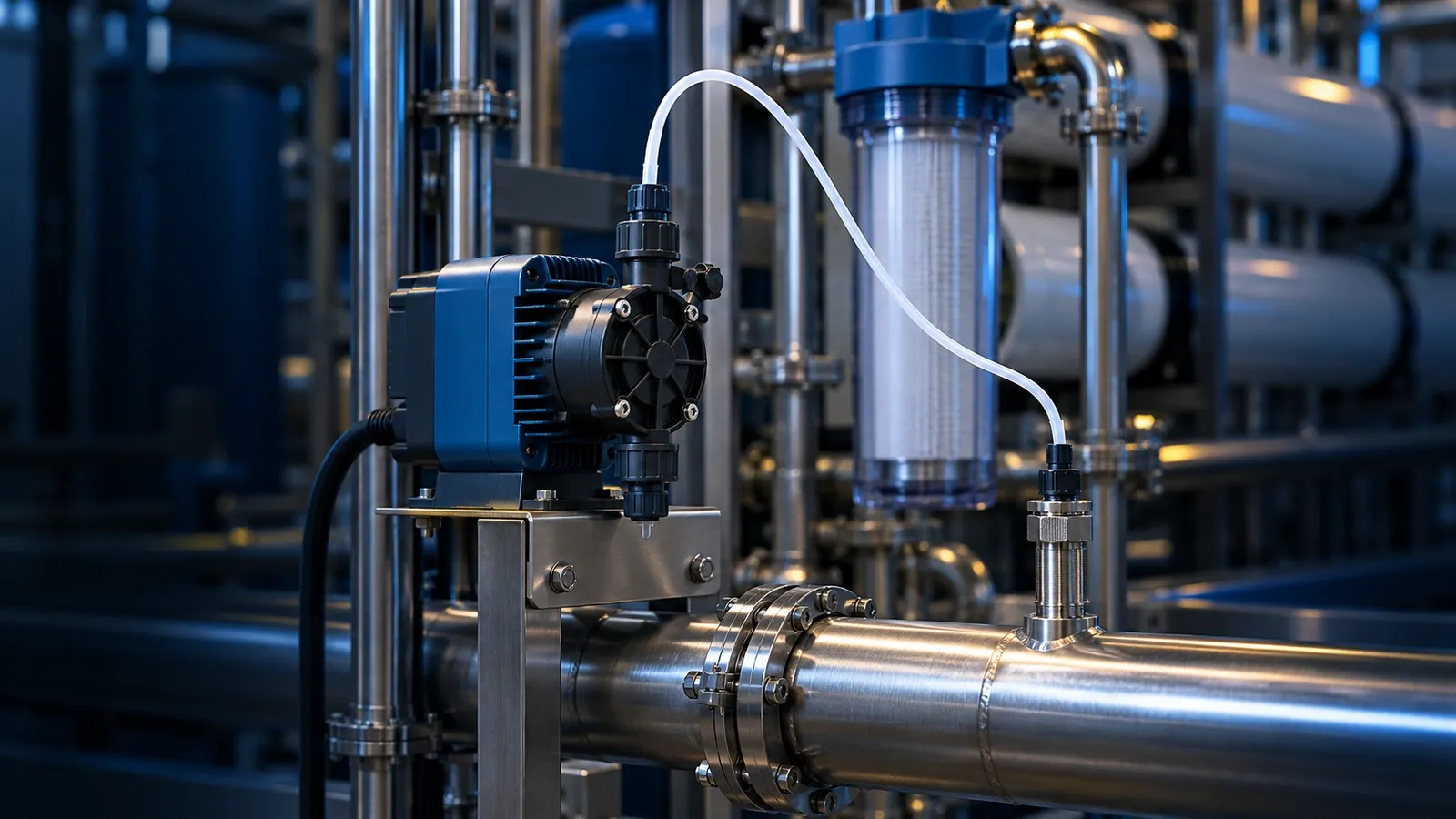 Illustration
On this page (12)
Overview
RO chemicals protect reverse osmosis membranes from the three problems that shorten their working life: mineral scaling, fouling by deposits and organic matter, and biological growth. A complete program combines an antiscalant in the feed water, a membrane cleaner used when normalized performance data show a decline, and a membrane disinfectant where biological growth is a risk. Each is selected from the feed water analysis.
What does an RO chemical program include?
Three groups of chemicals work together. Antiscalants are fed continuously ahead of the membranes and keep sparingly soluble salts in solution as the feed is concentrated along the pressure vessels. Membrane cleaners are used periodically, in a controlled cleaning procedure, to remove scale and fouling that has already formed. A membrane disinfectant is used to control microbial growth on the membrane surface and in the feed path.
Advanced Chemicals Industrial supplies RO antiscalants, membrane cleaners and a membrane disinfectant for seawater and brackish water RO plants. The treatment rate for each chemical is set by our technical team from the water analysis and the operating conditions of the plant, never from a general rule.
Why do RO membranes scale and foul?
As water passes through the membrane, the salts that remain behind become more concentrated in the reject stream. When a salt such as calcium carbonate, calcium sulfate or silica exceeds its solubility limit, it crystallizes on the membrane surface. This is scaling, and it is most severe in the last stage, where concentration is highest.
Fouling is different. It comes from suspended solids, colloids, iron and manganese, organic matter and microorganisms carried in with the feed. Biological fouling in particular forms a slimy film that traps further material and is hard to remove once established.
How do you know treatment is not working?
Normalized data tell the story earlier than raw readings. The usual warning signs are:
- a rising differential pressure across a stage or the whole system
- a falling normalized permeate flow at constant conditions
- a rising normalized salt passage, meaning permeate quality is getting worse
- a rising feed pressure needed to hold the same output
- more frequent cleaning than the plant has needed before
Each sign points to a different cause. A differential pressure rise points first to fouling or biological growth in the feed path, while a salt passage increase after a long period of stable data can point to scale damage on the membrane surface.
How are antiscalants selected?
Selection starts with the feed water analysis: hardness, alkalinity, sulfate, silica, iron and manganese, pH, temperature and the planned recovery. These show which salts are most likely to reach saturation in the concentrate. The antiscalant must also be compatible with the membrane and with any other chemical already in the feed, such as coagulants used in pretreatment. Our technical team reviews these inputs with you before recommending a product.
When should membranes be cleaned?
Cleaning is decided from normalized data, not from the calendar. Clean when the normalized permeate flow, the normalized salt passage or the differential pressure has moved away from the commissioning baseline by a meaningful margin. Waiting too long makes deposits harder to remove and can leave permanent loss of performance. Cleaning too often wears the membrane without need.
The cleaner is chosen for the deposit. Scale of mineral origin is usually addressed with an acidic cleaner, while organic and biological deposits are usually addressed with an alkaline cleaner. Where the type of deposit is not clear, a membrane autopsy or a foulant analysis helps avoid a cleaning that fixes the wrong problem.
Where does the disinfectant fit?
Biological growth builds up in the intake, the pretreatment and the cartridge filters as well as on the membranes. A membrane disinfectant is used according to the plant design and the membrane type, because some membranes tolerate oxidizing chemicals poorly. The disinfectant is part of the program, not a replacement for pretreatment control.
What do we need from you?
- a recent feed water analysis
- the type of plant: seawater or brackish water, single pass or two pass
- the membrane type and the stage layout
- recent operating records, ideally normalized, and any history of cleaning
- the current chemicals in use and the main concern
What are the common mistakes in RO chemical programs?
- choosing an antiscalant from a general table instead of the feed water analysis
- cleaning on a fixed calendar instead of on normalized data
- using one cleaner for every deposit
- letting the antiscalant tank run empty without noticing
- ignoring a change in the feed water after a season or a source change
Most of these are avoided by keeping records and reviewing them regularly with the supplier.
Send your operating data and a recent water analysis to our technical team for a technical review. Product samples and technical data for the antiscalant range are available through the technical team.
Applications
The RO chemical program applies wherever reverse osmosis is used to produce water from a saline or hard source. Typical uses include seawater desalination plants, brackish water RO plants fed from wells, process water production for industry, boiler makeup preparation, and RO units serving hotels, hospitals and commercial buildings.
Seawater RO
Seawater systems run at high pressure and strong concentration, so scale control and biological control are both central. Intake and pretreatment quality largely decide how much the membranes must be cleaned later.
Brackish water RO
Brackish feeds vary widely. Well water can carry high hardness, sulfate, silica, iron or manganese, and the antiscalant choice follows whichever of these limits recovery. Iron and manganese fouling is a frequent reason for unexpected cleaning.
Multi-stage and two-pass systems
Lead stages are exposed to fouling, tail stages to scale. A program often treats these separately in how it is monitored, even though the chemicals are fed at one point.
Plants with a limited cleaning window
Where production cannot stop often, a program that holds the cleaning interval steady is worth more than one that only cleans well.
For a reading of your own plant, our technical team starts from the analysis and the normalized operating data.
Problems this addresses
Problems
What causes RO membrane scaling and how is it controlled?
RO membrane scaling is the crystallisation of sparingly soluble salts on the membrane as the concentrate becomes saturated. See the signs, causes, checks and the treatment approach.
Problems
Why is RO differential pressure increasing?
A rising differential pressure across an RO system points to restricted feed channels. Learn how to tell fouling, scaling and pre-treatment problems apart before cleaning.
Problems
What is RO membrane biofouling and how do you control it?
Biofouling is the growth of a bacterial biofilm on RO membranes and feed spacers. Learn the signs, causes, checks and the cleaning and disinfection approach.
Products used
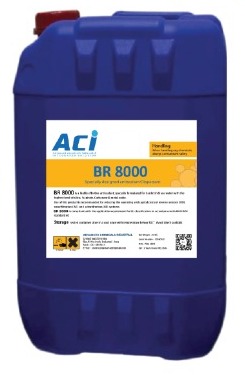
Antiscalants
BR8000 Reverse Osmosis Antiscalant
Antiscalant for seawater and brackish water reverse osmosis, for controlling carbonate, sulphate, metal oxide and silica scale.
Let's discuss your water system.
Share the application and operating context to start a technical review.