
Boiler Water Treatment for Low and Medium Pressure Boilers
Oxygen control in feedwater, pH control in the boiler, internal scale and corrosion inhibition, and neutralizing amines to protect condensate lines.
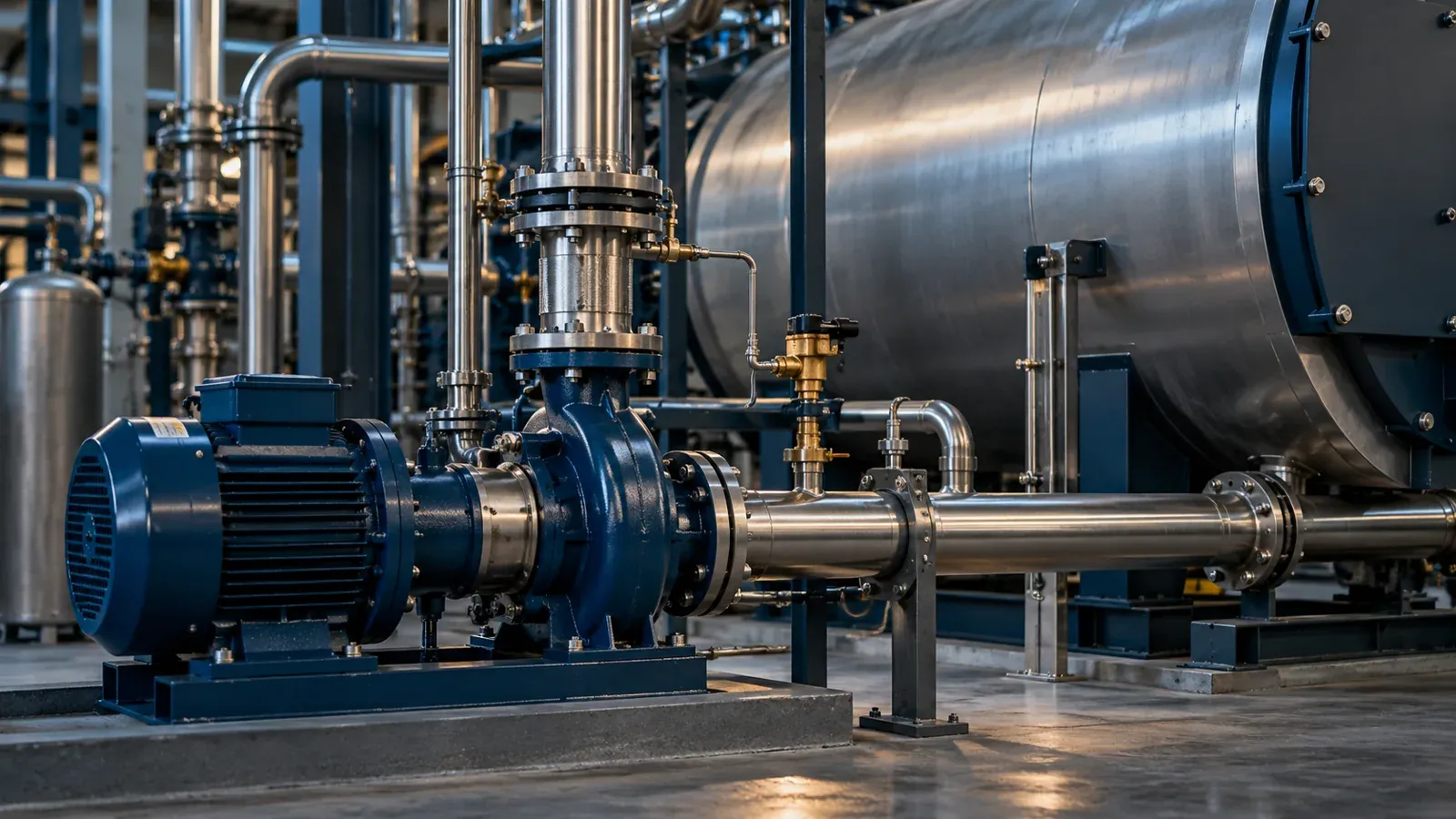 Illustration
On this page (14)
Overview
Boiler water treatment protects the boiler and the steam system at three points: the feedwater, the boiler water and the condensate return. It removes dissolved oxygen with a scavenger, holds the boiler water at a suitable alkalinity and pH, inhibits scale and corrosion inside the boiler, and neutralizes carbon dioxide in condensate lines with a volatile amine, all based on water analysis.
Why is boiler water treated at three points?
Each section of the steam cycle faces a different threat. Feedwater carries dissolved oxygen and hardness into the boiler. Inside the boiler, water is boiled off and dissolved solids concentrate. In the steam and condensate lines, carbon dioxide dissolves in condensate to form carbonic acid, which corrodes pipework. Treating only one point leaves the others exposed.
How is dissolved oxygen controlled?
Dissolved oxygen in feedwater causes pitting of the boiler, the economizer and the feed lines, even in small amounts. Mechanical deaeration removes most of it, and a chemical oxygen scavenger removes what remains and protects during stand-by. Advanced Chemicals Industrial supplies two scavenger types: one based on DEHA and one based on sodium bisulfite.
DEHA or sodium bisulfite?
- a DEHA-based scavenger is volatile and also helps passivate metal surfaces, which suits steam and condensate protection
- a sodium bisulfite scavenger reacts quickly and is economical for lower pressure systems, but it adds dissolved solids and can break down at higher pressure
Boiler pressure, feedwater quality and the use made of the steam guide the choice, and our technical team helps make it.
Why does boiler water pH matter?
The boiler water must stay alkaline enough to keep a protective magnetite layer on steel and to support the precipitation of hardness. Too low and the metal corrodes. Too high and the risk of caustic attack, foaming and carryover rises. A pH booster raises and holds the pH within the range the boiler design allows.
How are scale and internal corrosion inhibited?
Even well softened feedwater leaves traces of hardness, iron and silica. An internal scale and corrosion inhibitor keeps these suspended, conditions the sludge so it can be removed by blowdown, and supports the protective film on metal. A thin layer of scale already acts as an insulator, which raises fuel use and overheats tube metal.
How is the condensate return protected?
Carbonate and bicarbonate in the feedwater break down in the boiler and release carbon dioxide into the steam. When the steam condenses, the gas forms carbonic acid, which attacks condensate piping, traps and heat exchangers. A neutralizing amine travels with the steam and raises the pH of the condensate. Our range includes a neutralizing amine for steam and condensate systems. The choice of amine depends on the layout of the steam system, because different amines distribute differently along the line.
What should be monitored?
- feedwater hardness, oxygen and pH
- boiler water pH, alkalinity and conductivity
- scavenger residual in the boiler water
- condensate pH and iron or copper pick-up
- blowdown rate and total dissolved solids
Treatment rates are set by our technical team from the water analysis and the operating conditions of the boiler and are fed continuously with a chemical metering pump.
What do we need from you?
- boiler type and working pressure range
- makeup water source and any softener or RO ahead of the boiler
- a feedwater and boiler water analysis
- condensate return proportion and system layout
- current chemicals and the problem observed
What about stand-by and layup?
Boilers out of service corrode quickly if oxygen reaches wet metal. For short stand-by the boiler can be kept full with a higher scavenger residual, and for longer layup it is protected by dry or wet methods suited to the boiler. Plan the layup before the shutdown, and do not rely on routine operating treatment to cover it.
How does blowdown fit in?
Blowdown removes dissolved solids and sludge from the boiler. Too little lets solids build up and risks carryover and deposits, too much wastes heat, water and chemicals. Automatic conductivity-controlled blowdown, with heat recovery where it is practical, keeps the balance more steadily than manual operation.
What about water quality ahead of the boiler?
A softener or RO ahead of the boiler reduces hardness and dissolved solids, which lowers blowdown and chemical needs. Softener regeneration, breakthrough of hardness and the state of the deaerator all affect the program, so they are checked when a boiler problem appears.
Send your operating data and a recent water analysis to our technical team for a technical review. Product samples and technical data are available through the team.
Applications
The program is intended for low and medium pressure steam and hot water boilers in industry and in buildings. Typical settings include process steam for food and beverage plants, laundries and hospital sterilization, heating boilers in hotels and complexes, and auxiliary steam in industrial plants.
Fire-tube boilers
Common on process sites. Scale on the fire side tubes shows up first as a rise in stack temperature and fuel use.
Water-tube boilers
More sensitive to feedwater quality, because deposits in small tubes cause local overheating.
Steam and condensate networks
Long networks with high condensate return benefit most from the condensate treatment, because corrosion shows as red water, leaking traps and rising maintenance.
Steam used in direct contact with product
Where steam touches food, medical items or products, the choice of treatment chemicals is limited by the process, and this is discussed with our technical team before any program is set.
Our technical team reviews the feedwater and boiler data before proposing the program.
Problems this addresses
Problems
What causes scale and deposits in boilers?
Boiler scale forms when hardness, silica and iron deposit on heated surfaces. Learn the effects, causes, the checks to run and the scale and corrosion inhibitor approach.
Problems
How does dissolved oxygen corrode boilers and how do you stop it?
Dissolved oxygen in boiler feedwater causes pitting of feed lines, economisers and boiler surfaces. Learn the signs, checks and the oxygen scavenger approach.
Problems
What causes condensate line corrosion in steam systems?
Condensate lines corrode from carbonic acid and dissolved oxygen. See the signs, the checks to run and the neutralizing amine approach for steam and condensate.
Products used
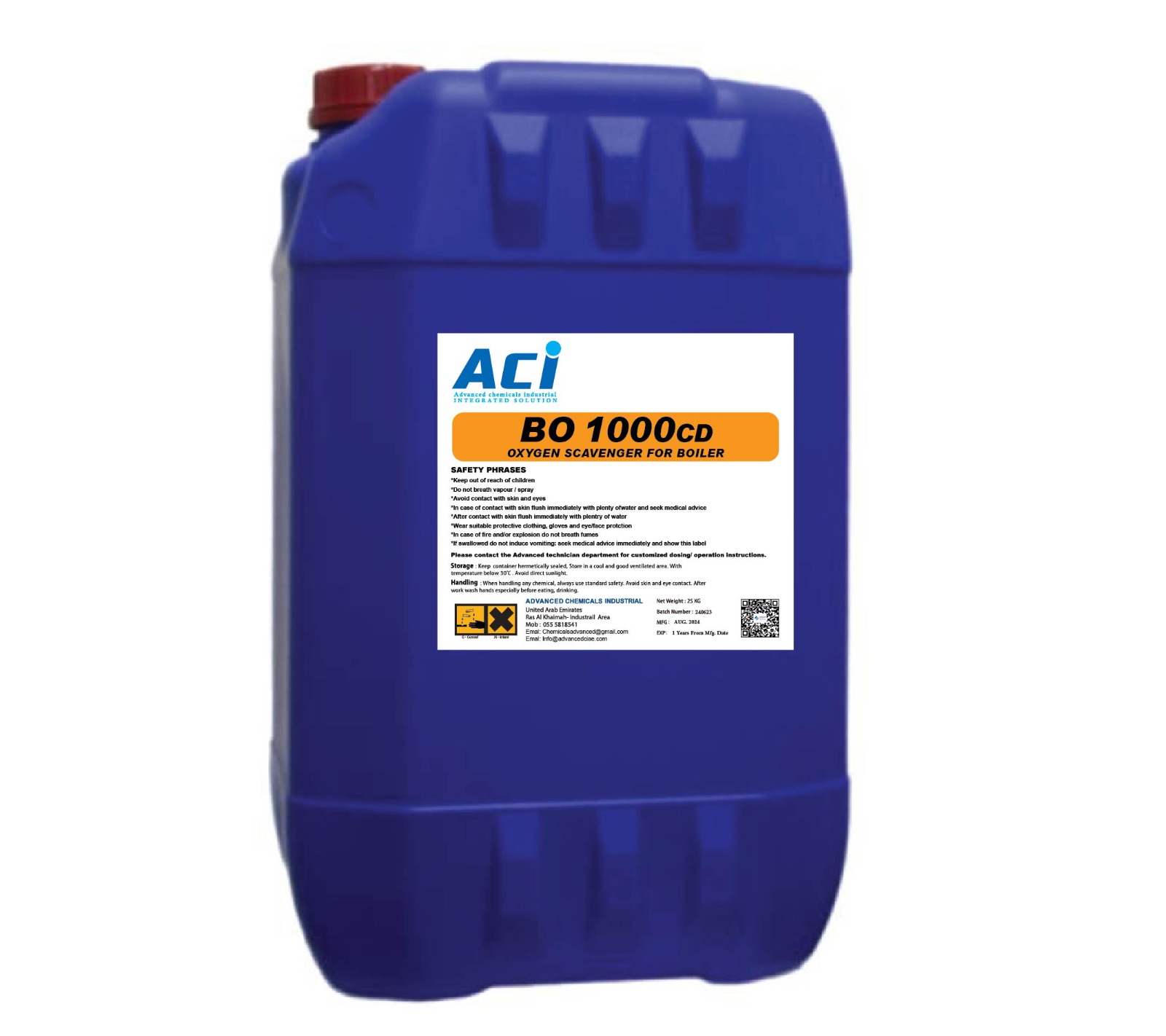
Boiler water chemicals
BO 1000 CD Boiler Oxygen Scavenger (DEHA)
DEHA based oxygen scavenger that helps control dissolved oxygen and minimise corrosion in boiler feedwater and condensate systems.
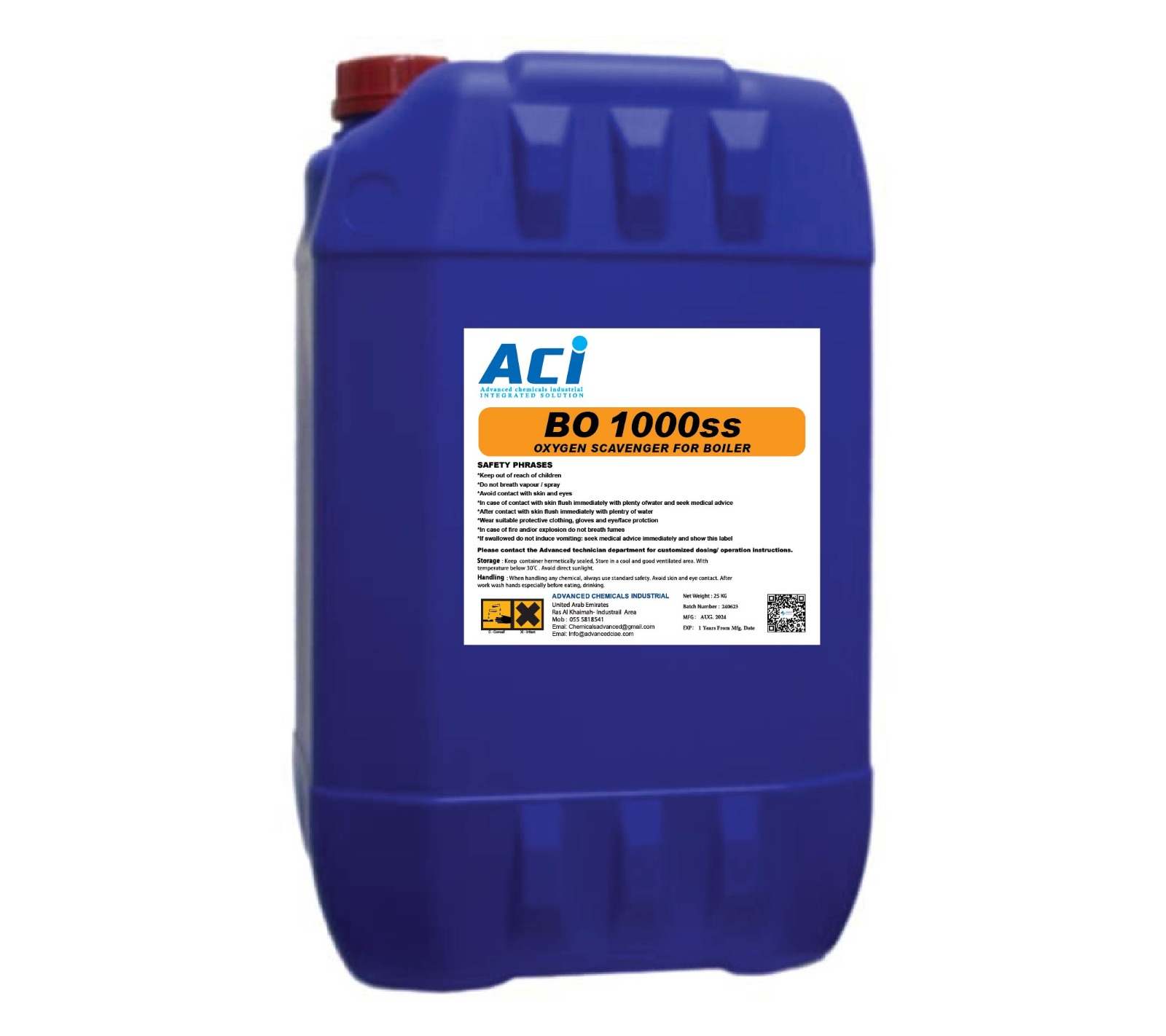
Boiler water chemicals
BO 1000 SS Boiler Oxygen Scavenger (Sodium Bisulfite)
Sodium bisulfite based treatment that helps remove dissolved oxygen from boiler feedwater and reduce the risk of oxygen-related corrosion.
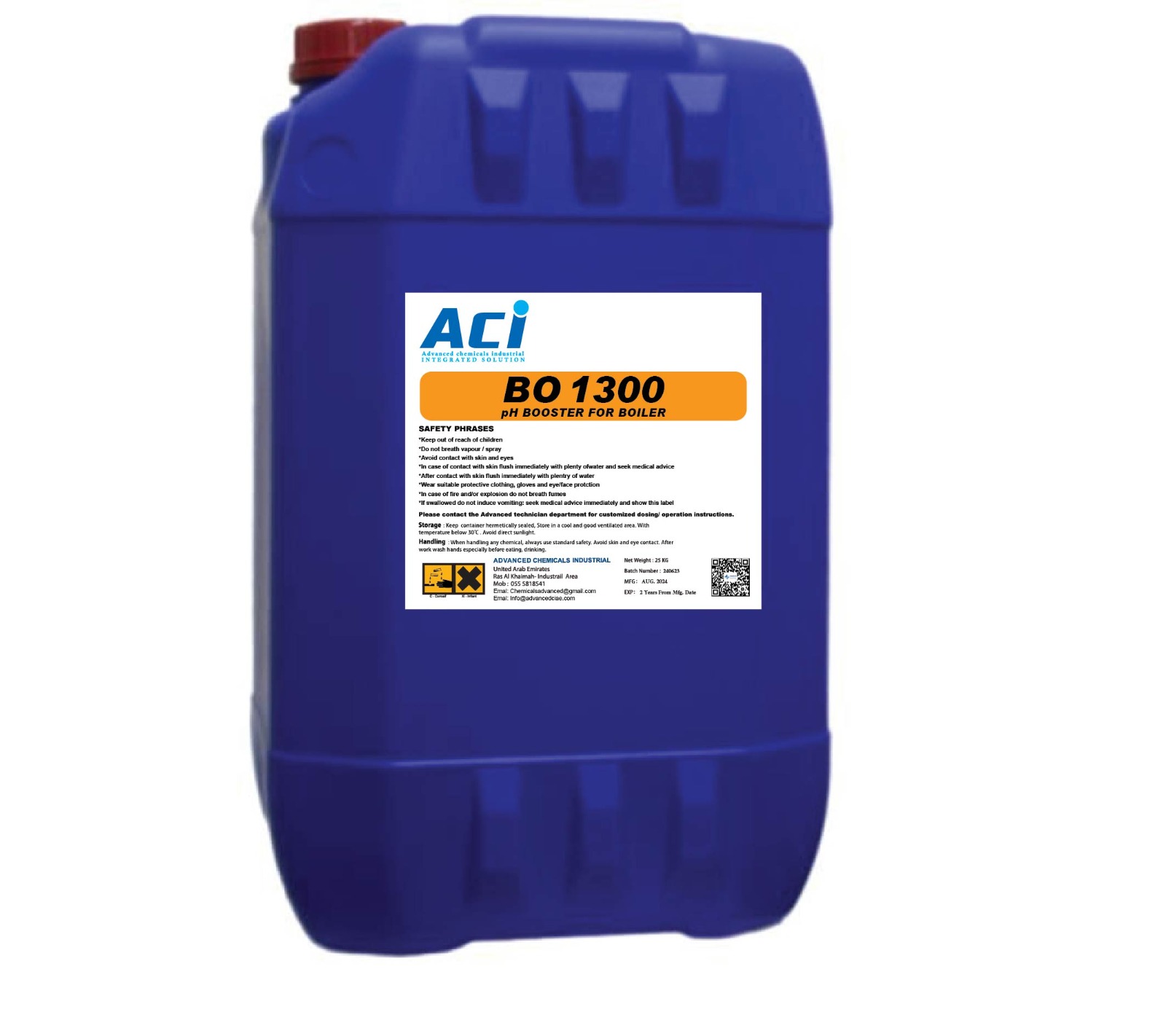
Boiler water chemicals
BO 1300 Boiler pH Booster
Boiler water treatment that helps maintain the boiler water pH and supports corrosion control in industrial and commercial boilers.
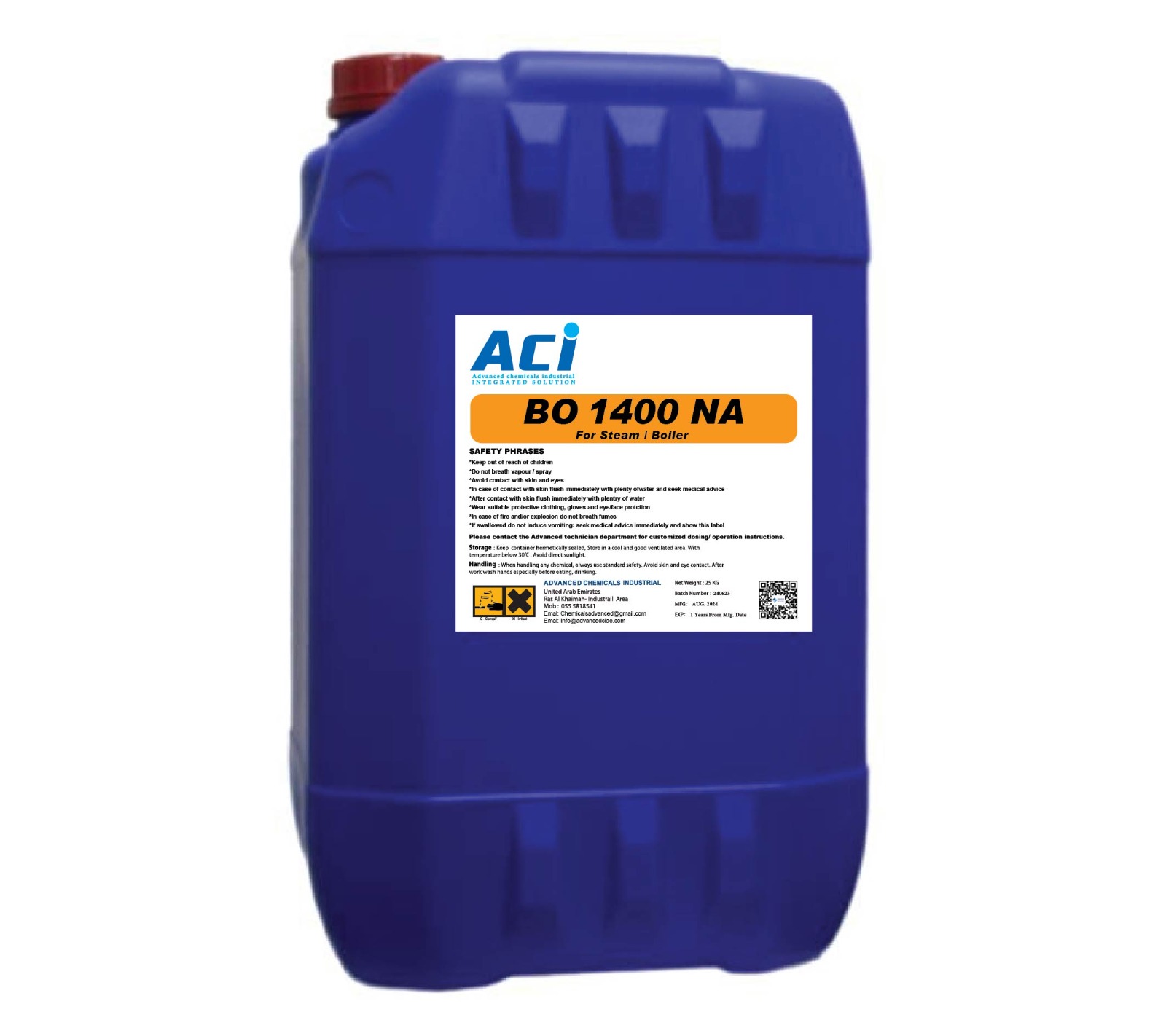
Boiler water chemicals
BO 1400 NA Steam and Boiler Treatment
Treatment for steam and boiler systems, as named on the product label.
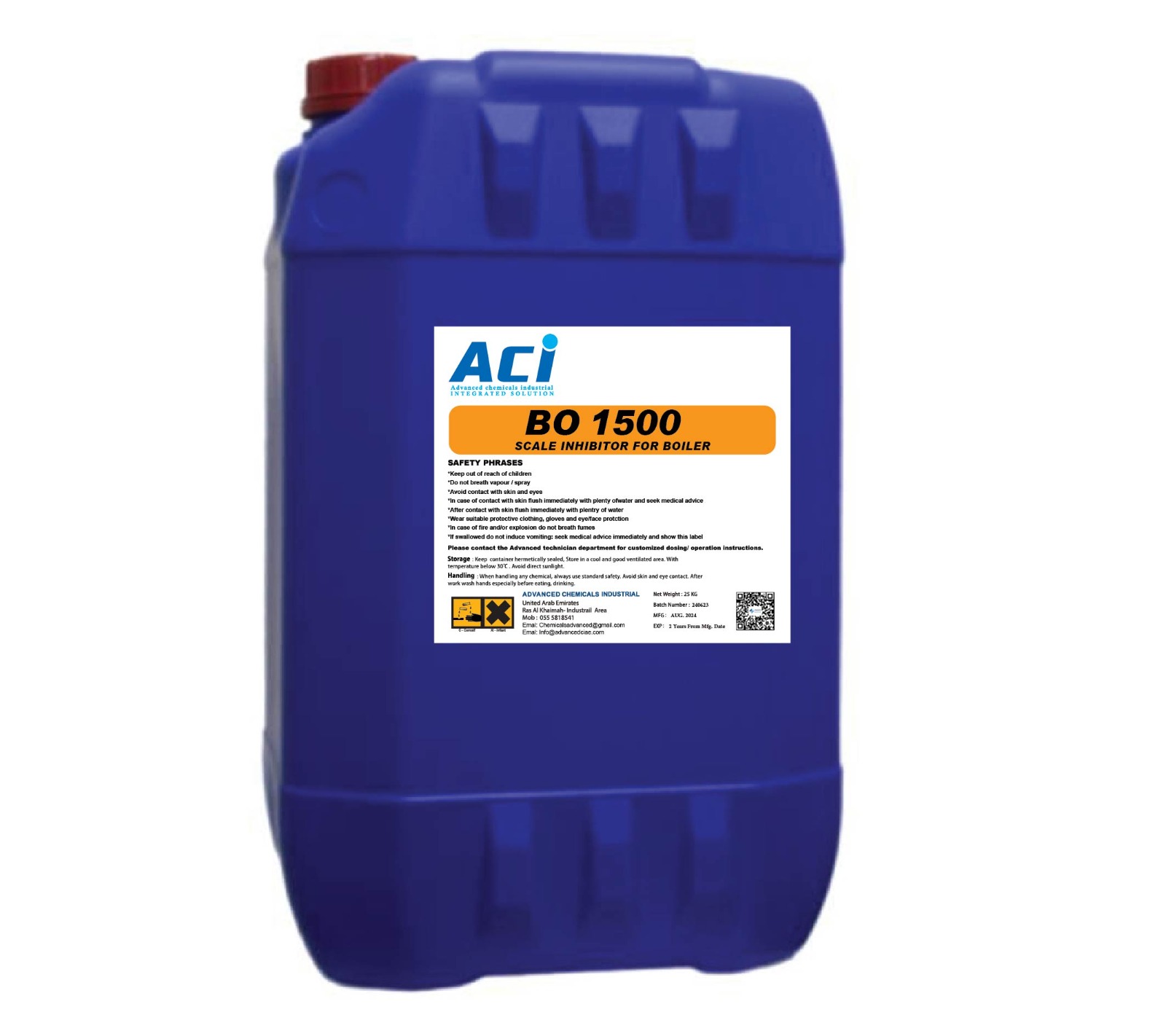
Boiler water chemicals
BO 1500 Boiler Scale and Corrosion Inhibitor
Treatment that helps control scale formation and corrosion in industrial and commercial boiler systems.
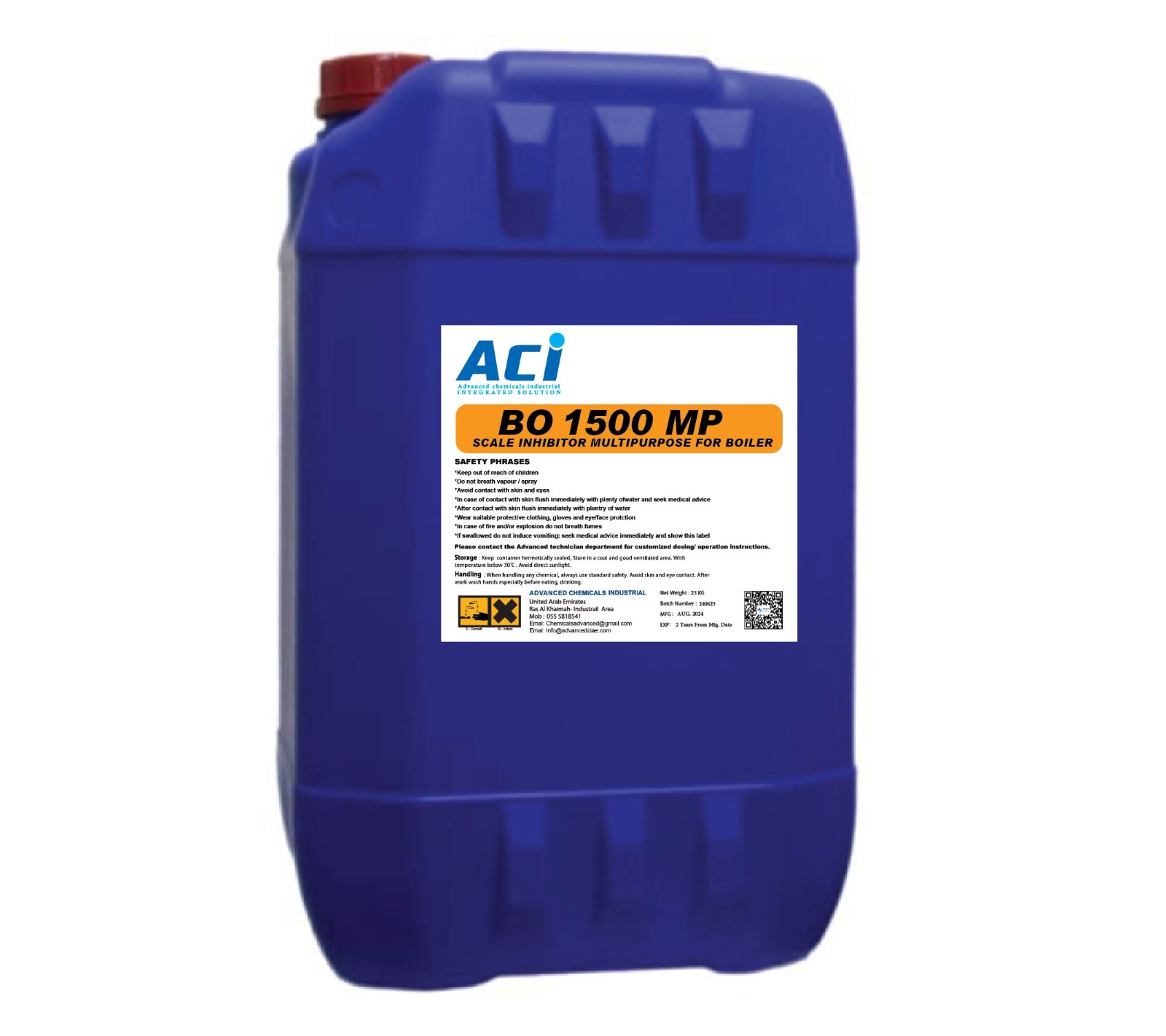
Boiler water chemicals
BO 1500 MP Neutralizing Amine for Steam and Condensate Systems
Neutralizing amine treatment that helps control acidic condensate corrosion in steam and condensate return systems.
Let's discuss your water system.
Share the application and operating context to start a technical review.