
Chilled Water Treatment for Closed-Loop Systems
Nitrite-based corrosion and scale inhibition for closed chilled-water loops, with nitrite residual monitoring and biocides suitable for closed circuits.
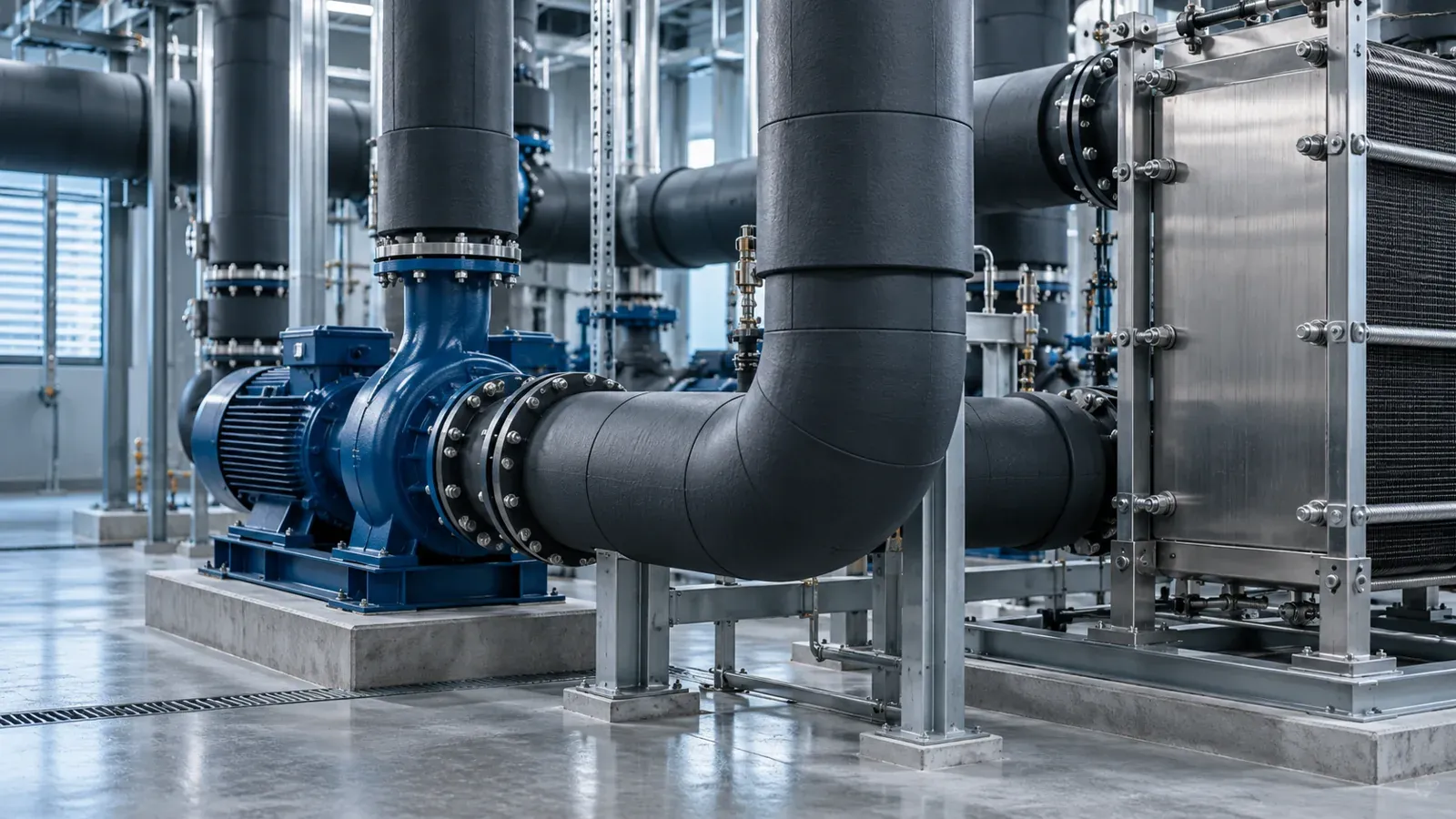 Illustration
On this page (13)
Overview
A closed chilled-water loop is protected mainly against corrosion, and secondarily against scale and microbial growth. The usual approach is a nitrite-based inhibitor that forms a protective film on the metal, monitored by testing the nitrite residual, with a biocide suitable for closed loops used when microbiological tests show a need. Because the water is reused for years, small errors accumulate.
Why do closed loops still corrode?
A closed loop does not lose water to evaporation, so it does not concentrate like a cooling tower. But it is never perfectly closed. Make-up water brings oxygen and dissolved salts, air enters through vents, joints and during maintenance, and mixed metals set up galvanic cells. Carbon steel pipework in a loop with copper coils and aluminium parts is a common case. Corrosion in a closed loop is slow, but the damage is hidden until a leak appears or deposits block a coil.
How does a nitrite-based inhibitor work?
Nitrite promotes the formation of a thin, stable oxide layer on steel that slows further corrosion. Advanced Chemicals Industrial supplies a nitrite-based inhibitor for closed-loop chiller systems. The film only forms and holds when enough nitrite is present, so the level must be checked and kept, which is why the residual is the central control parameter. The treatment rate is set by our technical team from the system water analysis and operating conditions.
Why monitor the nitrite residual?
Too little leaves the metal unprotected. A falling residual is also a signal. It can mean that bacteria are consuming nitrite, that make-up water is diluting the loop, or that a leak is draining and refilling the system. The trend tells you more than a single reading.
What else should be monitored?
- pH of the loop water
- conductivity, which reveals make-up or leakage
- corrosion indicators such as iron and copper in the water, and coupon results where fitted
- microbiological monitoring
- appearance of the water: colour, turbidity and suspended particles
Is biological growth a problem in a closed loop?
Yes, although less visible. Nitrite is itself a nutrient for some bacteria, and warm sections of a loop, dead legs and low-flow branches allow growth. Slime lowers heat transfer and can attack metal beneath the deposits. Where microbiological tests show growth, a biocide suitable for closed loops is used. We supply cooling system biocides based on isothiazolinone (CMIT/MIT) and on DBNPA, and our technical team advises which suits a given loop and how it interacts with the nitrite program.
What are the common causes of treatment failure?
- frequent make-up water from small leaks, which dilutes the inhibitor
- untreated flushing and refilling after maintenance
- no regular residual testing, so a fall goes unnoticed
- dirty system water left after commissioning or repair work
- bacterial consumption of nitrite in loops with poor flow
A good start matters. A new or refilled loop is flushed and cleaned before it is filled and treated, because the inhibitor cannot protect metal covered in debris.
What do we need from you?
- the loop type and the metals involved
- an estimate of the system volume and how often make-up is added
- a water analysis of the loop and of the make-up water
- recent residual and microbiological test records
- the problem observed: leaks, discoloured water, fouled strainers or reduced cooling
How is a new or repaired loop started correctly?
Start with a mechanical clean: drain, flush to remove debris, welding residue and oil, and refill with water of known quality. Treat the loop before it operates, test the residual after circulation, and record the first results as the reference. A loop treated while still dirty will never hold its residual.
How should sampling be done?
Take samples from a point of good circulation, not from a dead leg, and test promptly because some parameters change in the bottle. Sample from the same point each time so that the trend is meaningful. Check strainers and filters when you can, as they collect debris and show the condition of the loop.
When is a loop drained and refilled?
Not as a habit. Each refill resets the protection and brings new oxygen. A drain is justified by water that cannot be brought back into range, heavy contamination, or major repair, and it should always be followed by the full start-up routine.
Send your operating data and a recent water analysis to our technical team for a technical review. Technical data and product samples are available through the team.
Applications
Closed chilled-water loops are found in building air-conditioning, district-style cooling in large complexes, data and process rooms, and industrial process cooling circuits. They include the chilled-water side of chillers, the loops serving air handling and fan coil units, and closed condenser circuits.
Commercial and hotel buildings
Long loops with many branches and mixed metals are common. Dead legs and rarely used branches are where residual and microbial control are hardest to hold.
Hospitals and critical facilities
Cooling is not optional, and unplanned stops are costly. Steady inhibitor residual and clean water protect coils and pumps over the long term.
Industrial process loops
Closed circuits cooling process equipment depend on stable heat transfer. Deposits in small passages can restrict flow before any alarm sounds.
Loops with mixed metals and long run history
Older loops often carry deposits from past neglect. A cleaning step before restoring the treatment program protects the new inhibitor from being used up on old debris.
Our technical team reviews each loop from its water analysis and operating history.
Problems this addresses
Problems
What causes corrosion in closed-loop chilled water systems?
Closed chilled-water and hot-water loops corrode when oxygen enters, inhibitor residual falls or microbes grow. See the signs, checks and the nitrite inhibitor approach.
Problems
How do you control biological growth in cooling water?
Bacteria, algae and biofilm thrive in warm, nutrient-rich cooling water. Learn the signs, causes, microbiological checks and the biocide approach.
Products used
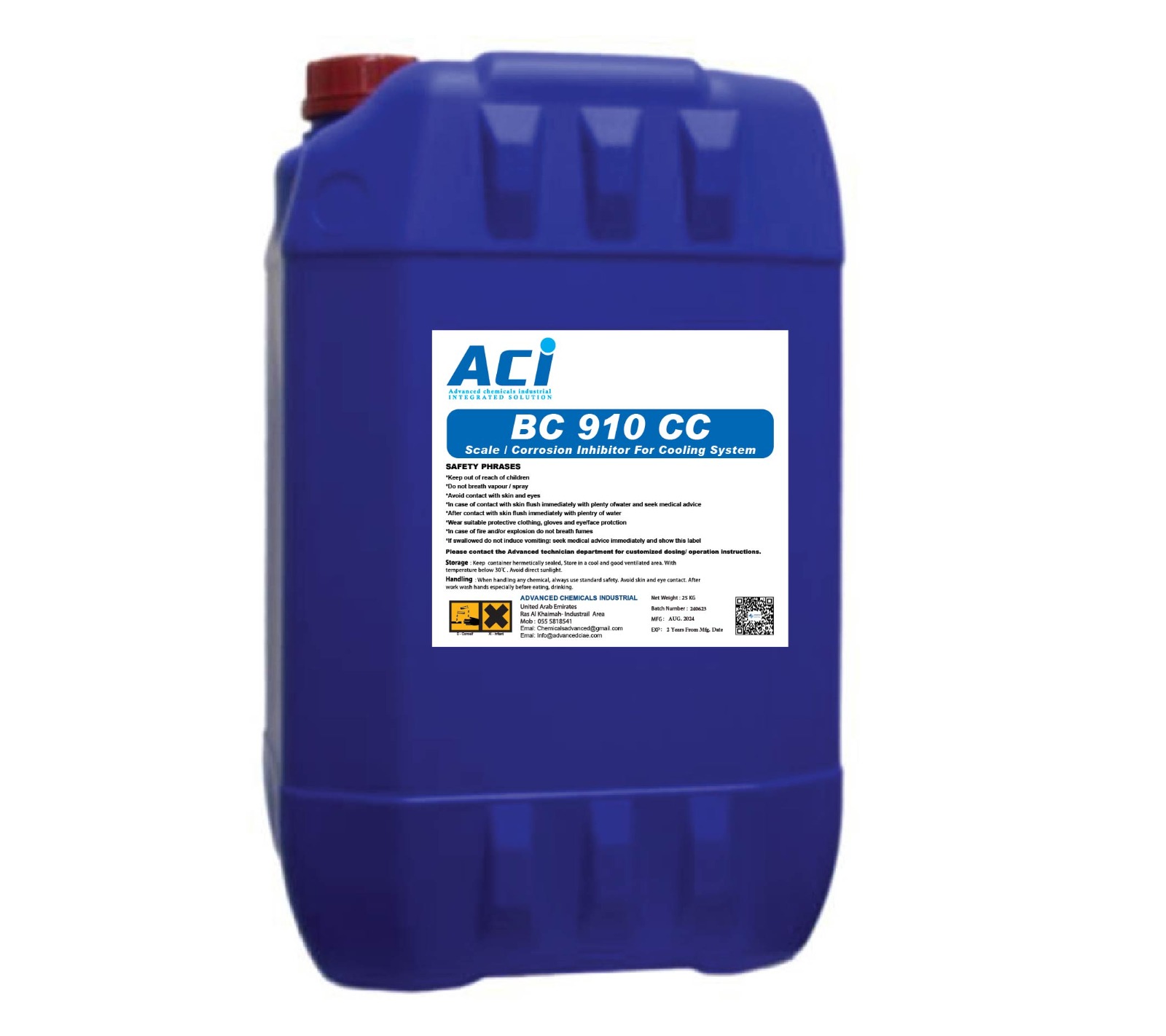
Cooling water chemicals
BC 910 CC Closed-Loop Chiller Inhibitor
Nitrite-based corrosion and scale inhibitor for closed-loop chilled water systems.
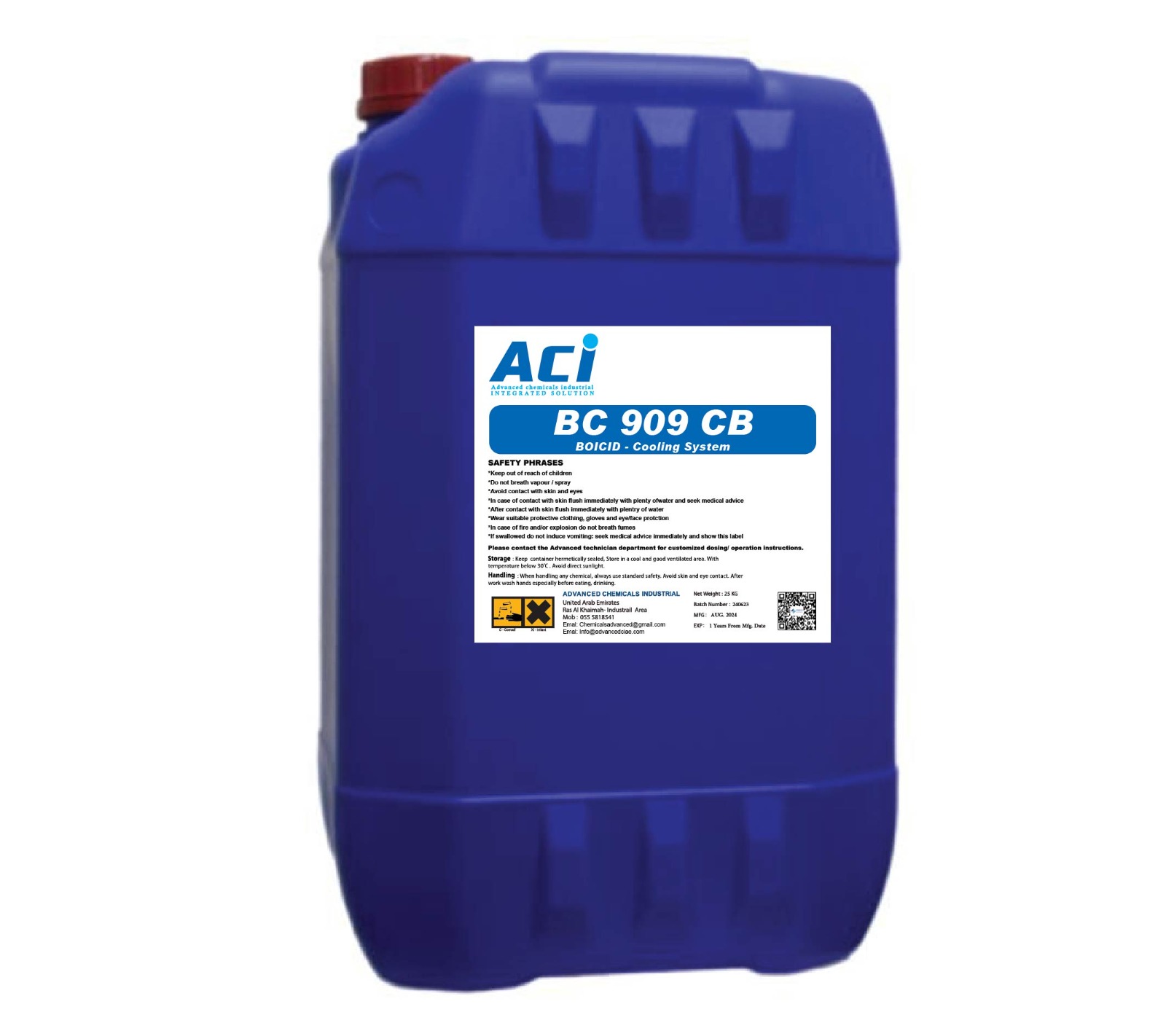
Cooling water chemicals
BC 909 CB Cooling System Biocide
CMIT/MIT based biocide that helps control bacteria, algae, fungi and slime in industrial and commercial cooling water systems.
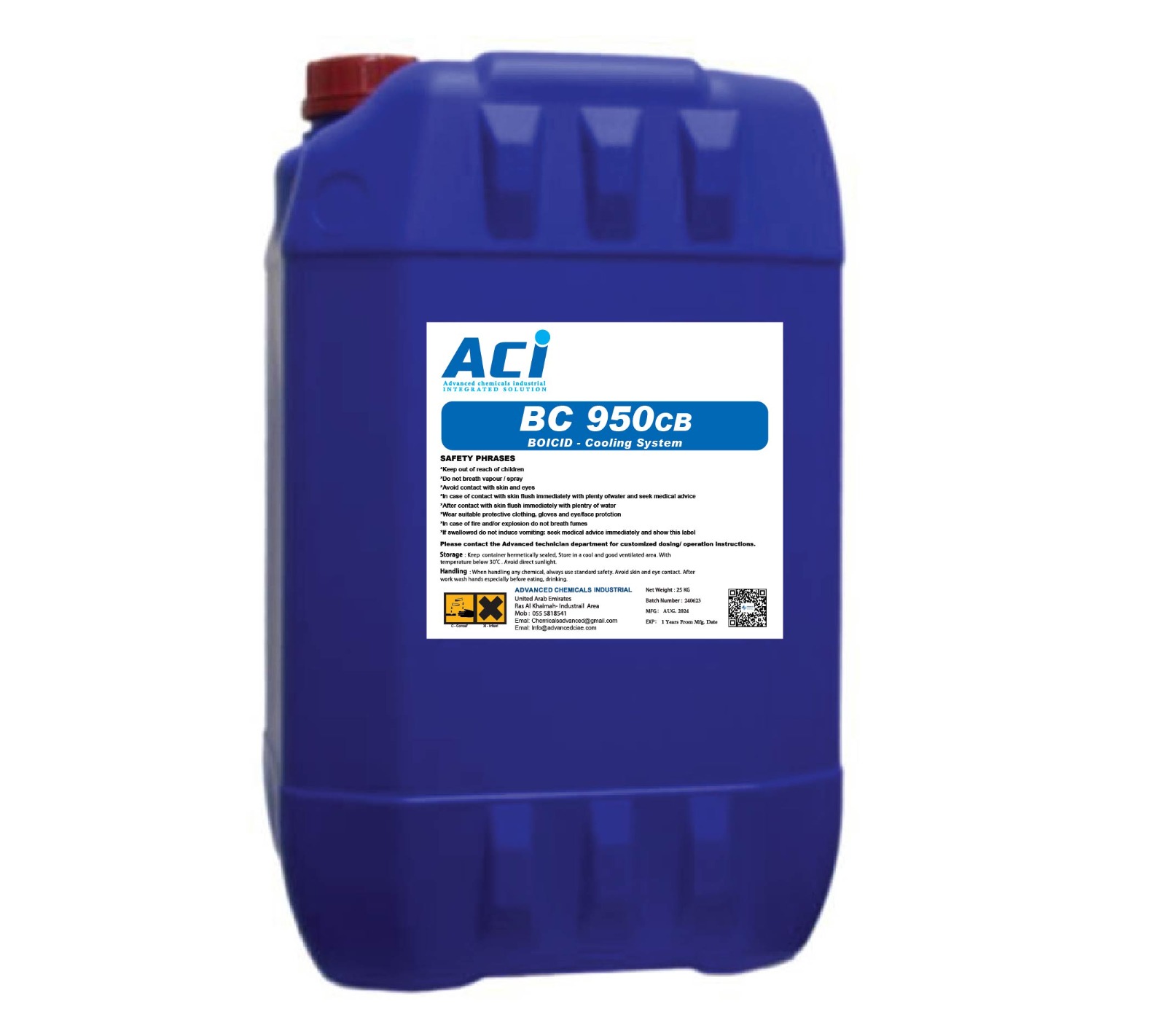
Cooling water chemicals
BC 950 CB Cooling System Biocide
Biocide that helps control bacteria, algae, fungi and slime in industrial and commercial cooling water systems.
Cooling water chemicals
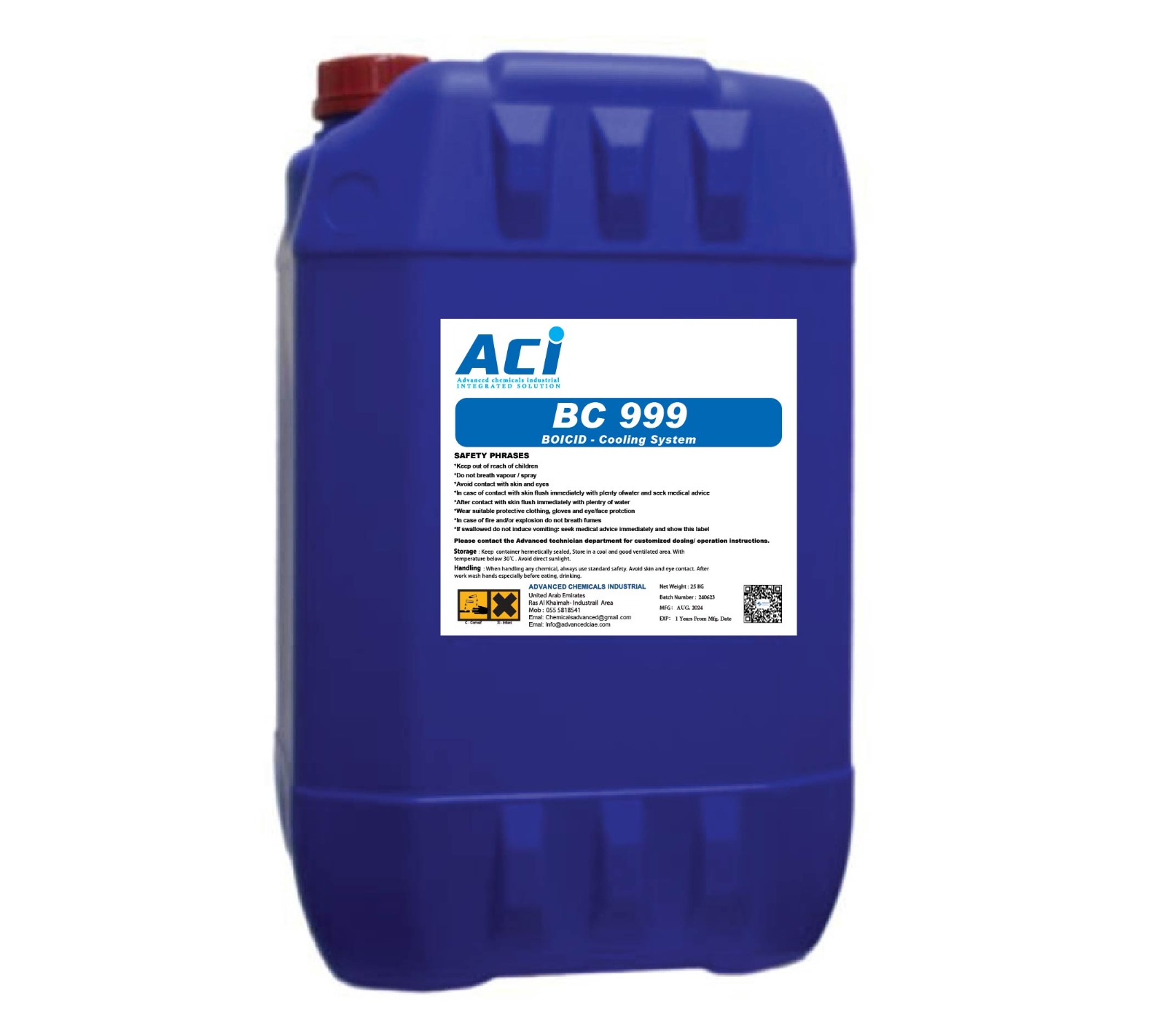
BC 999 Fast-Acting Cooling System Biocide (DBNPA)
DBNPA biocide for rapid control of microbiological growth in industrial and commercial cooling water systems.
Let's discuss your water system.
Share the application and operating context to start a technical review.