
What causes condensate line corrosion in steam systems?
Condensate lines corrode from carbonic acid and dissolved oxygen. See the signs, the checks to run and the neutralizing amine approach for steam and condensate.
 Illustration
On this page (12)
Overview
Condensate line corrosion is caused mainly by carbonic acid, formed when carbon dioxide from boiler water alkalinity dissolves in condensate and lowers its pH, and by oxygen entering the return system. It thins pipes and releases iron that returns to the boiler. Control uses a neutralizing amine to raise condensate pH, good deaeration, and regular monitoring of condensate pH and iron.
Where does carbonic acid come from?
Bicarbonate and carbonate alkalinity in boiler feedwater break down under heat and release carbon dioxide into the steam. When the steam condenses, the gas dissolves in the condensate to form carbonic acid, which lowers pH and attacks steel. The effect is strongest where condensate first forms and along return lines.
How does oxygen add to the damage?
Oxygen enters the condensate system through leaks, vacuum conditions, open receivers or poorly deaerated make-up water. Together with carbon dioxide it produces pitting and grooving, often at pipe bends, low points and threaded joints, where condensate collects or flows quickly.
Why does it matter to the boiler?
Corrosion products travel with the condensate back to the boiler and become iron deposits on heated surfaces. Stopping corrosion in the condensate lines therefore protects the boiler as well as the steam network.
How do amines travel through the system?
Neutralizing amines are carried by the steam and condense with it. Different amines have different volatility, so a more volatile one protects the far end of a long return while a less volatile one protects the early part. In long or complex networks a blend is often used so that protection extends along the whole line.
Frequently asked questions
What causes corrosion in steam condensate lines?
Carbon dioxide from decomposing alkalinity dissolves in condensate to form carbonic acid, which lowers pH and eats away the pipe wall, often as grooving. Oxygen entering the return system adds further attack. A neutralizing amine raises condensate pH so the acid is neutralized along the line.
Symptoms
Signs of condensate corrosion appear in the system and in the water:
- Low condensate pH measured at sample points along the return.
- Iron and copper in the condensate and feedwater, sometimes with red or black discolouration.
- Thinned, grooved or pitted pipe, traps and heat exchangers found at inspection.
- Leaks in condensate lines, steam traps and unit heaters.
- Iron deposits in the boiler, and repeated cleaning of strainers and traps.
Grooving along the bottom of a horizontal pipe is typical of carbonic acid attack, while pitting points more to oxygen.
The location of the damage points to the cause. Attack near the first condensing points suggests insufficient neutralization, attack at the far end suggests an amine that does not travel far enough, and pitting near vented receivers suggests oxygen.
Cause
Condensate corrosion is the result of acidic and oxidising conditions in the return system:
- Carbon dioxide from feedwater alkalinity, released in the boiler and carried into the steam.
- Oxygen from poor deaeration, leaks, vacuum conditions and open vented receivers.
- An absent, insufficient or unsuitable neutralizing treatment, or a feed that does not reach the far ends of the system.
- Mixed metals in the return network, including copper alloys in heat exchangers.
- Condensate stagnation or intermittent operation that leaves wet pipework with air present.
Higher alkalinity in the boiler feed means more carbon dioxide in the steam, so pre-treatment quality directly affects the return lines.
Steam traps that fail open or closed also change the picture. Condensate that sits in a line for long periods stays acidic and aerated, and local attack follows.
Approach in steps
Diagnosis
Measuring condensate at several points shows where the problem starts.
- Measure condensate pH at the beginning, middle and end of the return, and compare the results over time.
- Test condensate and feedwater for iron and copper, and trend the amounts.
- Review feedwater alkalinity and deaerator performance to assess carbon dioxide and oxygen load.
- Check the neutralizing amine feed and its distribution to the points where it is needed.
- Examine corrosion coupons, steam traps and removed pipe sections for grooving or pitting.
If pH is correct at the start of the return but falls toward the end, the amine selected may not travel far enough, which is where a blend of amines helps.
Document the layout of the return network, including low points and long runs, since these are the places where measurements and inspection are most informative.
Treatment approach
Treatment neutralises the acid and limits oxygen in the return.
- Neutralizing amine: a neutralizing amine for steam and condensate is fed into the steam to raise the condensate pH and reduce attack on the pipework.
- Selection by system: the amine or blend is chosen for the length and design of the system, so that protection reaches the end of the return.
- Oxygen control: deaeration and an oxygen scavenger reduce the oxygen that enters the system.
- Feedwater alkalinity: pre-treatment is checked to reduce the carbon dioxide that forms.
The treatment rate is set by our technical team from the water analysis and operating conditions, and it is monitored with condensate pH and iron tests.
Condensate pH and iron are followed along the return, and the programme is adjusted if a section remains unprotected.
Send your operating data and a recent water analysis to our technical team for a technical review.
Related solutions
Programs
Boiler Water Treatment for Low and Medium Pressure Boilers
Oxygen control in feedwater, pH control in the boiler, internal scale and corrosion inhibition, and neutralizing amines to protect condensate lines.
Related products
Boiler water chemicals
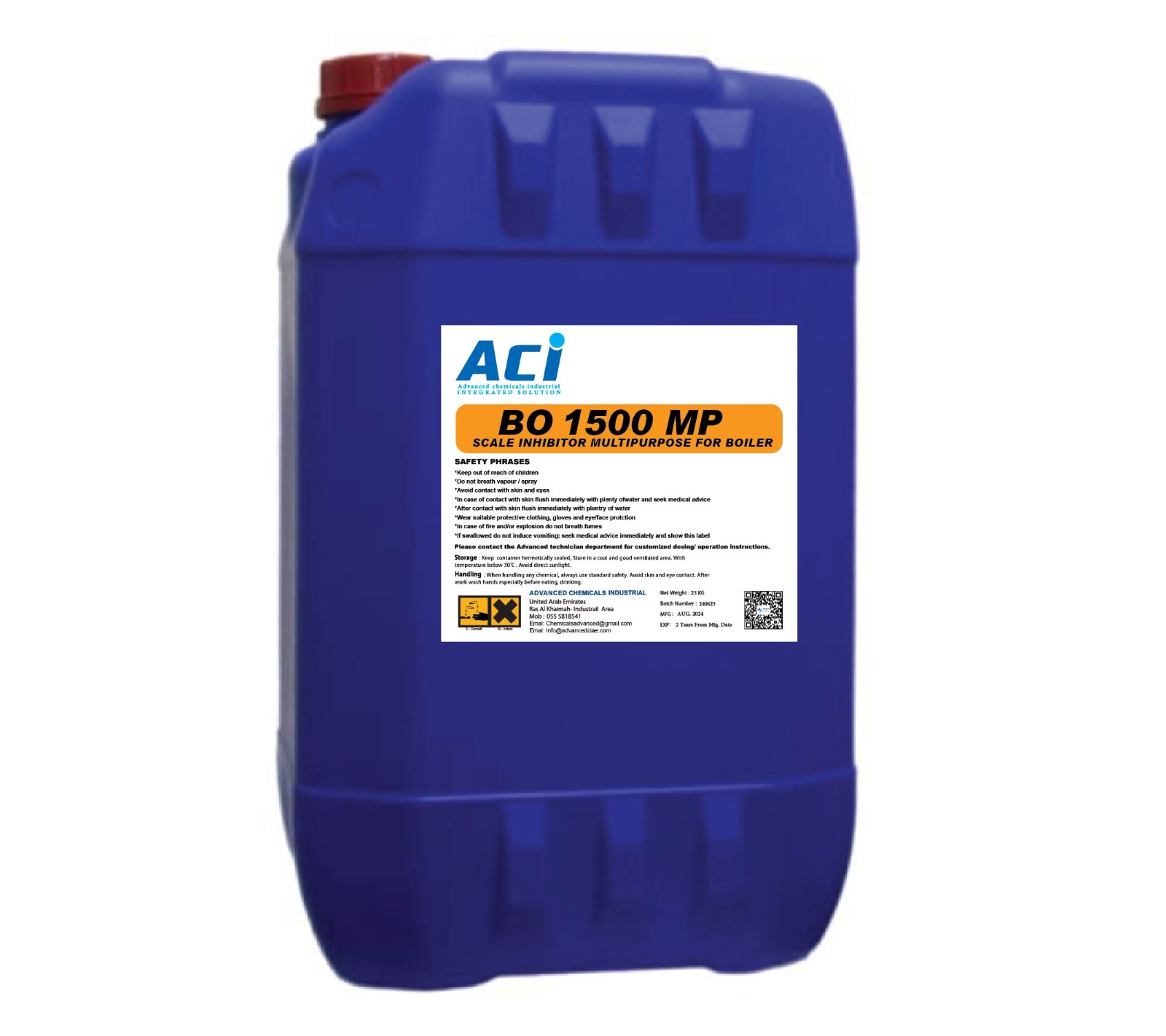
BO 1500 MP Neutralizing Amine for Steam and Condensate Systems
Neutralizing amine treatment that helps control acidic condensate corrosion in steam and condensate return systems.
Let's discuss your water system.
Share the application and operating context to start a technical review.