
Industries
Hospitality
Hotels and resorts depend on chilled water, cooling towers, steam and treated water for comfort and service. This page outlines their typical systems and the problems that follow.
On this page (6)
Overview
Hotels, resorts and similar buildings run a large share of their comfort and service on water systems that guests never see. Air conditioning depends on chilled-water loops and cooling towers, laundries and kitchens draw on steam or hot water, and some properties treat make-up water with RO. This page describes those systems and their typical problems in general terms. It is not a statement of past work in the sector.
Which water systems are typical in a hotel or resort?
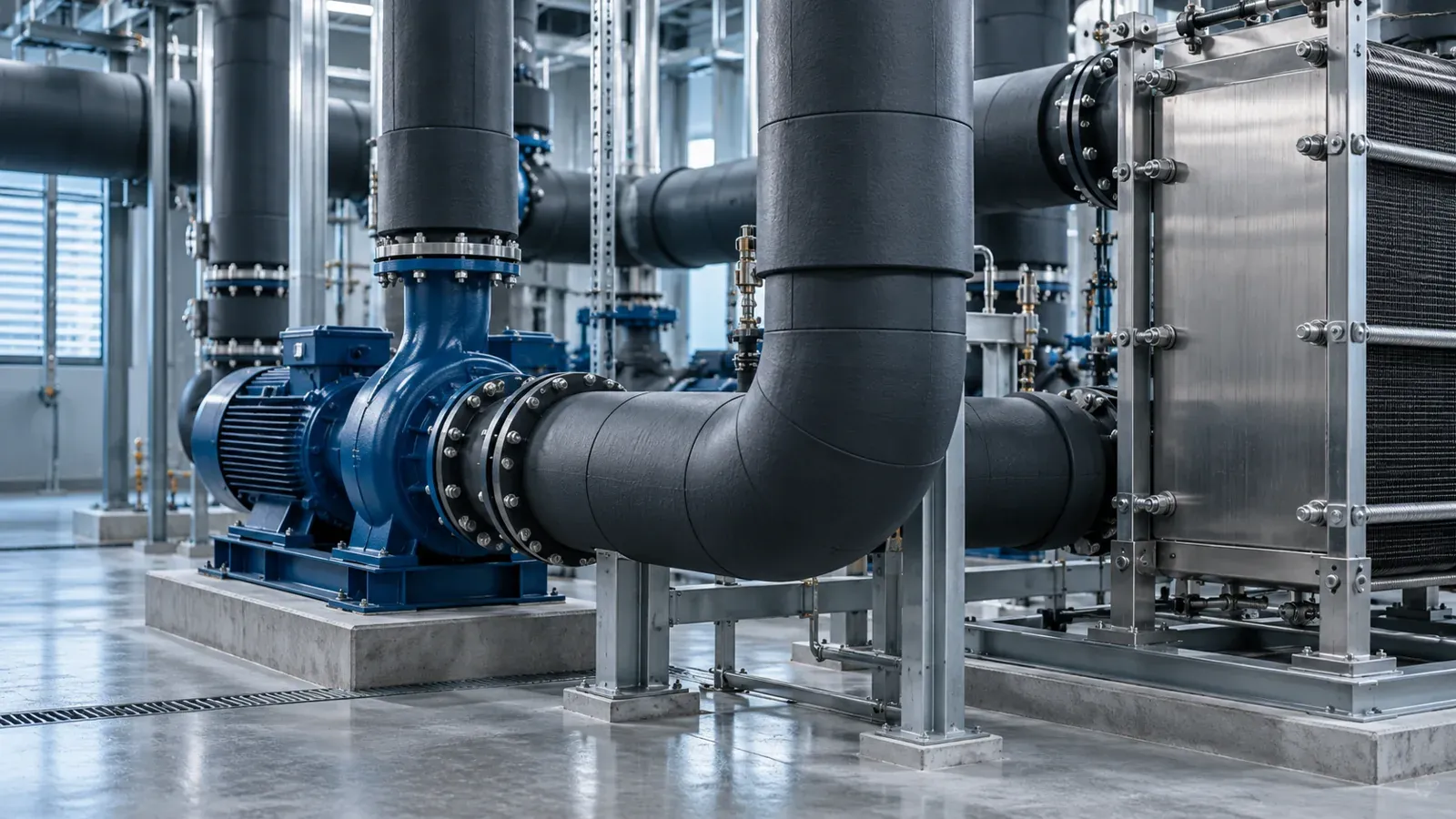
A central chiller plant serves a closed chilled-water loop that reaches every floor through air handlers and fan-coil units. The chillers reject heat through open cooling towers, or through condenser water loops linked to them. Boilers feed laundry equipment, kitchens and hot-water services. Where the supply water is brackish or sea water, RO units may prepare make-up or service water. Wastewater from the property is usually collected and treated before discharge.
What typically goes wrong?
- Biological growth in cooling-tower water, with slime, odour and a recognised health concern that calls for microbiological monitoring.
- Scale on condenser tubes that reduces chiller efficiency and raises energy cost, often noticed first in the summer peak.
- Corrosion in closed chilled-water loops, which carries iron particles into valves, coils and pumps.
- Condensate line corrosion in steam systems serving laundries and kitchens.
- Membrane fouling in RO units, seen as falling output or a rising differential pressure.
What do decision makers in the sector care about?
Cooling failure in a full property is a guest-experience problem before it is an engineering one. Facility and engineering managers look for reliable air conditioning, quiet maintenance windows that avoid occupied areas, and energy cost under control. Owners and operators look for clear records and a supplier that explains what is added to the water and why. Staff safety around chemicals and storage also matters in buildings with many shared spaces.
How does a problem-led approach help?
A property often has little in-house chemistry capacity, so a problem-led conversation is more useful than a product list. A complaint about warm rooms leads to the chiller and tower, a brown deposit in coils leads to loop corrosion, and a smell at the tower leads to biological control. Our technical team sets treatment rates from the water analysis and operating conditions, and recommends the monitoring that lets the property team confirm the result.
Challenges
These challenges are typical of hospitality properties in general and do not describe our own experience in the sector.
- Cooling demand that swings with occupancy and weather, so tower and chiller conditions never stay still.
- Buildings that cannot be shut down for long, which leaves little time for cleaning or inspection of loops.
- Microbiological control in cooling water, where growth must be prevented and monitored as a matter of routine.
- Mixed equipment ages across a property, with older loops carrying deposits and corrosion products.
- Small maintenance teams who cover mechanical, electrical and water treatment tasks together.
- Make-up water quality that varies and affects scaling tendency in towers and boilers.
Sharing a recent water analysis and the loop details with our technical team is the practical first step to separate these.
Related solutions
Cooling Water Treatment for Open Recirculating Cooling Towers
Scale, corrosion and biological control for open recirculating cooling towers, with monitoring and blowdown management built into the program.
Chilled Water Treatment for Closed-Loop Systems
Nitrite-based corrosion and scale inhibition for closed chilled-water loops, with nitrite residual monitoring and biocides suitable for closed circuits.
Boiler Water Treatment for Low and Medium Pressure Boilers
Oxygen control in feedwater, pH control in the boiler, internal scale and corrosion inhibition, and neutralizing amines to protect condensate lines.
RO Systems: Supply, Installation, Commissioning and Maintenance
Reverse osmosis systems supplied with installation, commissioning and maintenance, matched to the feed water and the water quality the process requires.
Related applications
Cooling Towers
Open recirculating cooling towers reject heat by evaporation, which concentrates the water. Scale, corrosion and biological growth are the three risks to manage.
Closed-Loop Chilled Water
Closed chilled-water loops carry cooling through a building or plant in a sealed circuit. Corrosion and deposits are the main risks, and a sealed loop depends on a stable inhibitor residual.
Steam Boilers
Steam boilers concentrate dissolved solids as they raise steam. Scale and corrosion inside the boiler are the main risks, and they are managed through water chemistry, blowdown and monitoring.
Seawater RO
Seawater RO produces fresh water from sea water through high-pressure membranes. High salinity, marine biology and scaling tendency make pretreatment and antiscalant control central.
Related products
Cooling water chemicals
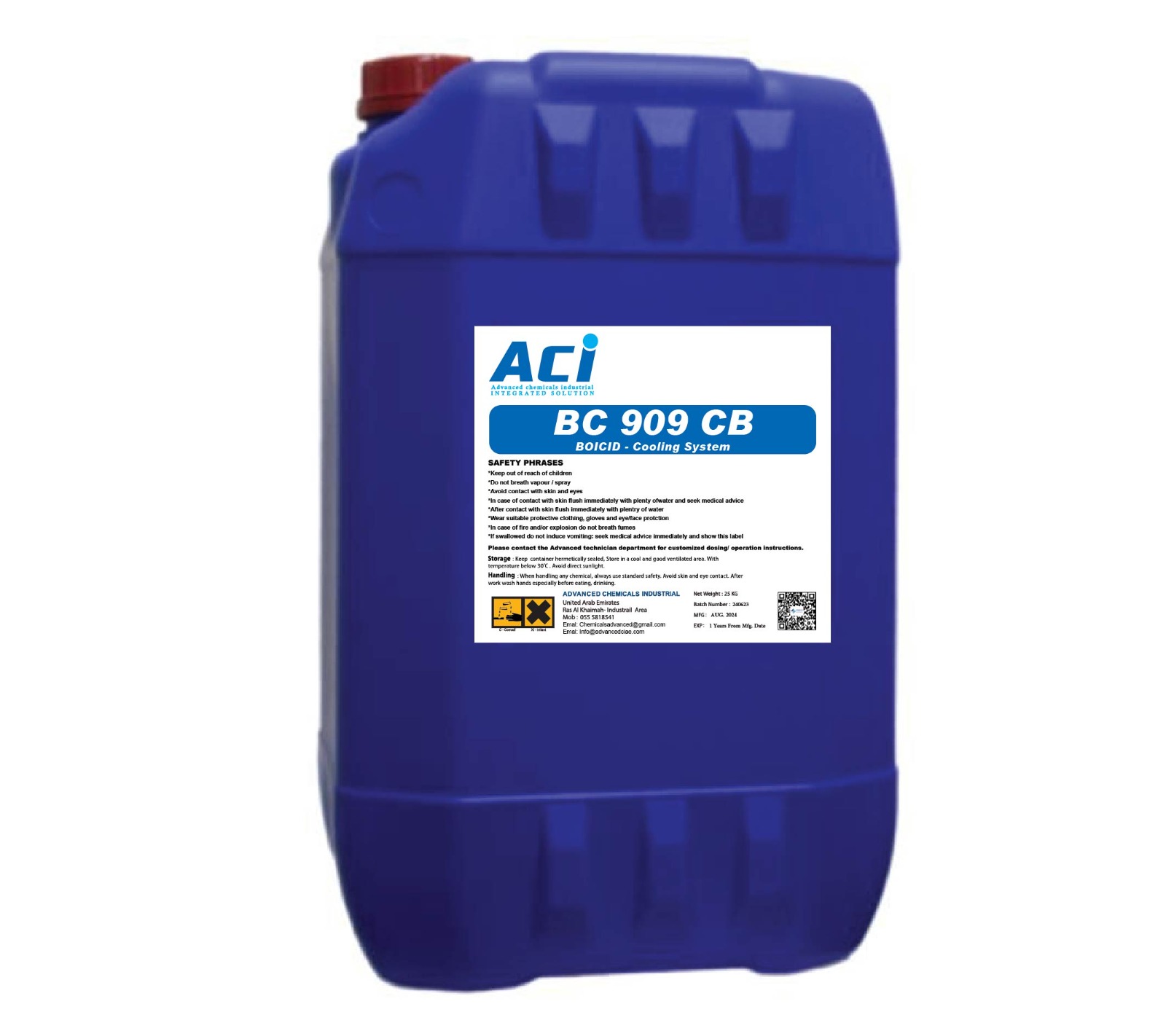
BC 909 CB Cooling System Biocide
CMIT/MIT based biocide that helps control bacteria, algae, fungi and slime in industrial and commercial cooling water systems.
Cooling water chemicals
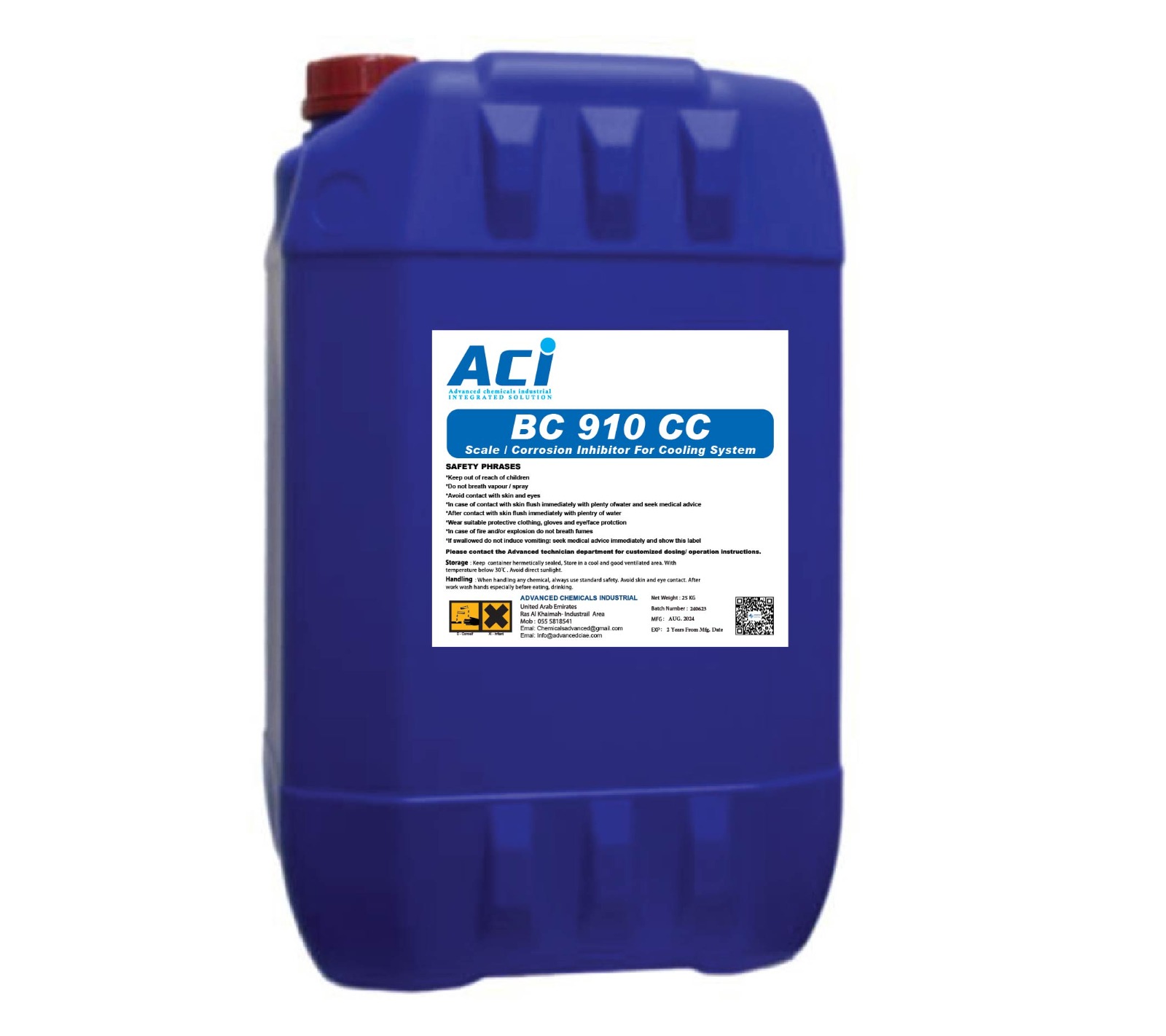
BC 910 CC Closed-Loop Chiller Inhibitor
Nitrite-based corrosion and scale inhibitor for closed-loop chilled water systems.
Cooling water chemicals
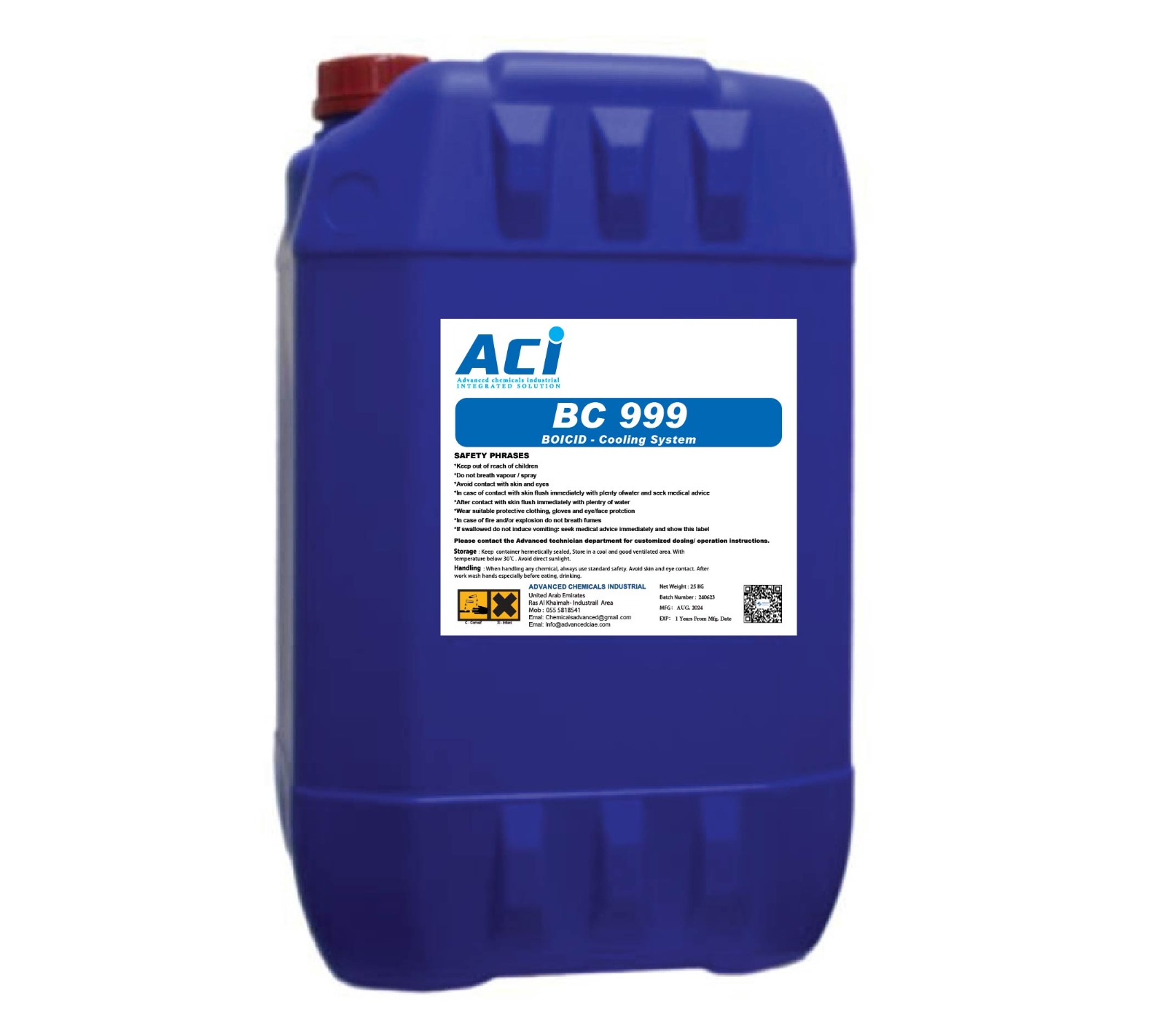
BC 999 Fast-Acting Cooling System Biocide (DBNPA)
DBNPA biocide for rapid control of microbiological growth in industrial and commercial cooling water systems.
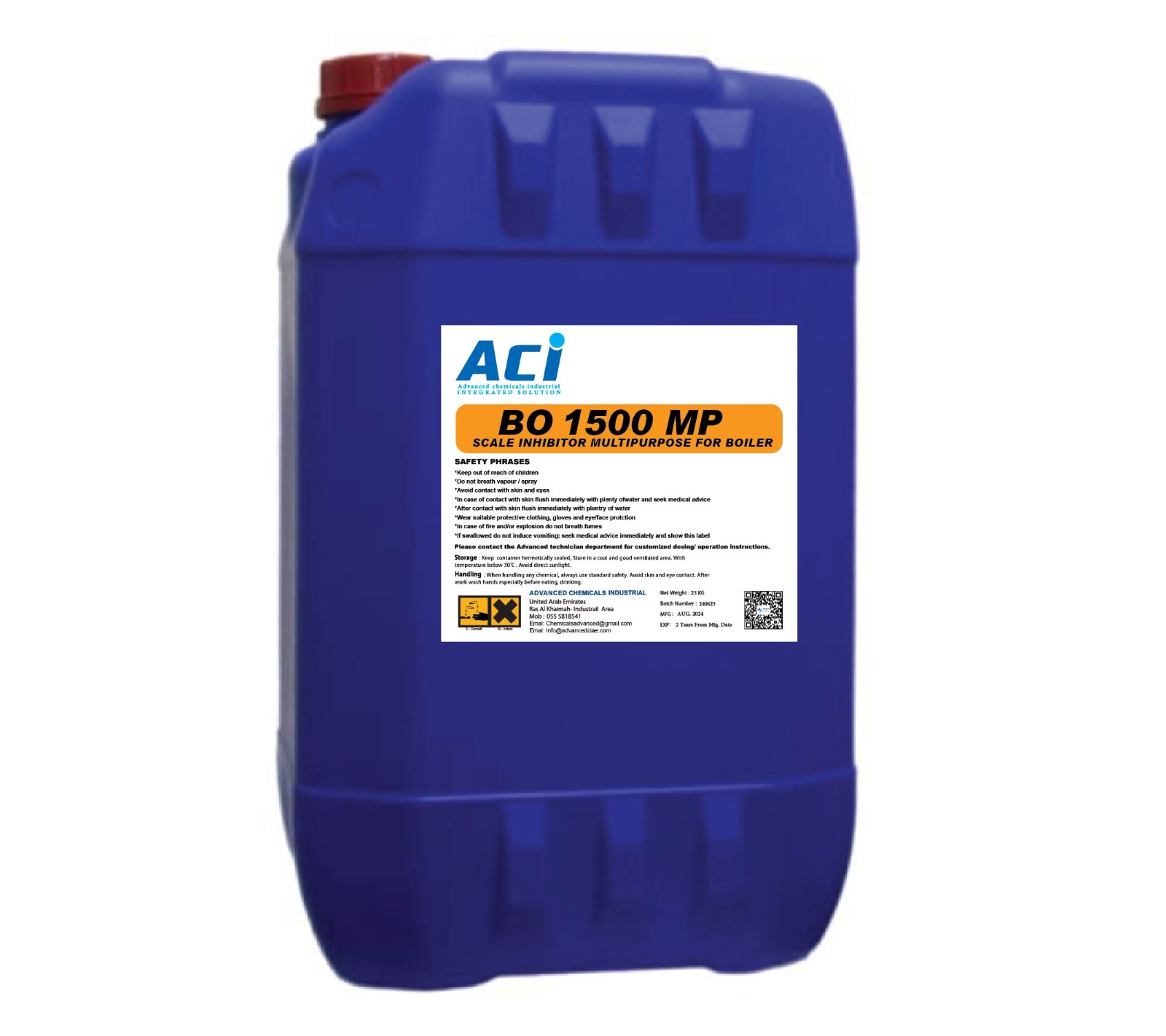
Boiler water chemicals
BO 1500 MP Neutralizing Amine for Steam and Condensate Systems
Neutralizing amine treatment that helps control acidic condensate corrosion in steam and condensate return systems.
Related problems
How do you control biological growth in cooling water?
Bacteria, algae and biofilm thrive in warm, nutrient-rich cooling water. Learn the signs, causes, microbiological checks and the biocide approach.
What causes corrosion in closed-loop chilled water systems?
Closed chilled-water and hot-water loops corrode when oxygen enters, inhibitor residual falls or microbes grow. See the signs, checks and the nitrite inhibitor approach.
What causes scale in cooling towers and how do you stop it?
Cooling tower scale forms when evaporation concentrates hardness and alkalinity beyond their solubility. See the signs, causes, checks and the scale inhibitor approach.
What causes condensate line corrosion in steam systems?
Condensate lines corrode from carbonic acid and dissolved oxygen. See the signs, the checks to run and the neutralizing amine approach for steam and condensate.
Let's discuss your water system.
Share the application and operating context to start a technical review.