
Cooling Water Treatment for Open Recirculating Cooling Towers
Scale, corrosion and biological control for open recirculating cooling towers, with monitoring and blowdown management built into the program.
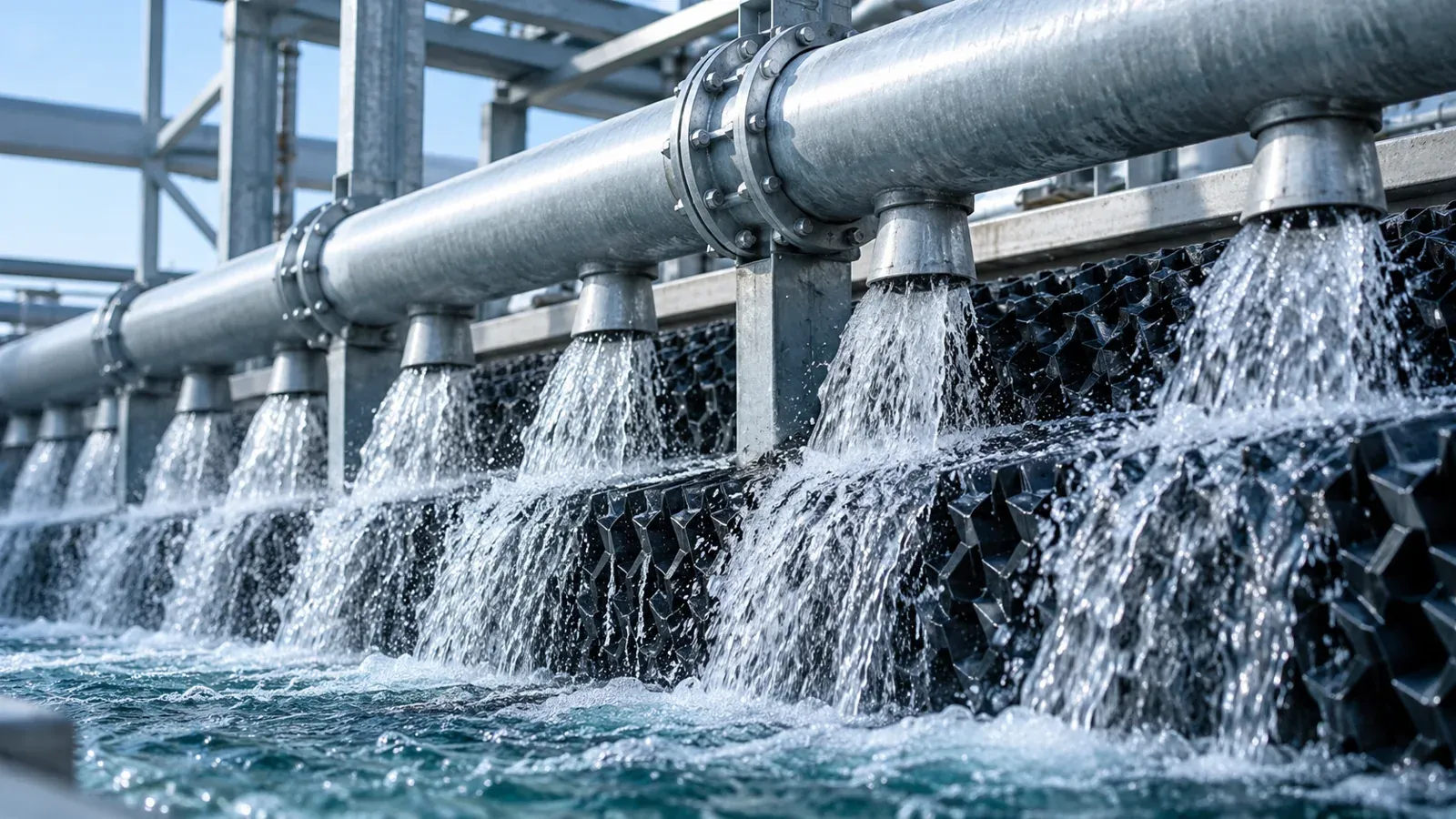 Illustration
On this page (13)
Overview
Cooling water treatment for an open recirculating cooling tower controls three linked problems: mineral scale, metal corrosion and biological growth. A working program combines a scale and corrosion inhibitor, biocides matched to the system, and routine monitoring of pH, conductivity, corrosion indicators, inhibitor residual and microbiological counts, with blowdown managed to keep the water within range.
Why does an open cooling tower need continuous treatment?
An open tower cools by evaporating part of the circulating water. The dissolved solids stay behind, so the water becomes more concentrated every day unless some is removed as blowdown and replaced with make-up. The tower is also open to the air, which brings in dust, oxygen and microorganisms. Concentrated, warm, oxygenated and nutrient-rich water is the ideal setting for scale, corrosion and biological growth at once.
What does the treatment program include?
Scale and corrosion control
A scale and corrosion inhibitor keeps hardness salts in solution and forms a protective film on metal surfaces. Advanced Chemicals Industrial supplies a zinc-based scale and corrosion inhibitor for open recirculating cooling towers. The treatment rate is set by our technical team from the make-up water analysis and the operating conditions, and the inhibitor is fed continuously with a chemical metering pump.
Biological control
Biocides limit bacteria, algae and fungi that form slime, shelter corrosion and lower heat transfer. We supply cooling system biocides based on isothiazolinone (CMIT/MIT) and on DBNPA. Different chemistries work differently, and alternating or combining them is a common way to limit resistant growth. The choice depends on the system water, the pH and the discharge conditions.
What should be monitored?
Treatment is only as good as its monitoring. The standard checks are:
- pH of the circulating water
- conductivity, which shows how concentrated the water has become
- corrosion indicators such as coupon results or corrosion rate readings
- the zinc residual of the inhibitor
- microbiological monitoring, for example dip slide counts
- make-up water quality, since a change in the source changes the whole balance
Conductivity deserves particular attention. It is the practical measure of cycles of concentration, and it drives the blowdown decision. A falling conductivity with unchanged make-up means too much water is being wasted, while a rising one means scale risk is rising.
How are blowdown and make-up managed?
Blowdown removes concentrated water and make-up replaces it. Higher cycles save water but raise the scale and corrosion risk, and lower cycles do the opposite. The right balance depends on the make-up quality and the inhibitor chosen, so blowdown is set from the analysis rather than from habit. Automatic conductivity-controlled blowdown keeps the system steady better than manual draining.
What happens when treatment slips?
- scale on heat exchange surfaces and fill reduces heat transfer and raises energy use
- corrosion thins pipes and exchangers and releases iron that feeds more deposits
- biological slime insulates surfaces, promotes under-deposit attack and creates health and odor concerns
These problems reinforce each other. Slime traps scale, scale shelters bacteria, and corrosion products give both a base to grow on. That is why the program treats them together.
What do we need from you?
- a recent analysis of the make-up water and of the circulating water
- the type of tower and the metals in the loop
- the system volume and the heat load, as far as they are known
- current chemicals and the monitoring already in place
- the main concern: scale, corrosion, slime or odor
How do cycles of concentration affect the program?
Cycles of concentration describe how many times the make-up water is concentrated before it leaves as blowdown. Raising them saves water and chemicals, but only as far as the make-up quality, the inhibitor and the metals allow. Beyond that point scale and corrosion risk grow quickly. The practical limit is found from the analysis and confirmed by the monitoring, then held with conductivity control.
What about shutdowns and seasonal operation?
Towers that stand idle or run at low load are exposed to stagnant water, which favours biological growth and under-deposit corrosion. Before a restart, clean the basin, check the fill and drift eliminators, and treat the system before the load returns. A short plan for stand-by and restart often prevents the first-week problems.
Why keep a log?
Trends reveal slow problems that a single visit cannot. A steady log of conductivity, pH, residuals and microbiological results, with the make-up and blowdown readings, lets our technical team advise from evidence.
Send your operating data and a recent water analysis to our technical team for a technical review. Product samples and technical data are available through the same team.
Applications
Open recirculating cooling towers serve air-conditioning plants in commercial buildings, hotels, hospitals and malls, as well as process cooling in industry, power generation auxiliaries and food and beverage plants. The program applies to both small packaged towers and large field-erected units.
Building air-conditioning
Towers on chiller plants run through most of the year. Scale on the condenser reduces chiller efficiency and raises power use, so scale control has a direct cost.
Industrial process cooling
Heat exchangers on process lines are sensitive to fouling. Biological growth and corrosion deposits cut heat transfer and can force unplanned stops.
Mixed-metal systems
Where copper alloys, steel and galvanized surfaces share one loop, the inhibitor must protect each metal without harming another. This is checked at the design of the program.
Data and critical cooling
Where cooling load runs continuously, interruption for cleaning is costly, and prevention through steady treatment is the cheaper path.
Our technical team reviews the make-up analysis and the operating records before recommending the program.
Problems this addresses
Problems
What causes scale in cooling towers and how do you stop it?
Cooling tower scale forms when evaporation concentrates hardness and alkalinity beyond their solubility. See the signs, causes, checks and the scale inhibitor approach.
Problems
What causes corrosion in cooling tower systems?
Corrosion in open recirculating cooling systems is driven by dissolved oxygen, salts, low pH and microbial activity. See the signs, checks and the inhibitor approach.
Problems
How do you control biological growth in cooling water?
Bacteria, algae and biofilm thrive in warm, nutrient-rich cooling water. Learn the signs, causes, microbiological checks and the biocide approach.
Products used
Cooling water chemicals
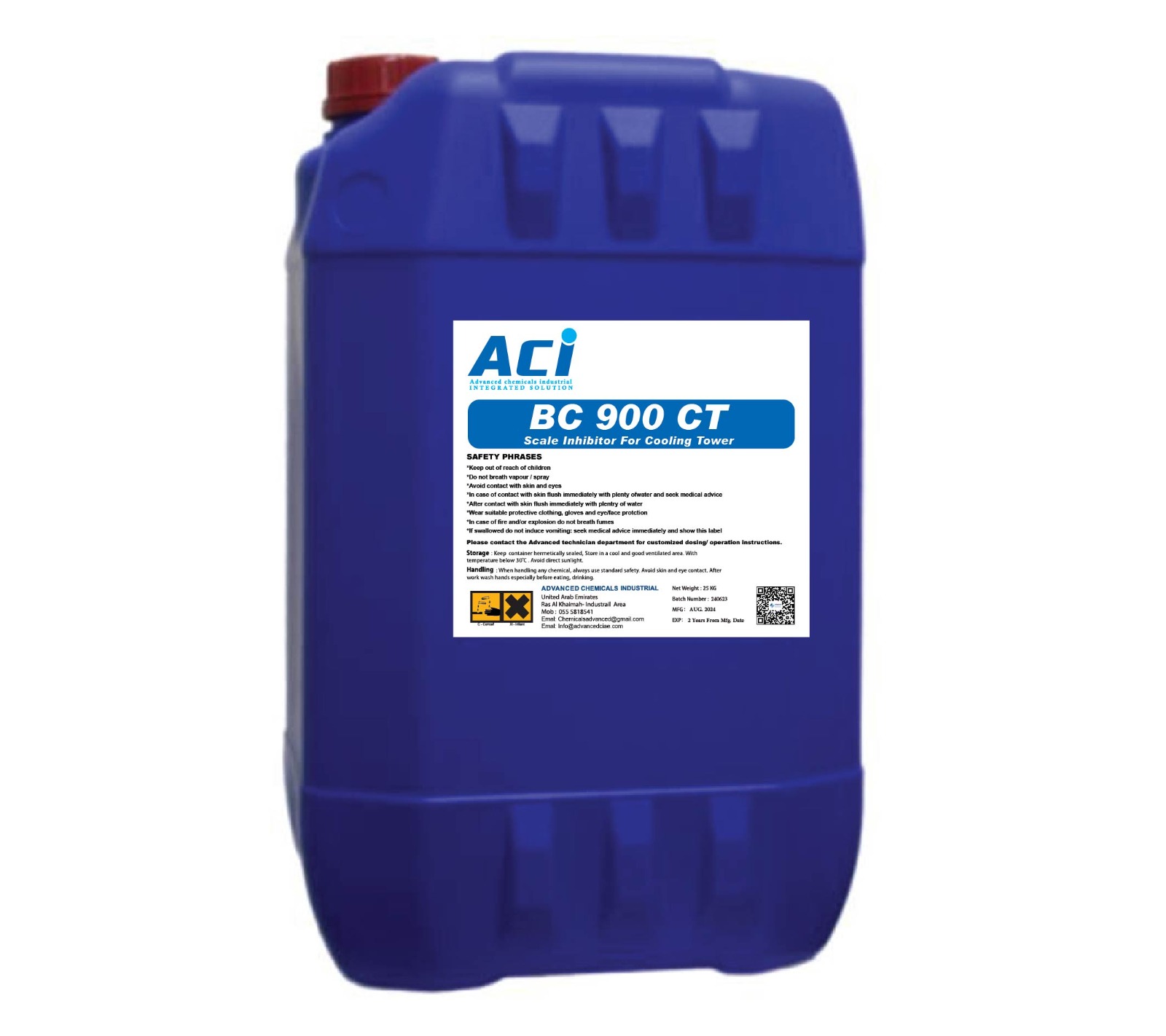
BC 900 CT Cooling Tower Scale and Corrosion Inhibitor
Zinc chloride based treatment that helps control corrosion and scale formation in open recirculating cooling water systems and cooling towers.
Cooling water chemicals
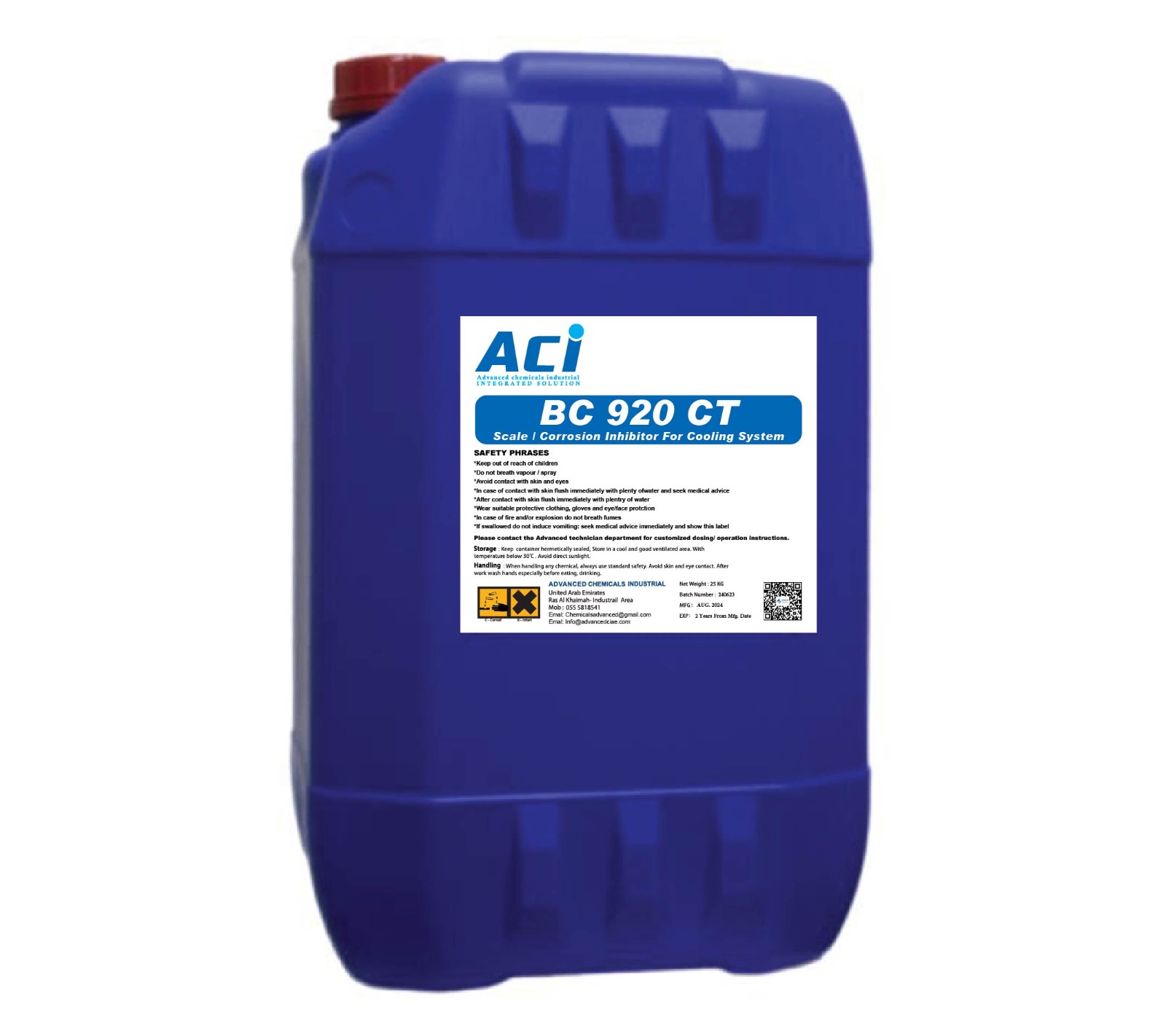
BC 920 CT Cooling System Scale and Corrosion Inhibitor
Scale and corrosion inhibitor for cooling systems, as named on the product label.
Cooling water chemicals
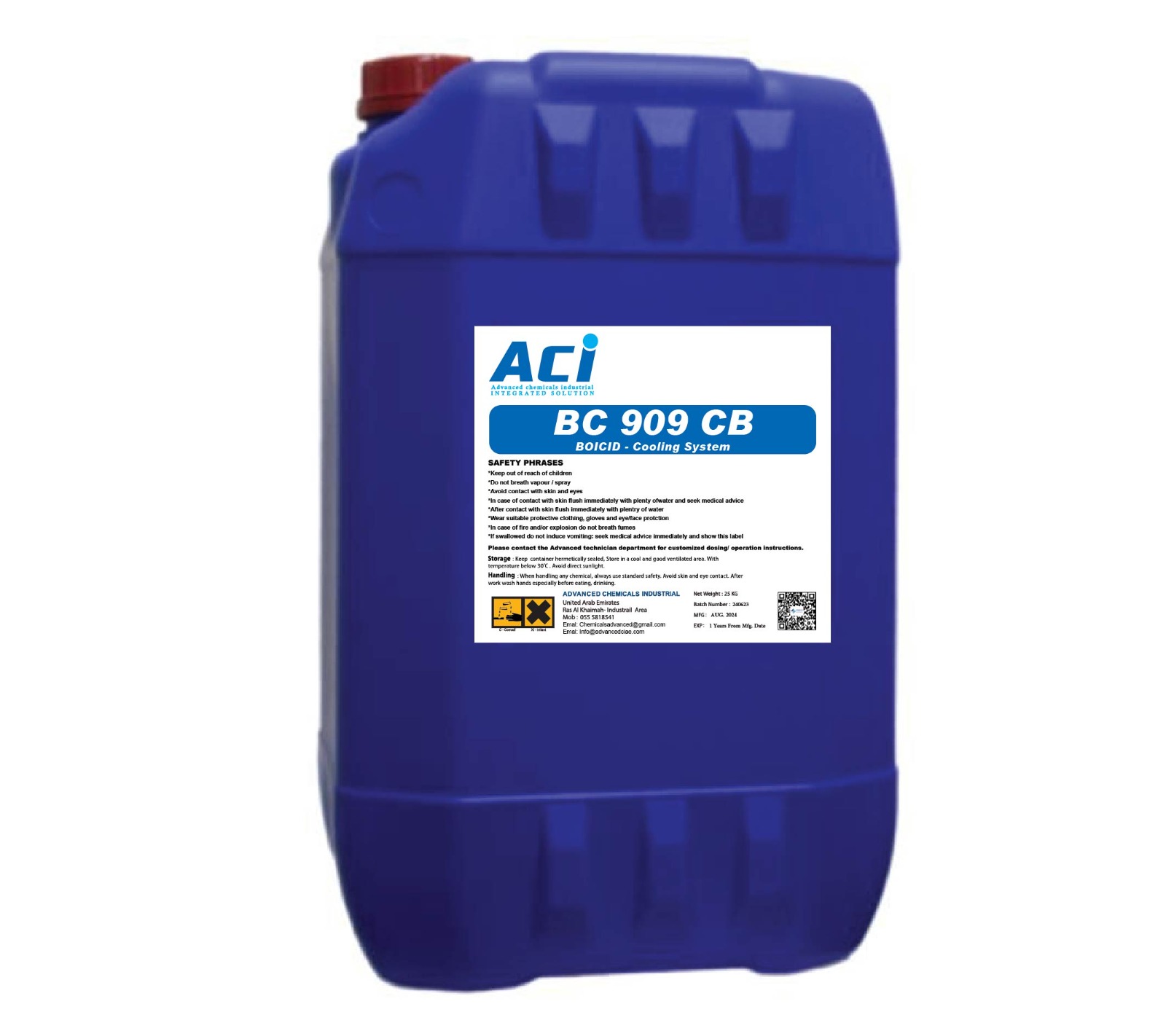
BC 909 CB Cooling System Biocide
CMIT/MIT based biocide that helps control bacteria, algae, fungi and slime in industrial and commercial cooling water systems.
Cooling water chemicals
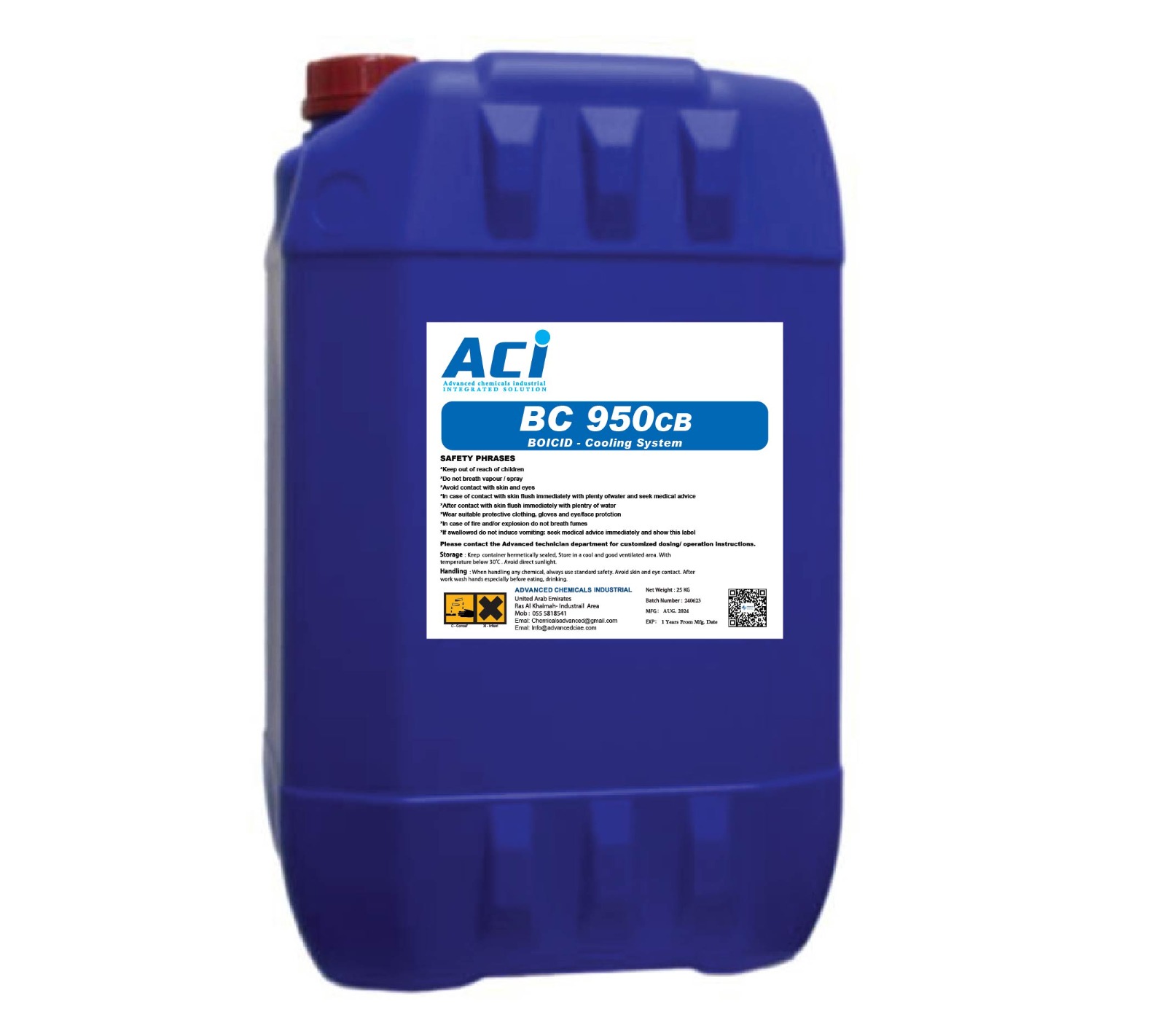
BC 950 CB Cooling System Biocide
Biocide that helps control bacteria, algae, fungi and slime in industrial and commercial cooling water systems.
Cooling water chemicals
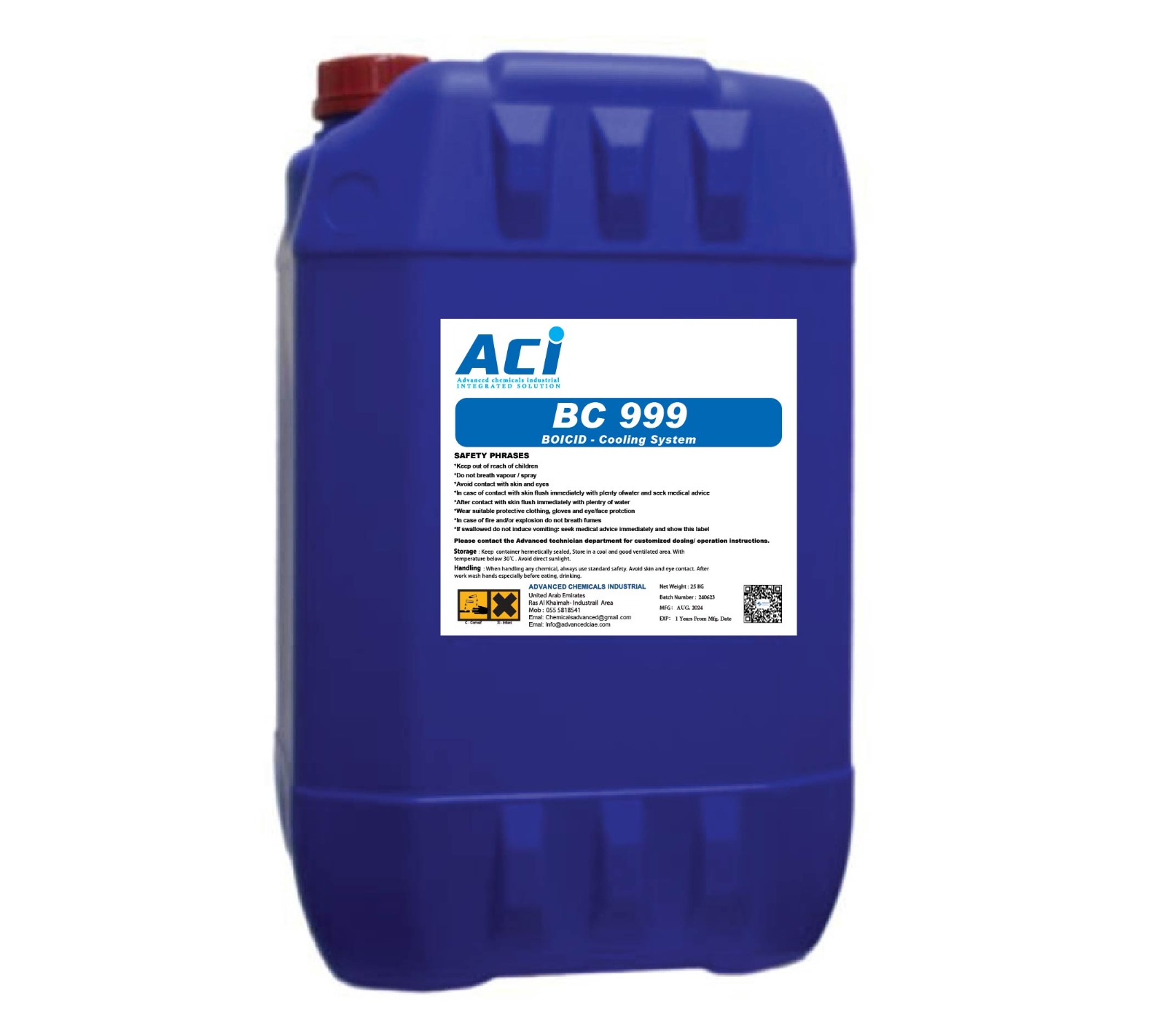
BC 999 Fast-Acting Cooling System Biocide (DBNPA)
DBNPA biocide for rapid control of microbiological growth in industrial and commercial cooling water systems.
Let's discuss your water system.
Share the application and operating context to start a technical review.