
Why is RO differential pressure increasing?
A rising differential pressure across an RO system points to restricted feed channels. Learn how to tell fouling, scaling and pre-treatment problems apart before cleaning.
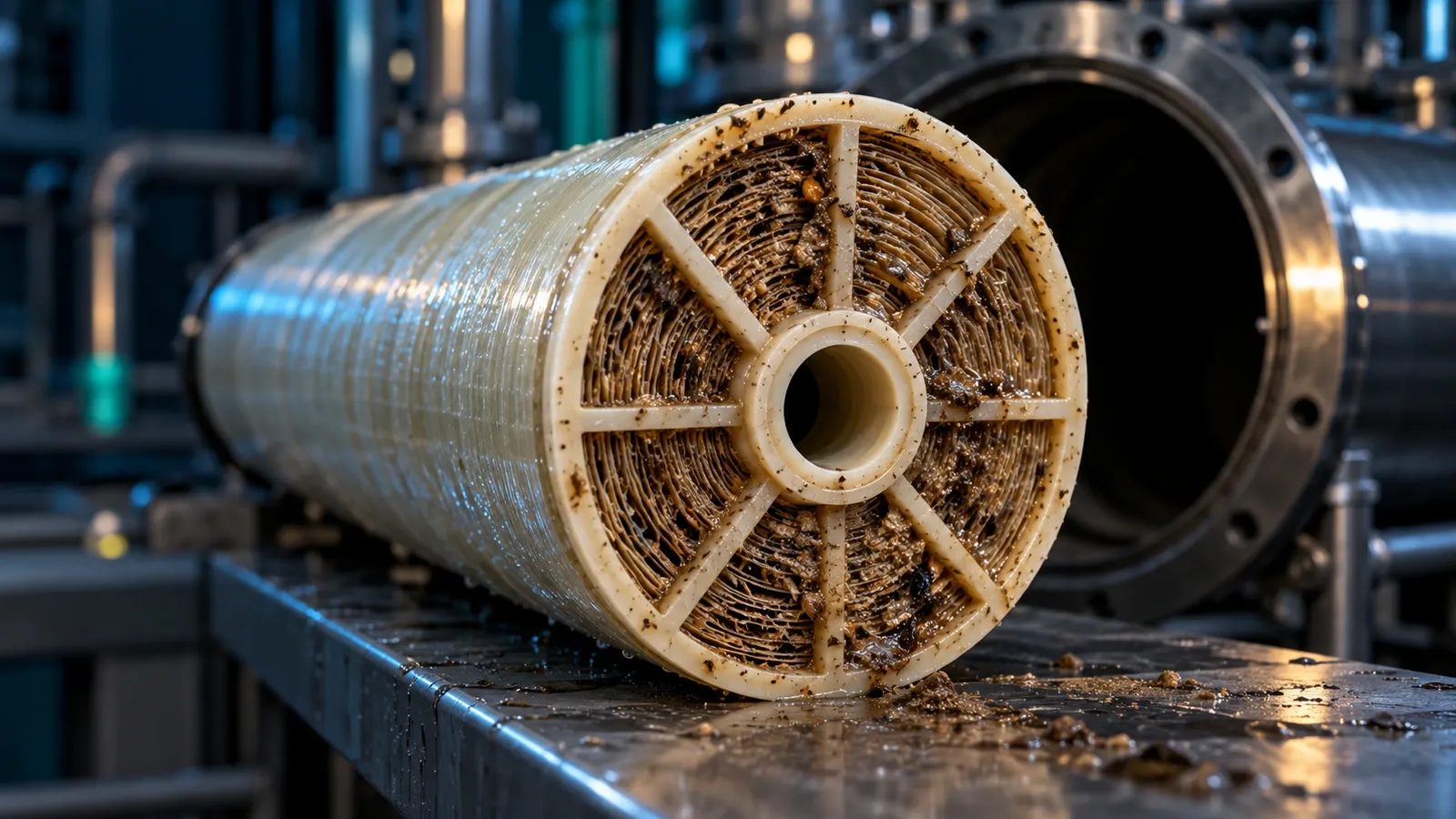 Illustration
On this page (12)
Overview
A rising differential pressure across an RO system means the feed channels are becoming restricted. The usual causes are particulate or colloidal fouling, biological growth, scaling by sparingly soluble salts, or a failing pre-treatment stage. Which one applies depends on the stage where the rise appears and on the feed water analysis, so compare normalized data before choosing a cleaning or treatment step.
What does differential pressure tell you about an RO system?
Differential pressure is the loss of pressure between the feed inlet and the concentrate outlet of a membrane stage. As deposits build up in the feed spacer channels, water meets more resistance and the loss rises, even when permeate output still looks acceptable. It is often the earliest warning that membranes are fouling.
Why does the location of the rise matter?
A rise in the first stage usually points to fouling carried in with the feed: suspended solids, colloids, organic matter or biological growth. A rise concentrated in the last stage points to scaling, because the concentrate there is most saturated with sparingly soluble salts. A rise across the whole array together with a loss of salt rejection suggests a mixed problem.
Why act early?
Heavy deposits are harder to remove, can compact the membrane and shorten its life. A well-timed cleaning, matched to the deposit type, restores performance with less stress on the membranes and less downtime.
How should the problem be approached?
Treat the rising differential pressure as a prompt to investigate, not as an instruction to clean. Compare current normalized data with the baseline, locate the stage where the change begins, read the feed water and pre-treatment records, and only then decide between cleaning, pre-treatment correction and a change to the chemical programme. This order avoids unnecessary cleanings that stress the membranes without removing the real cause.
Frequently asked questions
How often should RO membranes be cleaned?
There is no fixed calendar interval. Clean when normalized performance shows a clear change from the commissioning baseline: a rising differential pressure, falling normalized permeate flow or rising salt passage. Cleaning earlier, while the deposit is still thin, recovers performance more fully than waiting until the loss is severe.
Why is RO differential pressure increasing?
A rising differential pressure means the feed channels between membrane sheets are being blocked. The usual causes are particulates and colloids, biological growth, or scale from sparingly soluble salts. Where in the train the rise starts, and how fast it moves, helps separate these causes before choosing a cleaner.
What causes biofouling on RO membranes?
Microorganisms in the feed attach to the membrane and spacer surfaces, multiply on the nutrients present and build a slimy biofilm that raises differential pressure and lowers flow. It is usually worse after warm weather, a weak pretreatment barrier or a period of idle stagnation.
How can fouling be told apart from normal changes in RO performance?
Normalize permeate flow, differential pressure and salt passage for feed temperature, pressure and recovery, then compare them with the start-up baseline. Raw readings move with the seasons and load. A steady drift in the normalized values, not a swing in the raw ones, points to fouling or scaling.
Symptoms
Differential pressure rises from its commissioning baseline, often slowly at first and then faster. Typical signs seen together or separately:
- Higher feed pressure is needed to hold the same permeate output after normalizing for temperature and salinity.
- Normalized permeate flow falls while differential pressure climbs.
- Salt passage increases when scale or severe fouling damages the membrane surface.
- Cartridge filters need replacing more often, or the pressure drop across them climbs quickly.
- Differences appear between stages or between parallel trains running on the same feed.
Plant data read without normalization can hide these trends, because feed temperature and salinity changes move the readings in the same direction.
The pattern across stages is as informative as the size of the change. A first-stage rise with stable salt passage usually suggests fouling from the feed, while a last-stage rise that arrives with a falling salt rejection usually suggests scaling. Noting when the rise began, for example after a feed source change, a pre-treatment fault or a long shutdown, narrows the search considerably.
Cause
Increased differential pressure is a symptom, and several different mechanisms produce it:
- Particulate and colloidal fouling from silt, iron, aluminium or coagulant carry-over that passes the pre-treatment.
- Biological fouling, where bacteria form a slime layer inside the feed channels.
- Scale formation by calcium carbonate, calcium sulfate, silica or other sparingly soluble salts as the concentrate gets more saturated.
- Organic fouling from oils, humic matter or incompatible pre-treatment chemicals.
- Telescoping or damaged spacers after pressure surges, or incorrect cleaning and start-up practice.
In practice the causes overlap. A biofilm traps particles, and scale crystals grow more readily on already fouled surfaces.
Operating practice also contributes. Starting up without adequate flushing, running at flux levels that are too high for the feed quality, and repeated pressure surges all make the feed channels more likely to foul. Each of these should be reviewed alongside the water analysis.
Approach in steps
Diagnosis
Start with data, not with a cleaning chemical. A sound diagnosis compares what the system does now with what it did at commissioning, under the same conditions.
- Normalize permeate flow, differential pressure and salt passage for temperature, feed salinity and operating pressure, and trend them per stage.
- Review a recent feed water analysis: hardness, alkalinity, silica, iron, organic content and microbiological counts.
- Check the pre-treatment: filter performance, chlorine removal, coagulant and antiscalant feed and the condition of cartridge filters.
- Inspect cartridge filters and cleaning solutions for colour, slime or metal deposits, which indicate the deposit type.
- Where possible, analyse the deposit removed during a cleaning, or a membrane autopsy sample, to confirm the mechanism.
Matching the deposit type to the cleaning chemistry matters: an alkaline cleaner suits organic and biological deposits, an acid cleaner suits mineral scale and metal oxides.
Document everything with dates: cleanings, filter changes, chemical deliveries and feed water changes. A timeline often shows that the pressure rise began right after a specific event.
Treatment approach
Treatment follows the confirmed cause rather than the symptom alone.
- Membrane cleaner: an alkaline or acid membrane cleaning, selected for the deposit type, restores normalized performance when started in good time.
- Antiscalant: a suitable antiscalant in the feed limits scale formation where the concentrate approaches saturation.
- Disinfectant: where biological growth is the cause, a membrane-suitable disinfectant is used together with a review of pre-treatment hygiene.
- Pre-treatment correction: filter condition, chlorine removal and coagulant carry-over are corrected at the source.
The treatment rate and cleaning procedure are set by our technical team from the water analysis and the operating conditions of your system, and they are monitored with regular normalized data.
After any cleaning, normalized performance is checked again, so that the effect can be confirmed and the next interval set from evidence.
Send your operating data and a recent water analysis to our technical team for a technical review.
Related solutions
Programs
RO Chemicals: Antiscalants, Membrane Cleaners and Disinfectant
A treatment program for seawater and brackish RO plants: antiscalants to control scale, membrane cleaners to restore performance, and a disinfectant to limit biological growth.
Services
RO System Maintenance
What maintenance of an RO system involves: monitoring normalized data, deciding when to clean, replacing consumables and keeping the chemical supply continuous.
Related products
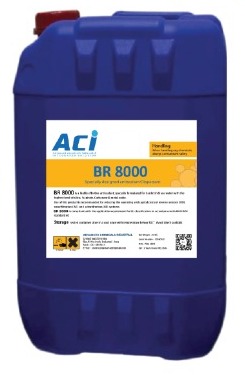
Antiscalants
BR8000 Reverse Osmosis Antiscalant
Antiscalant for seawater and brackish water reverse osmosis, for controlling carbonate, sulphate, metal oxide and silica scale.
Let's discuss your water system.
Share the application and operating context to start a technical review.