
Industries
Food and Beverage
Steam, chilled water, RO-treated process water and effluent shape food and beverage operations. This page outlines the typical systems, problems and decision points.
On this page (6)
Overview
Food and beverage plants rely on water in two ways at once: as a utility that heats, cools and cleans, and as a material that sits close to the product. Steam, chilled water, treated process water and effluent all have to run reliably, and chemical choices are made with product safety in mind. This page gives a general overview of the systems and problems typical of the sector. It is not a statement of past work in the sector.
Which water systems are typical in a food or beverage plant?
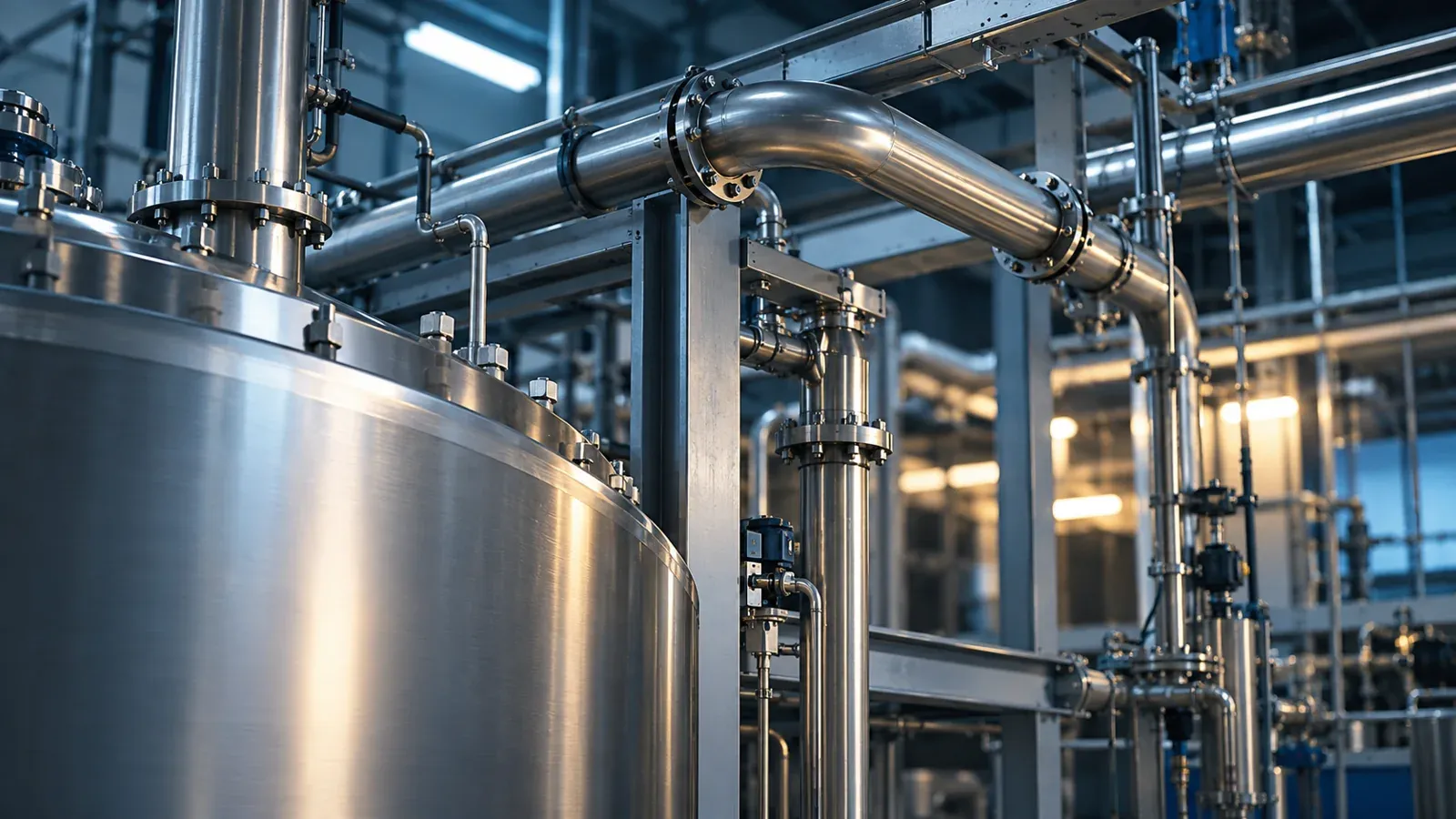
Steam boilers supply cooking, sterilising, cleaning and heating duties, with condensate returned where the layout allows. Chilled-water loops and refrigeration circuits keep product and rooms cold. Cooling towers or condensers reject the heat. RO units prepare water for rinsing, blending or boiler make-up. Effluent from washing and processing carries organic load and is treated before it leaves the site.
What typically goes wrong?
- Oxygen corrosion of boiler metal and pitting in feedwater lines when oxygen removal is incomplete.
- Condensate line corrosion, which returns iron to the boiler and shortens equipment life.
- Scale on heat-exchange surfaces, which slows heating and cooling duties.
- Biofilm on RO membranes and in cooling water, favoured by the nutrients and warm temperatures around food plants.
- Corrosion and deposits in chilled-water loops serving process cooling.
What do decision makers in the sector care about?
Quality and production managers care first about product safety and continuity. Any chemical that may reach steam or water in contact with product has to be selected and documented carefully, and its suitability for that use is a matter for the plant and the applicable rules, not for assumption.
Maintenance managers add reliable utilities and manageable cleaning windows, and purchasing adds supplier clarity.
How does a problem-led approach help?
A problem-led approach separates utility water, where corrosion and scale are the questions, from water that touches product, where the question is what may be added at all. It starts from the symptom, such as brown condensate, falling RO output or warm chilled water, and works toward a cause. Our technical team sets treatment rates from the water analysis and operating conditions, and the plant confirms any food-contact consideration before a product is chosen.
Challenges
These challenges are typical of the sector in general and do not describe our own experience in it.
- Steam that reaches product or packaging, which limits the chemicals that may be considered.
- Frequent hygienic cleaning cycles that put heavy demand on water and on membranes and exchangers.
- Organic load and warm conditions that favour biological growth in cooling water, RO systems and effluent.
- Condensate return that varies across a site, with long lines exposed to carbon dioxide.
- Effluent that varies with the production schedule and cleaning routine.
- Documentation expectations from customers and auditors that require clear chemical records.
Our technical team can review a water analysis and the operating description of each loop as the basis for a technical discussion.
Related solutions
Boiler Water Treatment for Low and Medium Pressure Boilers
Oxygen control in feedwater, pH control in the boiler, internal scale and corrosion inhibition, and neutralizing amines to protect condensate lines.
Cooling Water Treatment for Open Recirculating Cooling Towers
Scale, corrosion and biological control for open recirculating cooling towers, with monitoring and blowdown management built into the program.
Chilled Water Treatment for Closed-Loop Systems
Nitrite-based corrosion and scale inhibition for closed chilled-water loops, with nitrite residual monitoring and biocides suitable for closed circuits.
RO Chemicals: Antiscalants, Membrane Cleaners and Disinfectant
A treatment program for seawater and brackish RO plants: antiscalants to control scale, membrane cleaners to restore performance, and a disinfectant to limit biological growth.
Wastewater and STP Chemicals: Coagulation, Flocculation and pH Adjustment
Chemical treatment steps for sewage treatment plants and industrial wastewater: coagulation, flocculation, pH adjustment, defoaming and clarification.
Related applications
Steam Boilers
Steam boilers concentrate dissolved solids as they raise steam. Scale and corrosion inside the boiler are the main risks, and they are managed through water chemistry, blowdown and monitoring.
Boiler Feedwater and Condensate
Feedwater and condensate lines carry the water to and from the boiler. Dissolved oxygen and carbon dioxide are the main corrosion drivers, and they are controlled with oxygen removal and pH management.
Closed-Loop Chilled Water
Closed chilled-water loops carry cooling through a building or plant in a sealed circuit. Corrosion and deposits are the main risks, and a sealed loop depends on a stable inhibitor residual.
Brackish Water RO
Brackish water RO removes dissolved salts from water of moderate salinity. Scaling, fouling and biofouling of the membranes are the main risks, and they show up first as differential pressure and output.
Related products
Boiler water chemicals
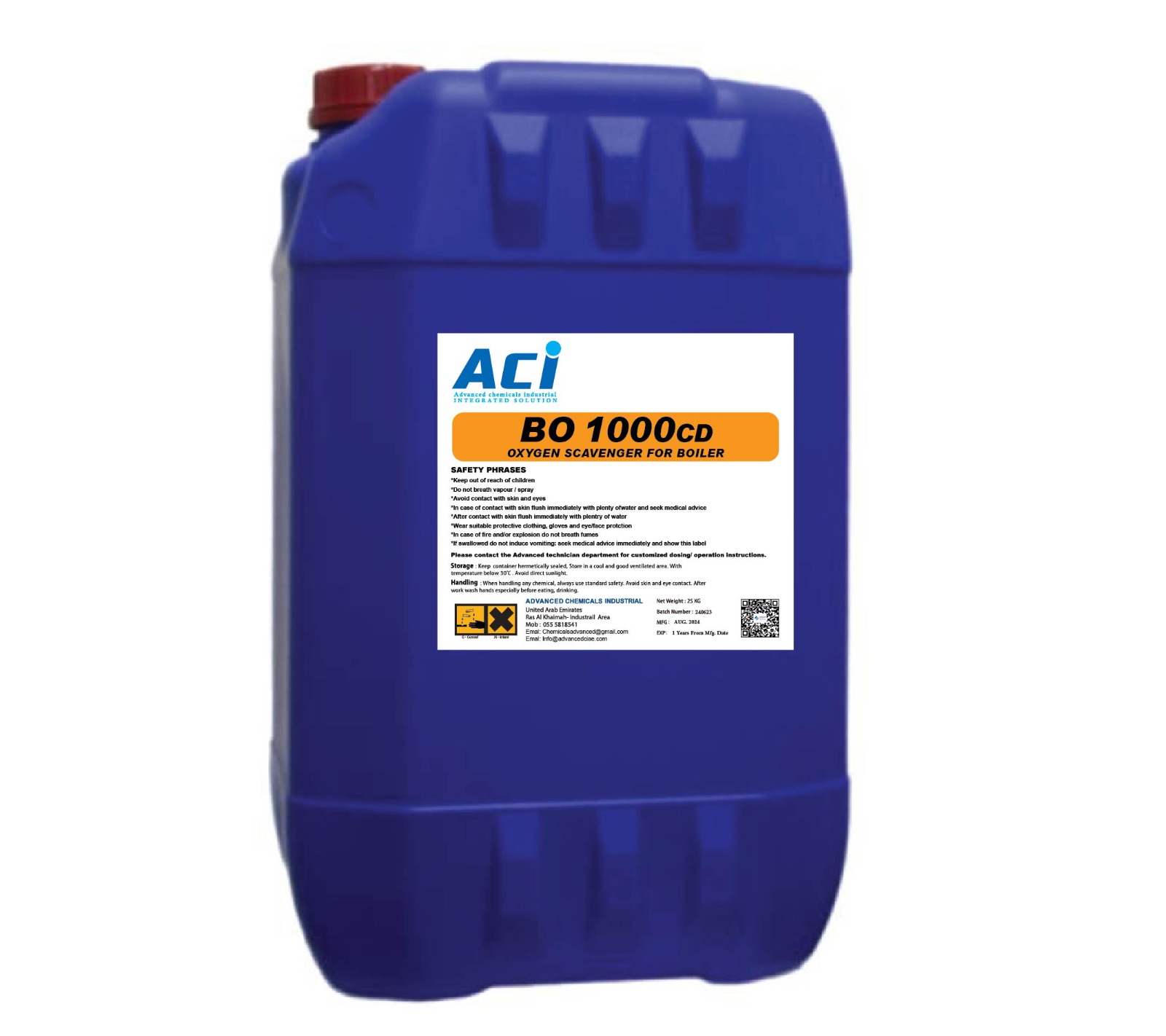
BO 1000 CD Boiler Oxygen Scavenger (DEHA)
DEHA based oxygen scavenger that helps control dissolved oxygen and minimise corrosion in boiler feedwater and condensate systems.
Boiler water chemicals
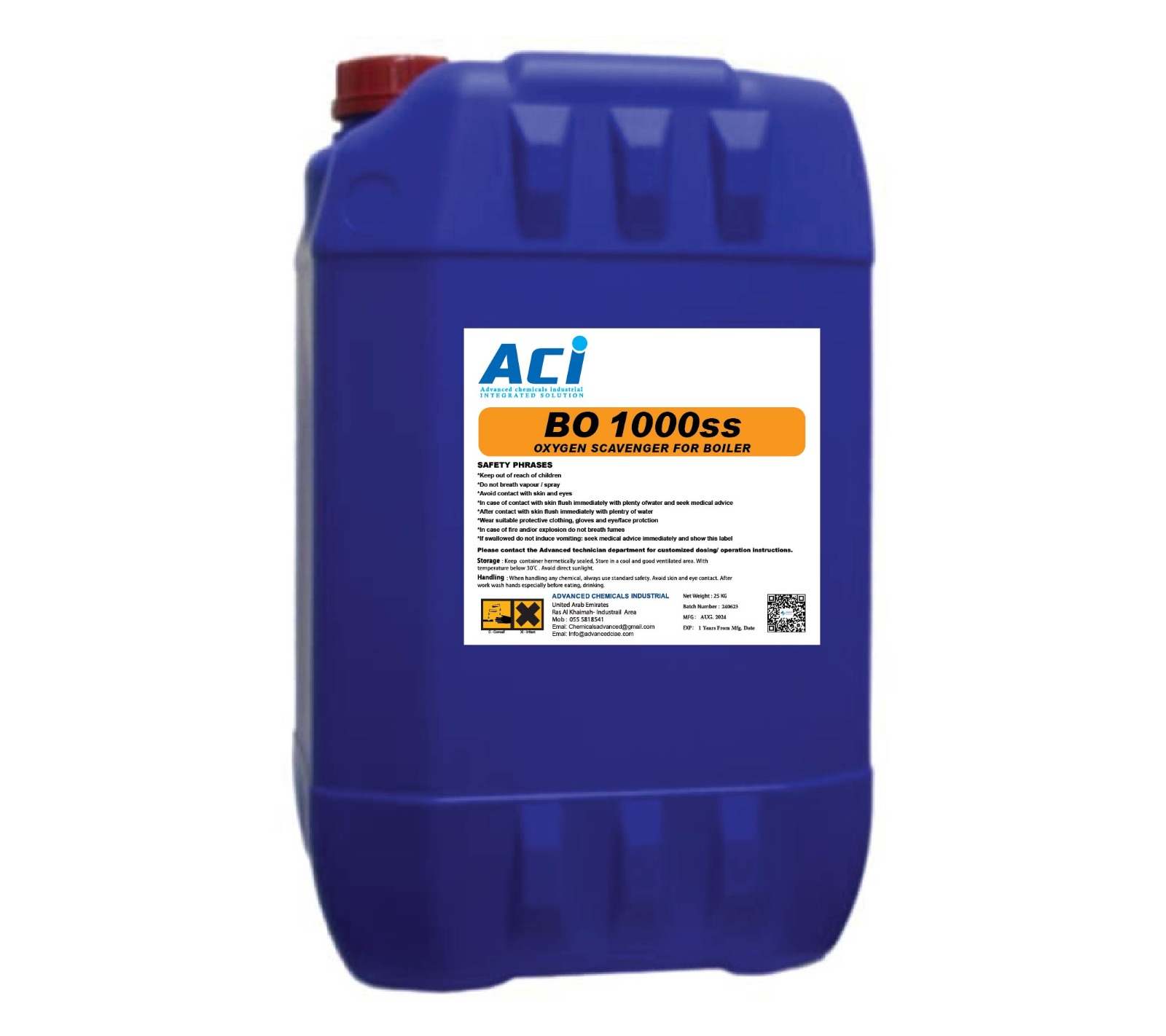
BO 1000 SS Boiler Oxygen Scavenger (Sodium Bisulfite)
Sodium bisulfite based treatment that helps remove dissolved oxygen from boiler feedwater and reduce the risk of oxygen-related corrosion.
Cooling water chemicals
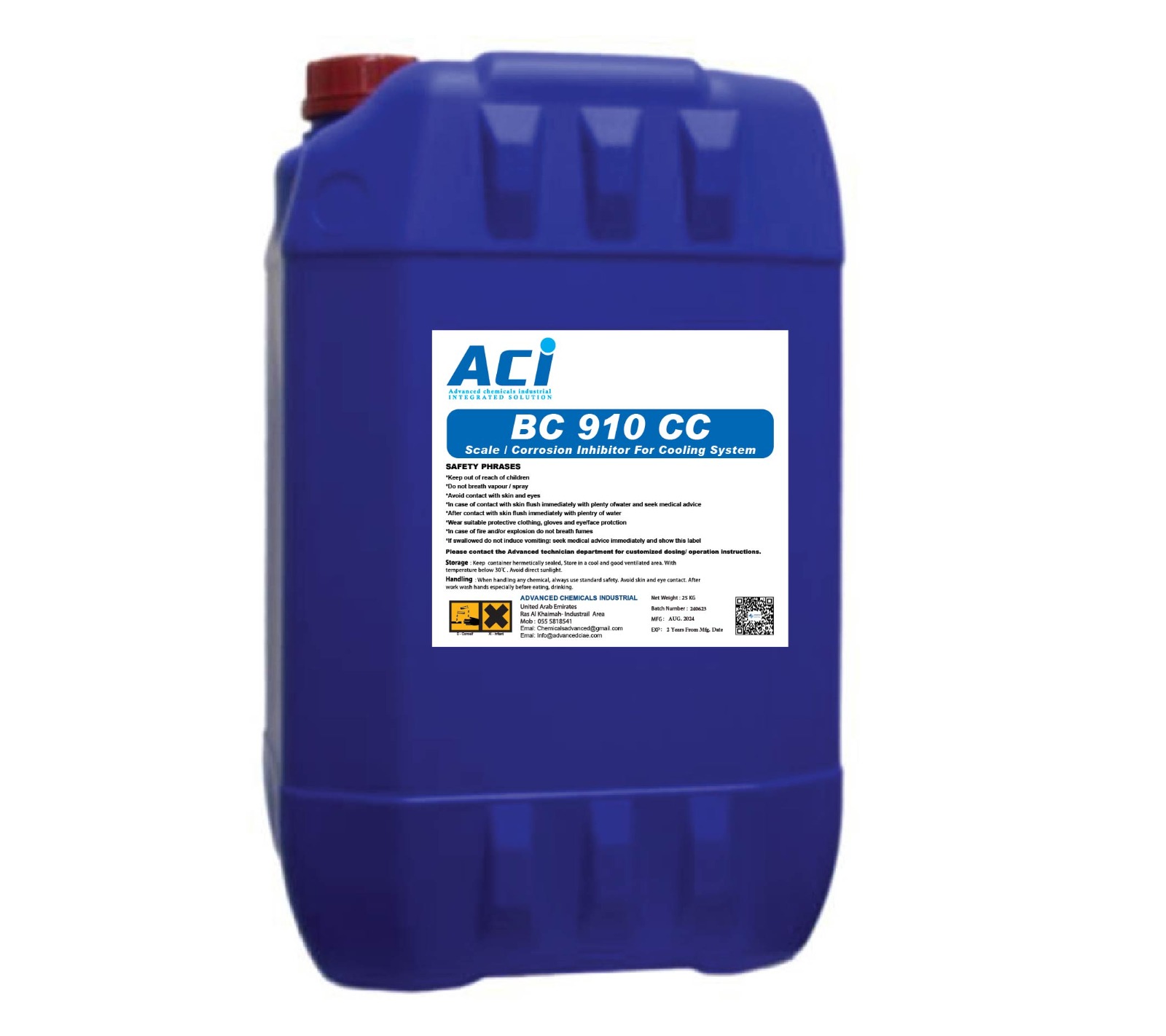
BC 910 CC Closed-Loop Chiller Inhibitor
Nitrite-based corrosion and scale inhibitor for closed-loop chilled water systems.
Antiscalants
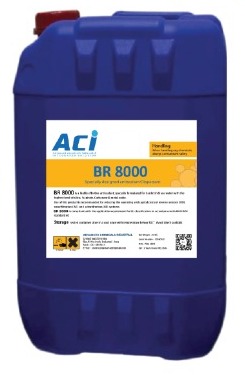
BR8000 Reverse Osmosis Antiscalant
Antiscalant for seawater and brackish water reverse osmosis, for controlling carbonate, sulphate, metal oxide and silica scale.
Related problems
How does dissolved oxygen corrode boilers and how do you stop it?
Dissolved oxygen in boiler feedwater causes pitting of feed lines, economisers and boiler surfaces. Learn the signs, checks and the oxygen scavenger approach.
What causes condensate line corrosion in steam systems?
Condensate lines corrode from carbonic acid and dissolved oxygen. See the signs, the checks to run and the neutralizing amine approach for steam and condensate.
What is RO membrane biofouling and how do you control it?
Biofouling is the growth of a bacterial biofilm on RO membranes and feed spacers. Learn the signs, causes, checks and the cleaning and disinfection approach.
What causes corrosion in closed-loop chilled water systems?
Closed chilled-water and hot-water loops corrode when oxygen enters, inhibitor residual falls or microbes grow. See the signs, checks and the nitrite inhibitor approach.
Let's discuss your water system.
Share the application and operating context to start a technical review.