
Industries
Oil and Gas
Cooling water, steam, desalination and produced or process effluent are central utilities in oil and gas facilities. This page outlines typical systems and problems.
On this page (6)
Overview
Oil and gas facilities, from processing plants to terminals and refineries, run large utility systems that must stay available through continuous operation. Cooling water, steam, desalinated utility water and effluent handling are the main water systems. This page describes them and their typical problems in general terms. It is not a statement of past work in the sector.
Which water systems are typical in an oil and gas facility?
Cooling water removes heat from process exchangers, compressors and machinery, often through large recirculating towers or once-through sea water circuits. Boilers raise steam for heating and process duties. Where fresh water is scarce, brackish or sea water RO supplies utility, boiler make-up and service water. Process, produced and domestic effluent each need collection and treatment before discharge or reuse.
What typically goes wrong?
- Corrosion of carbon steel in cooling circuits, made worse by chlorides and by poor inhibitor control.
- Scale on exchangers when cooling water is concentrated beyond what its chemistry tolerates.
- Biological fouling in cooling and in RO pretreatment, especially in warm, nutrient-rich water.
- Oxygen corrosion in boilers and condensate systems when feedwater treatment slips.
- Scaling, fouling and rising differential pressure in sea water and brackish RO membranes.
What do decision makers in the sector care about?
Operations and reliability managers care about availability: a utility fault can limit throughput on an entire unit. They look for conservative, well-documented treatment programs, predictable chemical supply to sites that may be remote, and monitoring that detects change early. Safety, handling and storage requirements for chemicals carry real weight. Procurement looks for technical clarity on what each product does and where it should not be used.
How does a problem-led approach help?
Critical utilities reward a diagnostic habit. A rising exchanger temperature, a corrosion coupon result or a climbing RO differential pressure each points to a cause that can be tested against the water analysis. Our technical team sets treatment rates from that analysis and the operating conditions, and the monitoring plan keeps the system within the limits the facility sets for itself.
Challenges
These challenges are typical of the sector in general and do not describe our own experience in it.
- Utility systems that cannot be taken offline easily, so inspection and cleaning depend on planned shutdowns.
- Saline or high-chloride water that raises corrosion risk and puts strain on RO membranes.
- Hot process surfaces that make scale and fouling form quickly when control is lost.
- Remote or hard-to-reach locations, where chemical logistics and sampling routines need planning.
- Strict internal rules for chemical handling, storage and documentation.
- Mixed metallurgy across cooling and steam systems, which affects inhibitor choice.
A water analysis and a description of the operating loop are the basis for a technical review with our technical team.
Related solutions
Cooling Water Treatment for Open Recirculating Cooling Towers
Scale, corrosion and biological control for open recirculating cooling towers, with monitoring and blowdown management built into the program.
Boiler Water Treatment for Low and Medium Pressure Boilers
Oxygen control in feedwater, pH control in the boiler, internal scale and corrosion inhibition, and neutralizing amines to protect condensate lines.
RO Chemicals: Antiscalants, Membrane Cleaners and Disinfectant
A treatment program for seawater and brackish RO plants: antiscalants to control scale, membrane cleaners to restore performance, and a disinfectant to limit biological growth.
RO Systems: Supply, Installation, Commissioning and Maintenance
Reverse osmosis systems supplied with installation, commissioning and maintenance, matched to the feed water and the water quality the process requires.
Wastewater and STP Chemicals: Coagulation, Flocculation and pH Adjustment
Chemical treatment steps for sewage treatment plants and industrial wastewater: coagulation, flocculation, pH adjustment, defoaming and clarification.
Related applications
Cooling Towers
Open recirculating cooling towers reject heat by evaporation, which concentrates the water. Scale, corrosion and biological growth are the three risks to manage.
Steam Boilers
Steam boilers concentrate dissolved solids as they raise steam. Scale and corrosion inside the boiler are the main risks, and they are managed through water chemistry, blowdown and monitoring.
Boiler Feedwater and Condensate
Feedwater and condensate lines carry the water to and from the boiler. Dissolved oxygen and carbon dioxide are the main corrosion drivers, and they are controlled with oxygen removal and pH management.
Seawater RO
Seawater RO produces fresh water from sea water through high-pressure membranes. High salinity, marine biology and scaling tendency make pretreatment and antiscalant control central.
Brackish Water RO
Brackish water RO removes dissolved salts from water of moderate salinity. Scaling, fouling and biofouling of the membranes are the main risks, and they show up first as differential pressure and output.
Related products
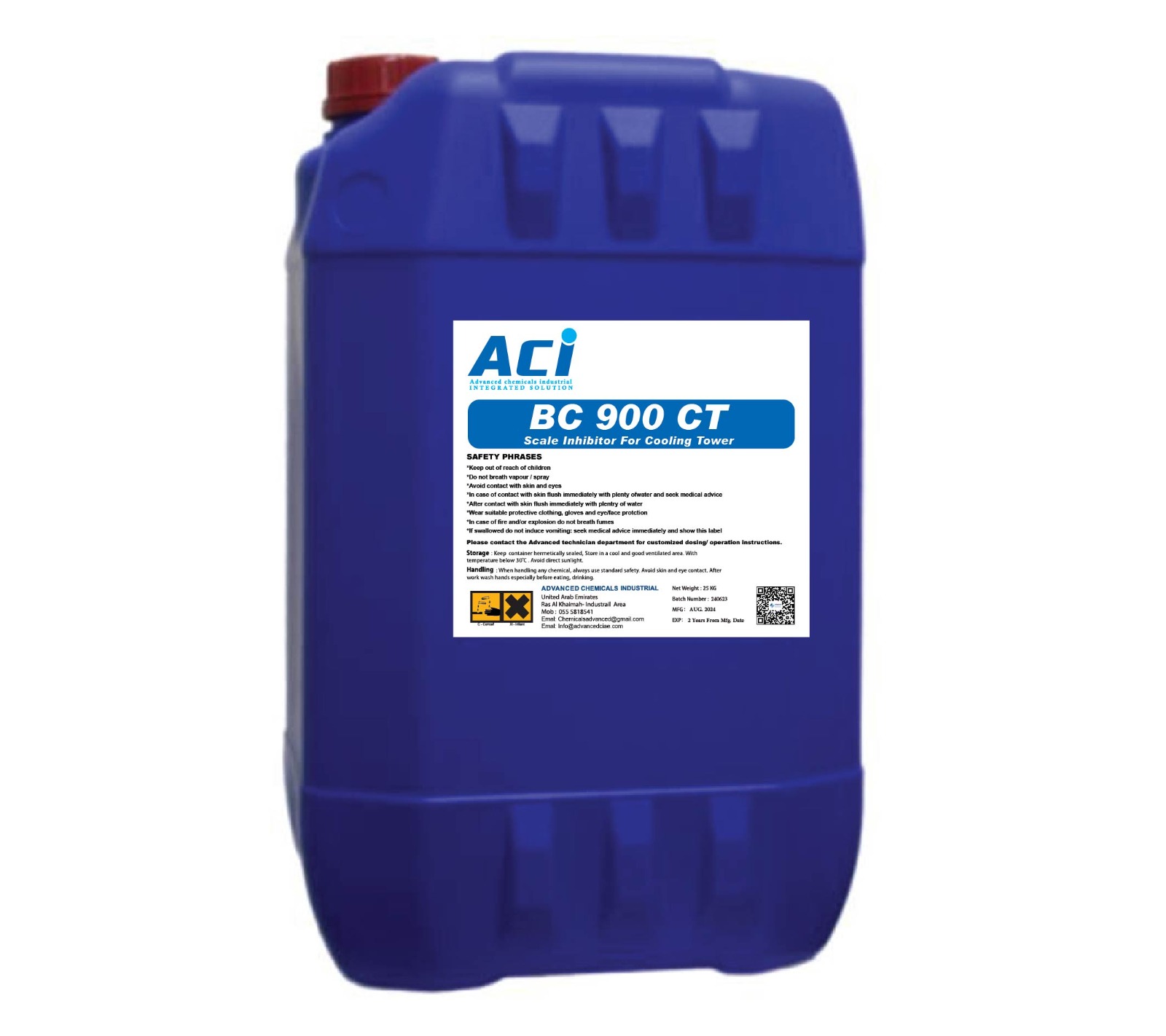
Cooling water chemicals
BC 900 CT Cooling Tower Scale and Corrosion Inhibitor
Zinc chloride based treatment that helps control corrosion and scale formation in open recirculating cooling water systems and cooling towers.
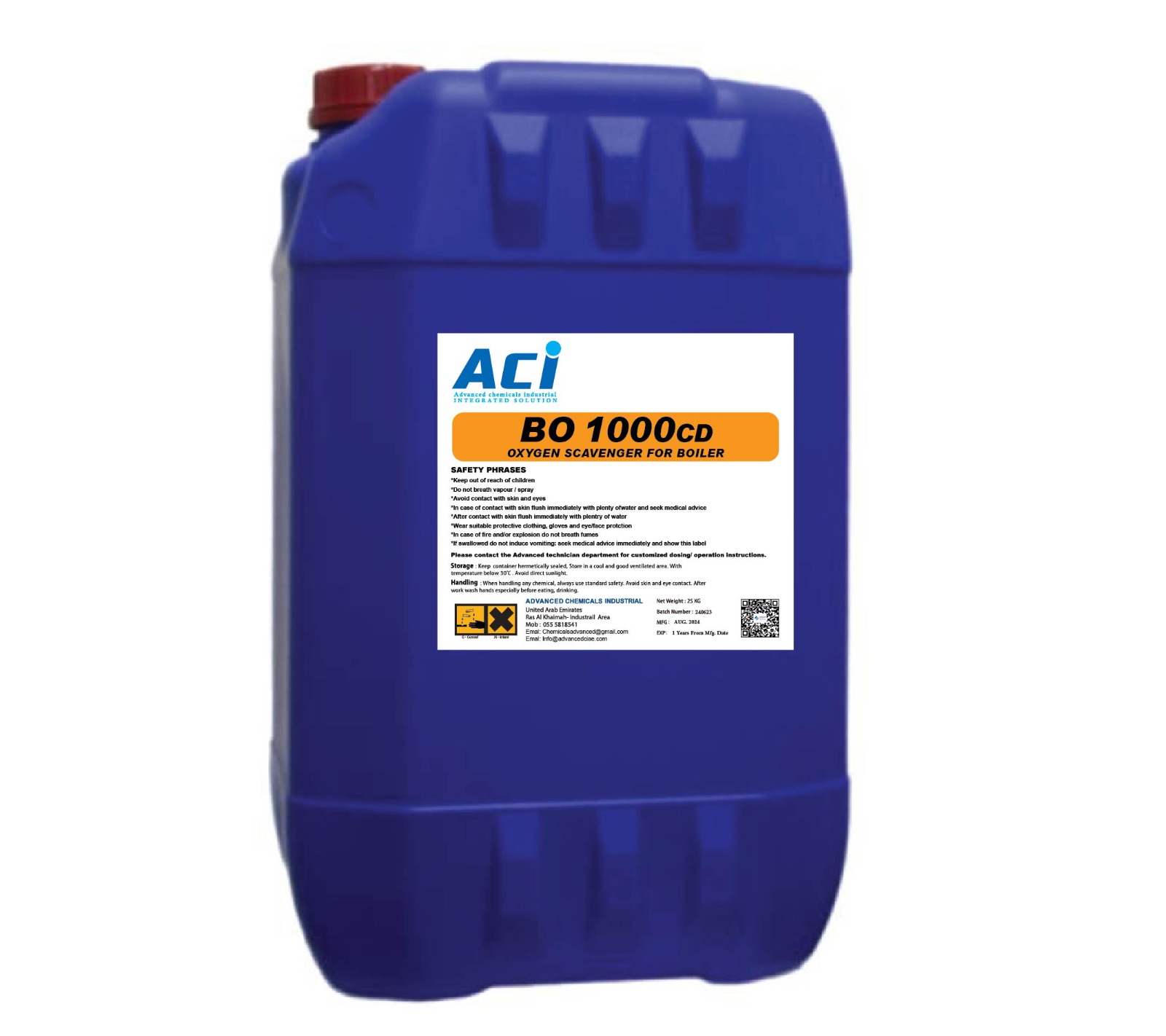
Boiler water chemicals
BO 1000 CD Boiler Oxygen Scavenger (DEHA)
DEHA based oxygen scavenger that helps control dissolved oxygen and minimise corrosion in boiler feedwater and condensate systems.
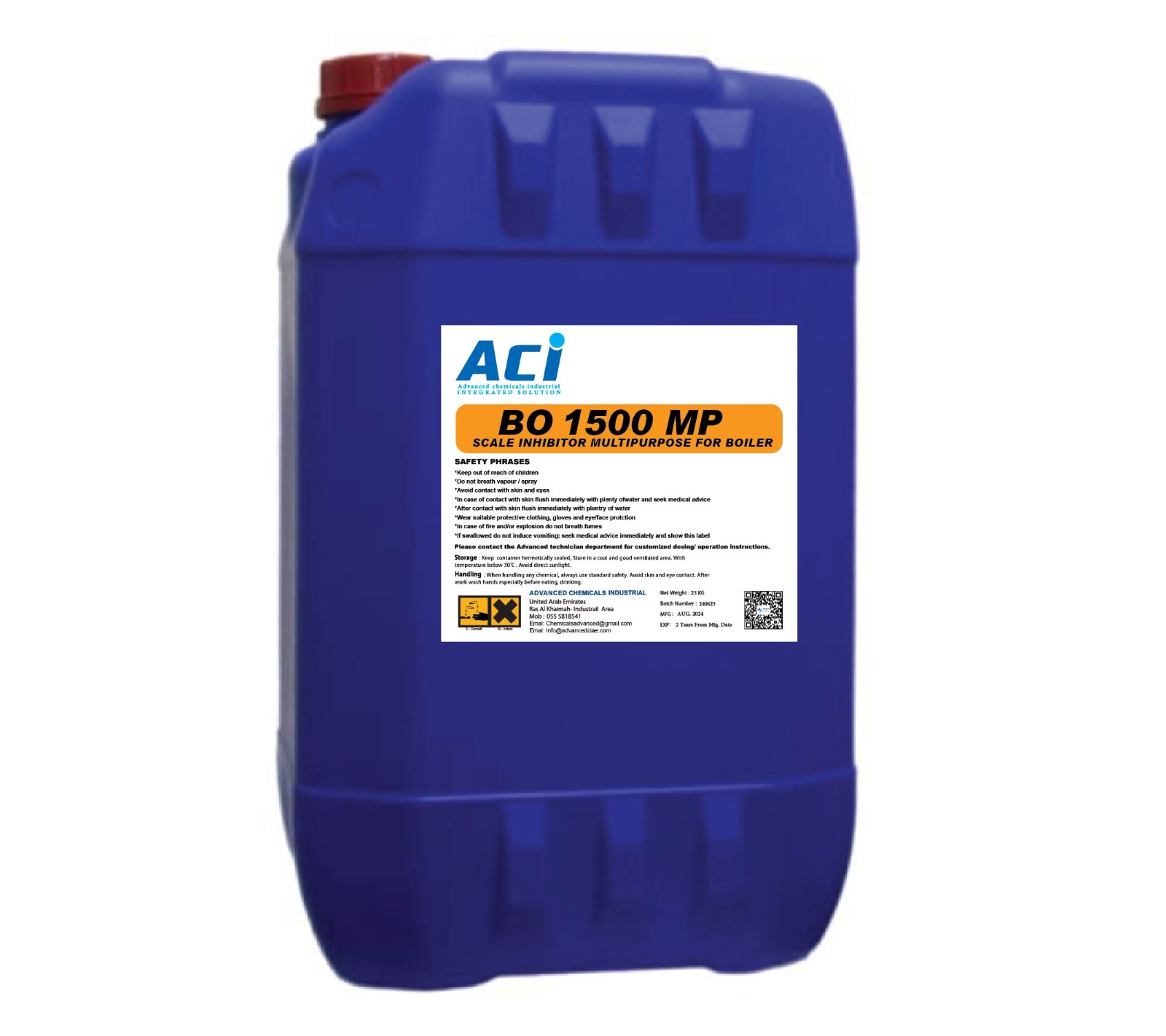
Boiler water chemicals
BO 1500 MP Neutralizing Amine for Steam and Condensate Systems
Neutralizing amine treatment that helps control acidic condensate corrosion in steam and condensate return systems.
Antiscalants
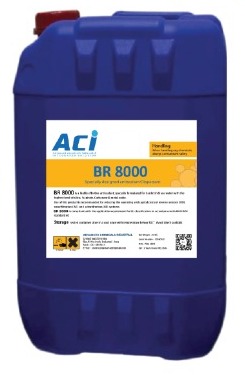
BR8000 Reverse Osmosis Antiscalant
Antiscalant for seawater and brackish water reverse osmosis, for controlling carbonate, sulphate, metal oxide and silica scale.
Related problems
What causes corrosion in cooling tower systems?
Corrosion in open recirculating cooling systems is driven by dissolved oxygen, salts, low pH and microbial activity. See the signs, checks and the inhibitor approach.
How does dissolved oxygen corrode boilers and how do you stop it?
Dissolved oxygen in boiler feedwater causes pitting of feed lines, economisers and boiler surfaces. Learn the signs, checks and the oxygen scavenger approach.
What causes RO membrane scaling and how is it controlled?
RO membrane scaling is the crystallisation of sparingly soluble salts on the membrane as the concentrate becomes saturated. See the signs, causes, checks and the treatment approach.
Why is RO differential pressure increasing?
A rising differential pressure across an RO system points to restricted feed channels. Learn how to tell fouling, scaling and pre-treatment problems apart before cleaning.
Let's discuss your water system.
Share the application and operating context to start a technical review.