
What causes corrosion in closed-loop chilled water systems?
Closed chilled-water and hot-water loops corrode when oxygen enters, inhibitor residual falls or microbes grow. See the signs, checks and the nitrite inhibitor approach.
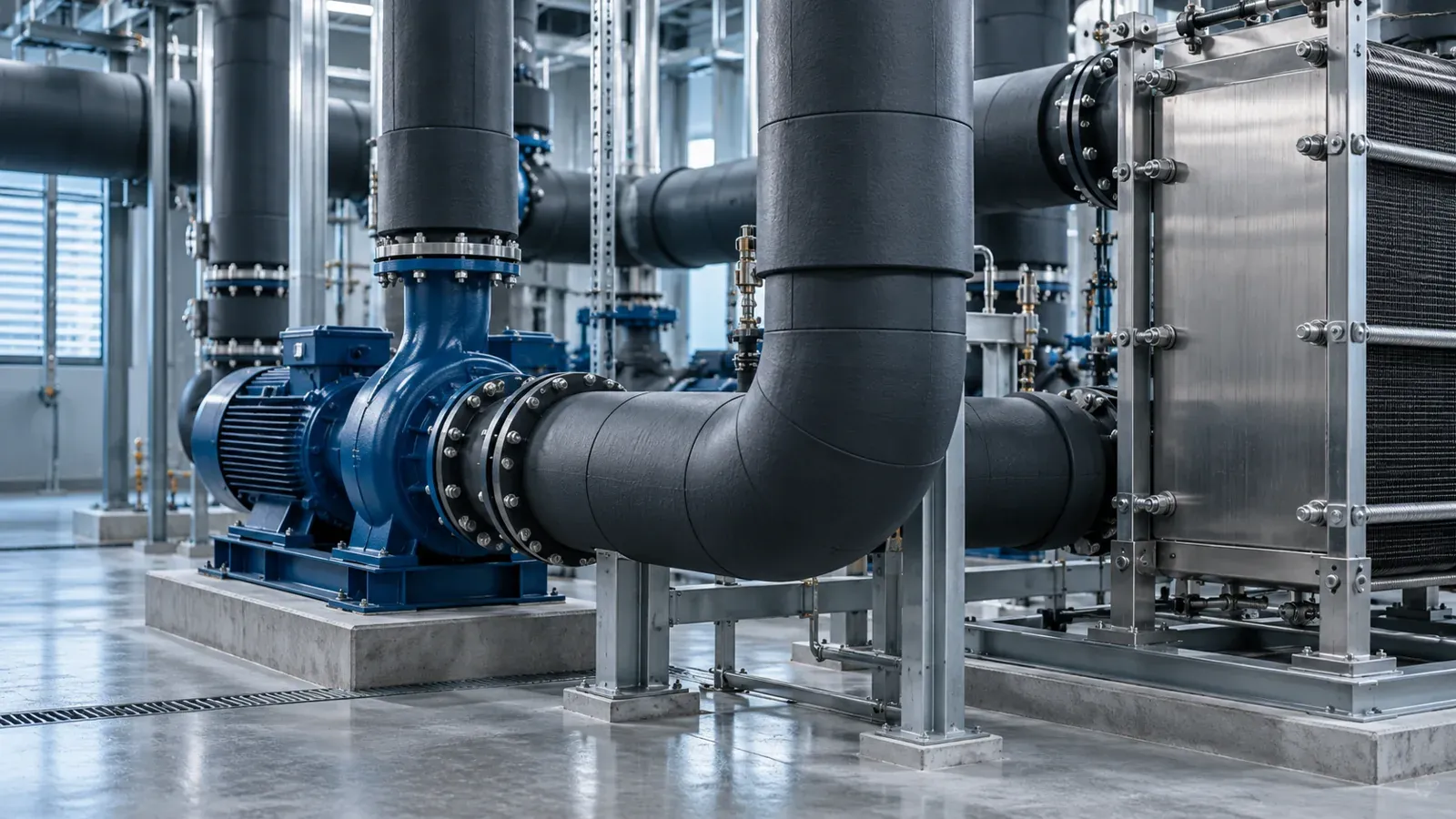 Illustration
On this page (12)
Overview
Corrosion in closed-loop chilled water systems usually comes from oxygen entering through make-up water, leaks or open expansion vessels, an inhibitor residual that has fallen too low, mixed metals, and microbial growth. It produces black or red water, pitting and fouled exchangers. Control uses a closed-loop corrosion inhibitor, monitoring of its residual, pH and corrosion indicators, and cleanliness of the loop.
Why do closed loops corrode at all?
A closed loop circulates the same water for years, so it is often assumed to be safe. In reality oxygen enters with make-up water, at pump seals, vents and expansion tanks, and after maintenance when the system is opened. Different metals share the circuit, and any untreated water left in the loop supports corrosion.
What forms does it take?
Oxygen attack produces pits that can perforate pipes and coils. Galvanic effects appear where steel meets copper alloys or aluminium. Microbiologically influenced corrosion develops beneath slime. Corrosion products themselves settle as sludge that blocks strainers and fouls heat exchangers.
Why is it often discovered late?
Because the loop is sealed, damage is hidden until a leak, a blocked coil or poor cooling reveals it. Regular sampling of the loop water is the practical way to find problems before that point.
What should be checked after maintenance or draining?
Any time a closed loop is opened, drained or topped up, the inhibitor residual changes and oxygen enters. Testing after the work, restoring the residual, and checking for air pockets and leaks are simple steps that prevent a long period of unprotected operation.
Frequently asked questions
What causes corrosion in closed-loop chilled water systems?
Even a sealed loop corrodes when oxygen enters through make-up water, leaks or open expansion tanks, when the inhibitor residual falls, or when mixed metals and deposits set up galvanic and under-deposit attack. Water that is not monitored drifts out of its protective range unnoticed.
What is a nitrite-based closed-loop chiller inhibitor?
It is a corrosion inhibitor based on sodium nitrite that forms a thin protective film on steel surfaces in closed chilled-water circuits. Its protection depends on keeping the nitrite residual within the range stated for the product, which is why regular testing of the loop water is part of the programme.
Why does a sealed chilled-water loop still need treatment?
A closed loop is never perfectly closed: make-up water, small leaks and maintenance openings let in oxygen, minerals and microorganisms. Untreated, the loop corrodes, sheds iron that fouls heat exchangers and may support microbial growth, all of which reduce cooling efficiency and shorten equipment life.
How is a closed-loop chiller inhibitor monitored?
Test the loop water for the inhibitor residual, nitrite in the case of a nitrite product, together with pH, conductivity and iron, and compare corrosion coupon results over time. A falling residual or rising iron signals a leak, make-up dilution or active corrosion that needs a response.
Can microbial growth occur in closed chilled-water systems?
Yes. Low-flow branches, dead legs and warm sections let bacteria establish biofilm even in a closed loop, and some bacteria accelerate corrosion under the film. Good circulation, clean make-up water and periodic microbiological testing, with biocide treatment where results call for it, keep the loop healthy.
How does make-up water affect a closed chilled-water loop?
Every addition of make-up water dilutes the inhibitor and brings in fresh oxygen, hardness and chlorides. Frequent or unexplained make-up is therefore a warning of leakage, and the inhibitor residual should be re-tested and restored after any significant top-up or draining.
Symptoms
Typical signs in a closed chilled-water or hot-water loop:
- Black, brown or red water in samples, or sludge collected in strainers and low points.
- Rising iron or copper in the water analysis.
- Inhibitor residual, such as nitrite, that is low or falling quickly.
- Corrosion coupons or probes showing a rising corrosion rate or pitting.
- Reduced flow, blocked coils and poor heat transfer, or leaks at fittings and exchangers.
Frequent top-ups of make-up water usually point to a leak or venting problem that is also introducing oxygen.
Water colour is a useful quick indicator. Clear water with a stable residual is reassuring, while a change from clear to dark over a short period suggests active corrosion, often after make-up or maintenance.
Strainers that clog repeatedly, or pumps that wear quickly, are indirect signs of suspended corrosion products in the loop.
Cause
The main drivers of corrosion in sealed loops are:
- Oxygen ingress through make-up water, leaks, air in the loop and open or poorly sealed expansion vessels.
- An inhibitor residual that has fallen through leaks, dilution by make-up water or bleed, or that was never established at the right level.
- Mixed metals in the circuit, and a pH that is not suited to all of them.
- Microbial growth and sludge that create under-deposit conditions.
- Poor cleaning and flushing before filling, leaving debris or old deposits in the system.
Make-up water adds both oxygen and fresh salts, which is why its volume is itself a diagnostic.
Dead legs, isolated sections and standby equipment are often outside the treatment flow. Water in them loses its inhibitor and corrodes unnoticed, then contaminates the loop when it is put back into service.
Approach in steps
Diagnosis
Regular loop sampling and a few well-chosen checks reveal the cause.
- Measure the inhibitor residual, such as nitrite for a nitrite-based product, and compare it with the previous results.
- Measure pH and conductivity, and look for a change after make-up or draining.
- Test the water for iron, copper and total suspended matter to confirm active corrosion and sludge.
- Read corrosion coupons or probes for each metal in the loop.
- Check microbiological counts, and record how much make-up water has entered the loop.
If the residual keeps falling, look for leaks, unintended bleed and the condition of expansion vessels and air vents.
Record sampling results with dates and any event such as draining, top-up or repair, so that a change in the residual can be linked to its cause.
Treatment approach
Treatment protects every metal in the loop while the system is sealed.
- Corrosion inhibitor: a nitrite-based closed-loop chiller inhibitor, introduced through a chemical feed pot or metering pump, forms a protective film on metal surfaces.
- Cleaning before treatment: dirty or heavily corroded loops are flushed or cleaned so that the inhibitor can reach clean metal.
- Biological control: a biocide is used when microbial counts show growth.
- Residual management: the inhibitor is topped up after leaks, draining or make-up, based on residual testing.
The treatment rate is set by our technical team from the water analysis and operating conditions, and it is followed by checks of nitrite residual, pH, conductivity and corrosion indicators.
Results are reviewed after each correction to confirm that the residual holds and the loop water stays clear.
Send your operating data and a recent water analysis to our technical team for a technical review.
Related solutions
Programs
Chilled Water Treatment for Closed-Loop Systems
Nitrite-based corrosion and scale inhibition for closed chilled-water loops, with nitrite residual monitoring and biocides suitable for closed circuits.
Related products
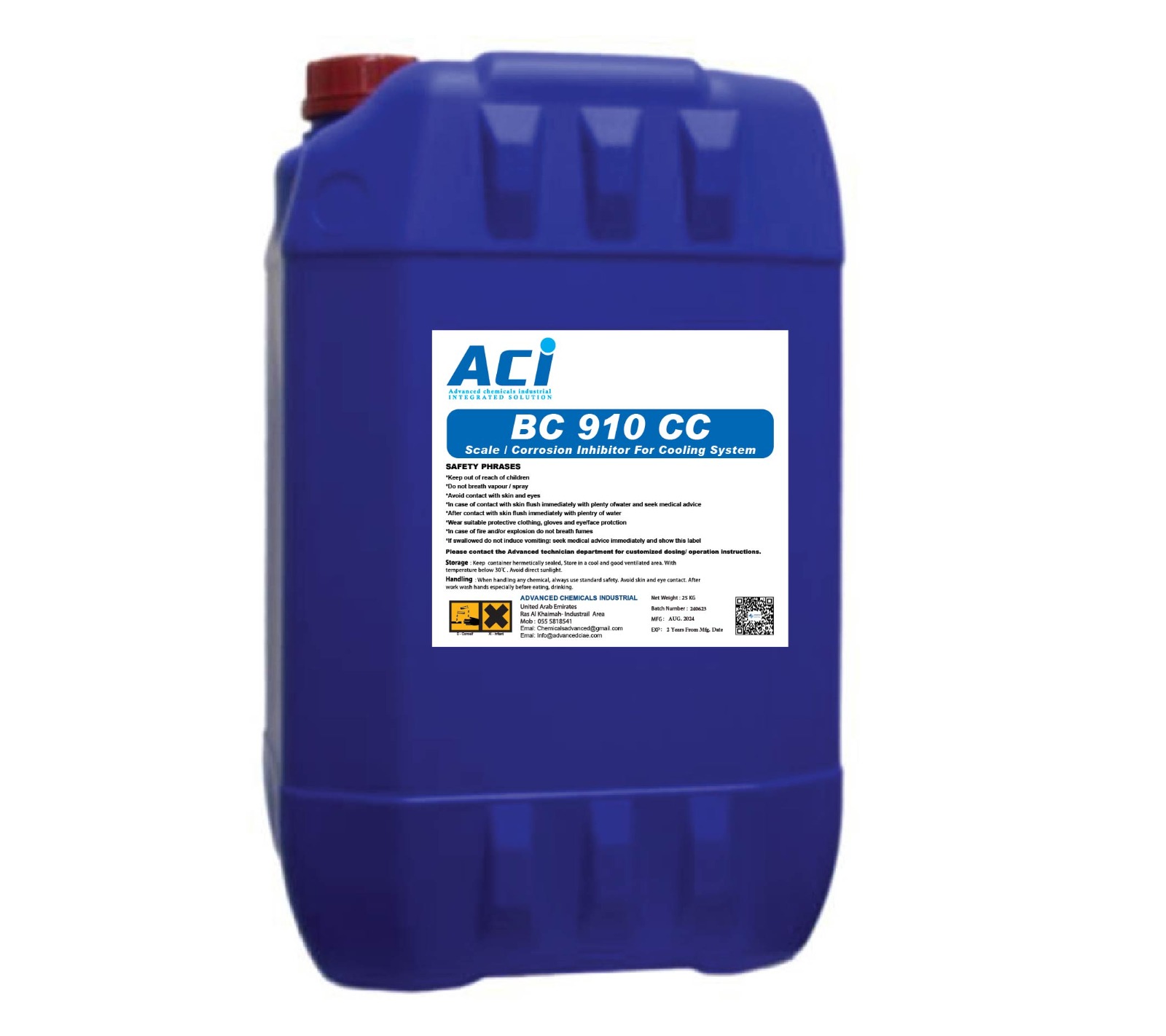
Cooling water chemicals
BC 910 CC Closed-Loop Chiller Inhibitor
Nitrite-based corrosion and scale inhibitor for closed-loop chilled water systems.
Let's discuss your water system.
Share the application and operating context to start a technical review.