
What causes corrosion in cooling tower systems?
Corrosion in open recirculating cooling systems is driven by dissolved oxygen, salts, low pH and microbial activity. See the signs, checks and the inhibitor approach.
 Illustration
On this page (12)
Overview
Corrosion in cooling tower systems is driven by dissolved oxygen, aggressive salts such as chlorides and sulfates, low or unstable pH, galvanic couples and microbial activity under deposits. It thins metal, causes pitting and leaks, and produces iron deposits that foul exchangers. Control relies on balanced water chemistry, a corrosion inhibitor, biological control and regular monitoring by corrosion coupons or indicators.
Why is an open cooling system prone to corrosion?
Water in an open tower is constantly aerated, so it stays saturated with oxygen, and evaporation concentrates salts. Mixed metals such as carbon steel, copper alloys, stainless steel and galvanized components share the same water, which adds galvanic effects.
What forms does corrosion take?
General corrosion removes metal evenly and produces iron oxide that settles as sludge. Pitting is more dangerous because it is local and can perforate a tube with little overall metal loss. Under-deposit and microbiologically influenced corrosion occur where slime or scale shelters the surface from the treatment.
What does it lead to?
Corrosion products reduce heat transfer, block strainers and nozzles, and can create leaks in exchangers and pipework. Repairs, tube replacement and unplanned downtime follow, so the cost of weak corrosion control usually exceeds the cost of treating the water.
How do scale and corrosion control fit together?
A cooling programme has to protect against both. Pushing pH or cycles too high favours scale, while running the water too aggressive favours corrosion. A combined scale and corrosion inhibitor, with the water kept in balance, protects the metal while keeping hardness salts in solution.
Frequently asked questions
What causes corrosion in cooling towers?
Corrosion follows from dissolved oxygen, low or aggressive pH, high chloride and sulfate content, galvanic contact between different metals, and deposits or biofilm that create under-deposit attack. Concentrating the water by evaporation makes each of these worse unless blowdown and inhibitor treatment keep the chemistry in balance.
Why does cooling water conductivity matter?
Conductivity is a quick indicator of how concentrated the circulating water has become, so it is the usual control signal for blowdown. Too high and scale and corrosion risk rise; too low and water and chemicals are wasted. It supports, but does not replace, a full water analysis.
How can cooling tower scale be told apart from corrosion?
Scale appears as hard, pale, adherent crust on warm surfaces and fill, and shows up as falling heat transfer. Corrosion appears as red-brown or black tuberculation, pitting, metal loss and iron in the water. Inspection of exchanger surfaces plus water and coupon results settle which one dominates.
Symptoms
Corrosion is often detected through its by-products or by inspection:
- Reddish-brown or black water, or iron-rich sludge in the basin and strainers.
- Corrosion coupons or probes show a rising corrosion rate or pitting.
- Leaks, thin-walled pipes or tubes found at exchangers, condensers or pump casings.
- Rising iron or copper in the recirculating water analysis.
- Tubercles, pits or flaking on surfaces seen at inspection or cleaning.
Corrosion can also appear as a loss of heat-transfer performance caused by corrosion product deposits rather than by scale.
Where several metals are present, the symptoms differ. Carbon steel shows iron-coloured water and tubercles, copper alloys show green-blue staining and copper in the analysis, and galvanized parts lose their coating. Reading each metal separately gives a clearer view of what is happening.
Cause
Several factors combine to attack metal in cooling circuits:
- Dissolved oxygen supplied continuously by the tower.
- Chloride and sulfate that rise with cycles of concentration and break down protective films.
- pH that is too low, or that swings with make-up water or acid feed.
- Under-deposit conditions beneath scale, sludge or microbial slime.
- Galvanic couples between different metals, and stagnant or low-flow zones.
- Inhibitor residual that is too low, interrupted, or inappropriate for the metals present.
Because corrosion and scale are linked, a programme that fixes only one often worsens the other.
Cleaning chemicals, process leaks and acid feed faults can all change the pH suddenly. A short excursion may do lasting damage because it strips the protective film, so excursions should be logged and investigated.
Approach in steps
Diagnosis
Diagnosis relies on measuring the corrosion itself and the water conditions that drive it.
- Evaluate corrosion coupons or probes for each metal in the system, with attention to pitting as well as general loss.
- Review pH, conductivity, chloride, sulfate and alkalinity trends against the intended control ranges.
- Measure the inhibitor residual, such as the zinc residual of a zinc-based inhibitor, and confirm that the feed is continuous.
- Look at iron and copper in the water as signs of active corrosion.
- Inspect the basin, strainers, fill and exchangers for deposits and for slime, and check microbiological counts.
When corrosion is localized, examining the deposit and the metal surface helps distinguish under-deposit and microbial attack from simple oxygen corrosion.
Compare coupon results over a full exposure period rather than a single reading, since the rate may change as films develop or deposits build.
Treatment approach
The aim is a protective film on every metal and water that does not strip it.
- Corrosion inhibitor: a zinc-based cooling tower scale and corrosion inhibitor, fed continuously with a chemical metering pump, builds a protective layer while controlling scale.
- Water balance: pH and cycles of concentration are controlled so that chlorides and sulfates stay within the tolerance of the metals.
- Biological control: a biocide programme limits slime and microbial corrosion.
- Cleaning and passivation: heavily fouled or corroded systems are cleaned before the protection programme is established.
The treatment rate is set by our technical team from the water analysis and operating conditions, and it is monitored with corrosion indicators, pH, conductivity and inhibitor residual.
Results are reviewed regularly and the programme is adjusted when the water, the load or the metals in the system change.
Send your operating data and a recent water analysis to our technical team for a technical review.
Related solutions
Programs
Cooling Water Treatment for Open Recirculating Cooling Towers
Scale, corrosion and biological control for open recirculating cooling towers, with monitoring and blowdown management built into the program.
Related products
Cooling water chemicals
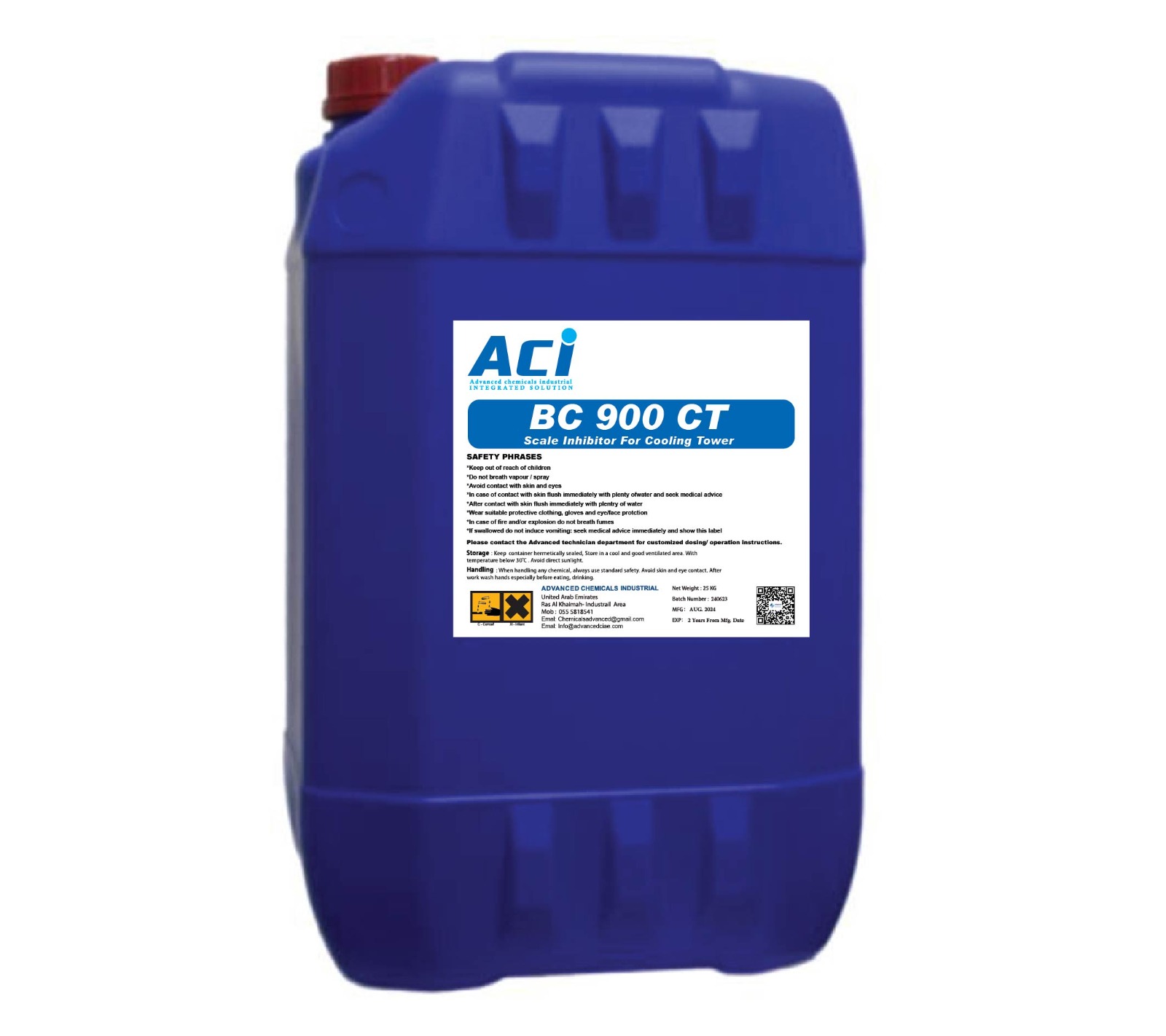
BC 900 CT Cooling Tower Scale and Corrosion Inhibitor
Zinc chloride based treatment that helps control corrosion and scale formation in open recirculating cooling water systems and cooling towers.
Cooling water chemicals
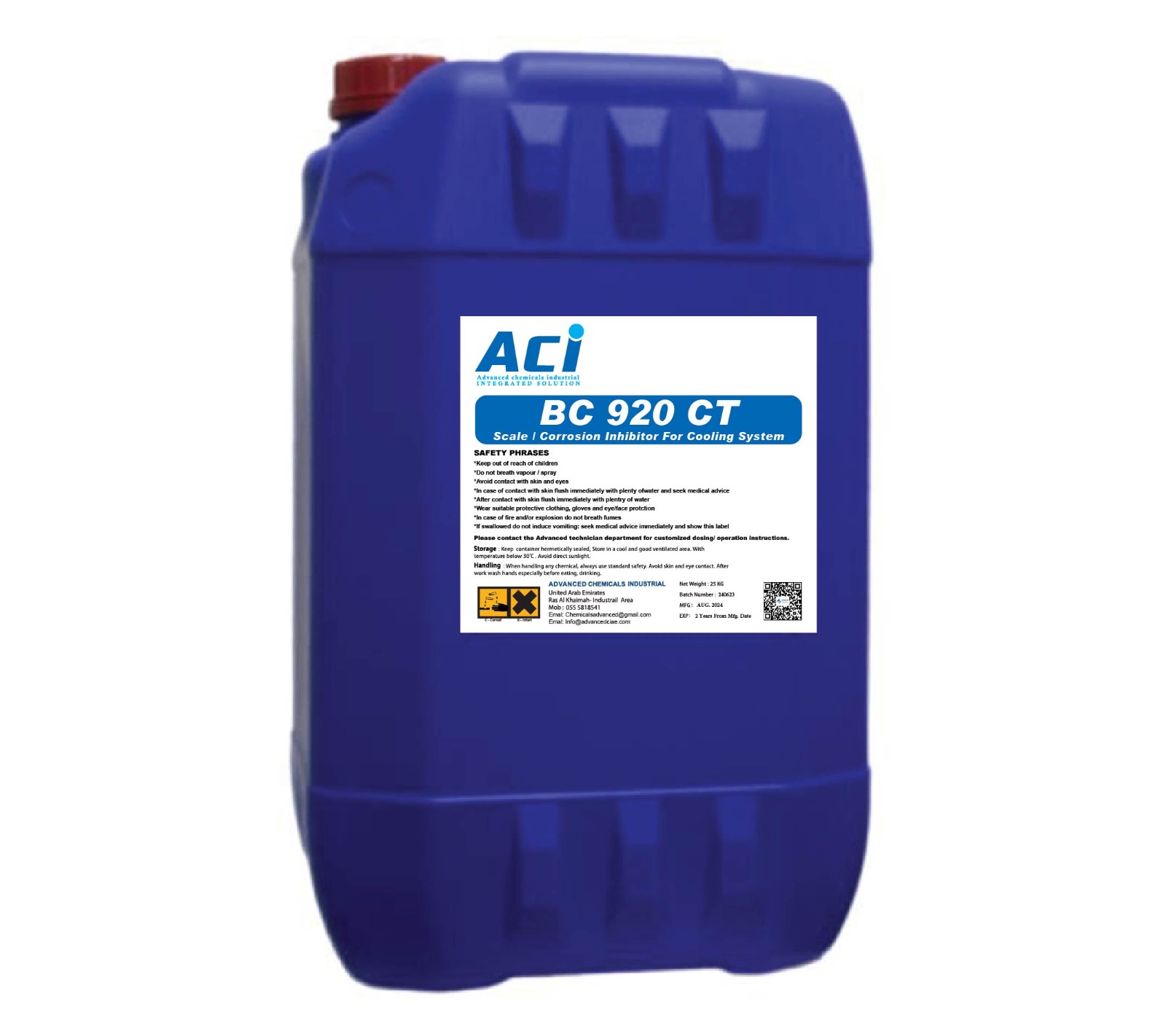
BC 920 CT Cooling System Scale and Corrosion Inhibitor
Scale and corrosion inhibitor for cooling systems, as named on the product label.
Let's discuss your water system.
Share the application and operating context to start a technical review.