
How do you control biological growth in cooling water?
Bacteria, algae and biofilm thrive in warm, nutrient-rich cooling water. Learn the signs, causes, microbiological checks and the biocide approach.
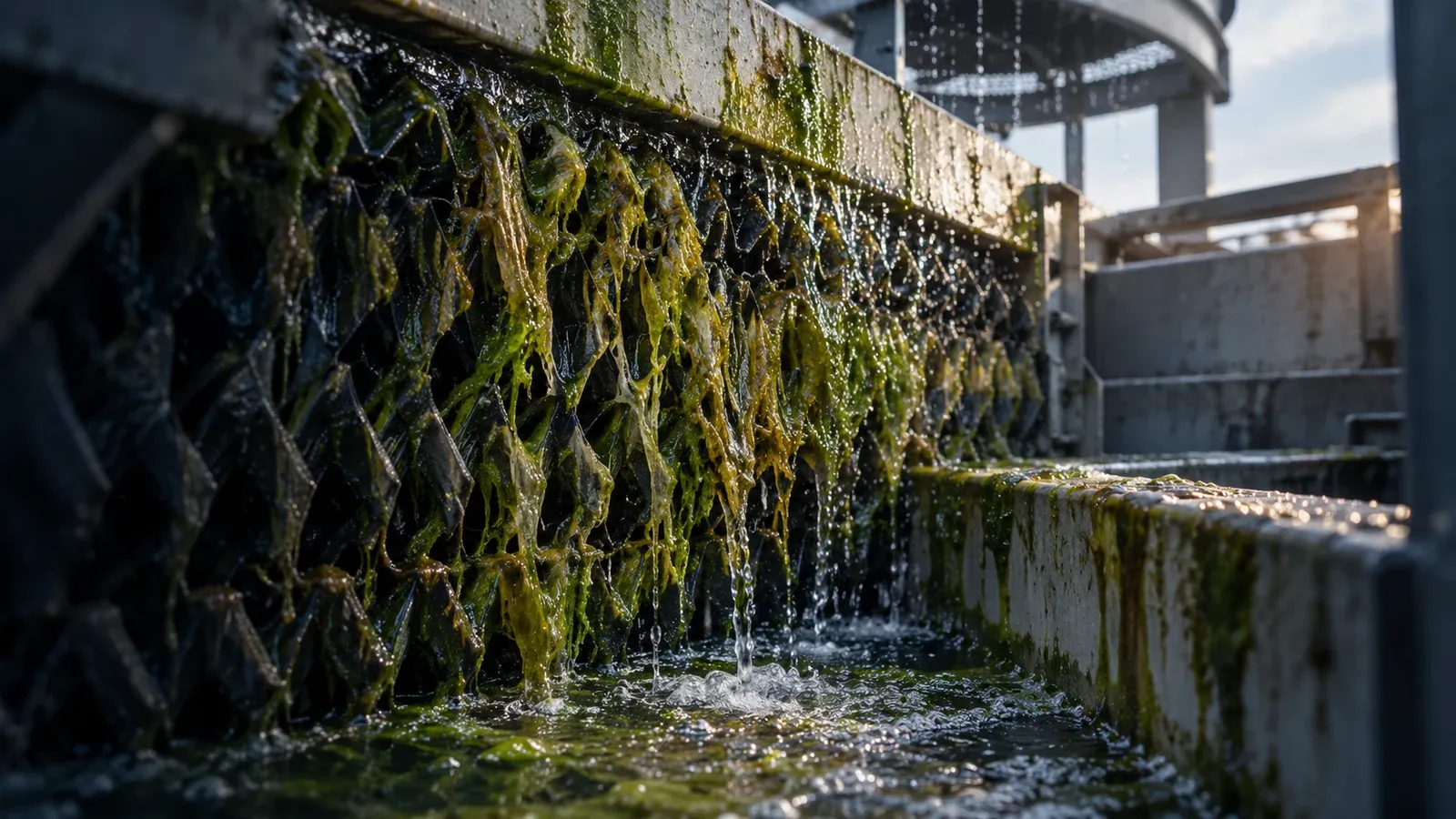 Illustration
On this page (12)
Overview
Biological growth in cooling water is the multiplication of bacteria, algae and fungi, and the slime they form, in warm, aerated and nutrient-rich systems. It lowers heat transfer, restricts flow, drives under-deposit corrosion and creates a health risk. Control combines regular microbiological monitoring, cleanliness of the tower, a suitable biocide programme and correct treatment of the rest of the water chemistry.
Why does cooling water support microbial growth?
Open recirculating systems are warm, aerated and constantly supplied with nutrients from make-up water, dust and process leaks. Sunlight on the tower deck encourages algae. Dead legs, low-flow zones and fouled surfaces give organisms places to settle and form a protective biofilm.
What problems does growth cause?
A biofilm is an insulating layer, so heat transfer falls and energy use rises. Slime traps debris and scale, blocks distribution decks and nozzles, and shelters organisms from treatment. Underneath it, microbiologically influenced corrosion can attack metal quickly. In addition, certain organisms in warm water systems are a public health concern, which makes monitoring and control a responsibility and not an option.
How do closed loops differ?
Closed chilled-water loops are not exposed to the air like a tower, but they can still carry bacteria that foul exchangers and cause corrosion, particularly after make-up or maintenance work. Control is applied with the same logic, using products suited to the loop.
Why does Legionella monitoring belong in this discussion?
Warm, aerated water systems can support organisms that are a risk to health when aerosols are released from the tower. Routine microbiological monitoring, clean surfaces and a consistent biocide programme are part of responsible operation, and any microbiological concern should be handled through the appropriate health and safety procedures of the site.
Frequently asked questions
How is biological growth controlled in cooling water?
Control combines a clean, well-drained system, removal of deposits that shelter organisms, and a biocide programme monitored by microbiological testing. Isothiazolinone-based and DBNPA-based biocides are both used in cooling systems, and alternating them is a common way to keep microorganisms from adapting.
Can microbial growth occur in closed chilled-water systems?
Yes. Low-flow branches, dead legs and warm sections let bacteria establish biofilm even in a closed loop, and some bacteria accelerate corrosion under the film. Good circulation, clean make-up water and periodic microbiological testing, with biocide treatment where results call for it, keep the loop healthy.
Symptoms
Biological growth is visible in the system and in the numbers:
- Green algae on the fill, deck and basin, or slimy deposits on wetted surfaces.
- Slime in strainers, on heat exchangers and in distribution nozzles.
- A musty or sour smell, foaming, or cloudy, discoloured water.
- Microbiological counts that rise or fail to fall after a treatment.
- Falling heat-transfer performance and corrosion beneath slime found at inspection.
Higher biocide demand, with an oxidant residual that disappears quickly, is a typical sign of heavy organic and microbial load.
Seasonal patterns are common. Algae are worse in sunny, hot periods, bacteria counts rise after maintenance or make-up changes, and problems often follow a shutdown when stagnant water is returned to service.
Records of past outbreaks, and of the time between a biocide addition and the return of growth, help to judge how effective the programme really is.
Cause
Growth results from conditions that favour organisms and from gaps in the control programme:
- Warm, aerated water with a continuous supply of nutrients and organic matter.
- Sunlight on open decks, which encourages algae.
- Poor cleanliness of the basin, fill and strainers, and process leaks that add food for bacteria.
- A biocide programme that is irregular, unsuitable for the organisms, or relies on a single product, so that resistance and survival increase.
- Dead legs, stagnant lines and standby equipment without circulation or treatment.
- Scale and corrosion products that provide a protected surface.
Control of one factor alone rarely holds, since growth, scale and corrosion each feed the others.
Treatment that is applied only as a reaction to visible slime also allows regrowth. Consistent control is more effective than occasional shocks, and records of when and how products were added help judge the programme.
Approach in steps
Diagnosis
Monitoring shows what the organisms are doing before the system shows damage.
- Carry out microbiological testing on a regular schedule and compare results with earlier samples, before and after biocide additions.
- Check the biocide residual and its decay, and confirm that the product feed works as intended.
- Inspect the basin, deck, fill and strainers for algae and slime, and check dead legs and standby lines.
- Review pH and conductivity, because an unsuitable pH reduces the effect of some biocides.
- Look at corrosion indicators and at heat-transfer data for signs of under-slime attack.
Where counts stay high despite treatment, check whether the organisms are in the bulk water or in the biofilm, since both need different action.
Sample from several points, including the basin and the return, and note the time of sampling relative to biocide additions, because a count taken just after treatment can look better than the real condition.
Treatment approach
A programme combines physical cleanliness with chemical control.
- Biocide: cooling system biocides, such as isothiazolinone CMIT and MIT or DBNPA products, are applied by a chemical metering pump to control bacteria, algae and fungi.
- Alternating biocides: using different types reduces the chance that organisms adapt.
- Cleaning: a biodispersant or cleaning step removes established biofilm so that the biocide can reach the organisms.
- Housekeeping: shading, clean basins, flushing of dead legs and treatment of standby equipment limit regrowth.
The treatment rate is set by our technical team from the water analysis and operating conditions, and it is verified with microbiological monitoring.
Programme records and monitoring results are reviewed together so that changes are made on evidence.
Send your operating data and a recent water analysis to our technical team for a technical review.
Related solutions
Programs
Cooling Water Treatment for Open Recirculating Cooling Towers
Scale, corrosion and biological control for open recirculating cooling towers, with monitoring and blowdown management built into the program.
Programs
Chilled Water Treatment for Closed-Loop Systems
Nitrite-based corrosion and scale inhibition for closed chilled-water loops, with nitrite residual monitoring and biocides suitable for closed circuits.
Related products
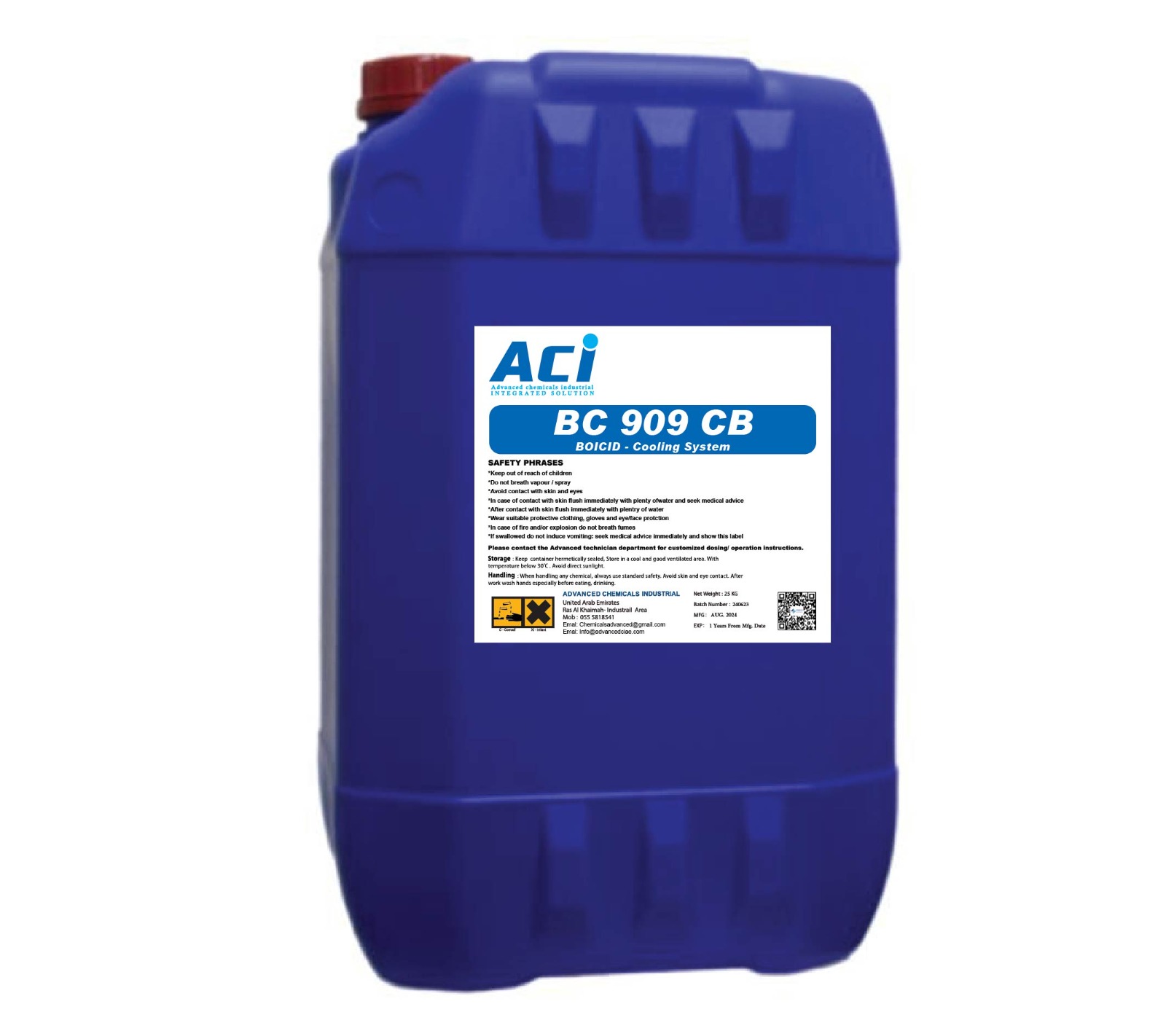
Cooling water chemicals
BC 909 CB Cooling System Biocide
CMIT/MIT based biocide that helps control bacteria, algae, fungi and slime in industrial and commercial cooling water systems.
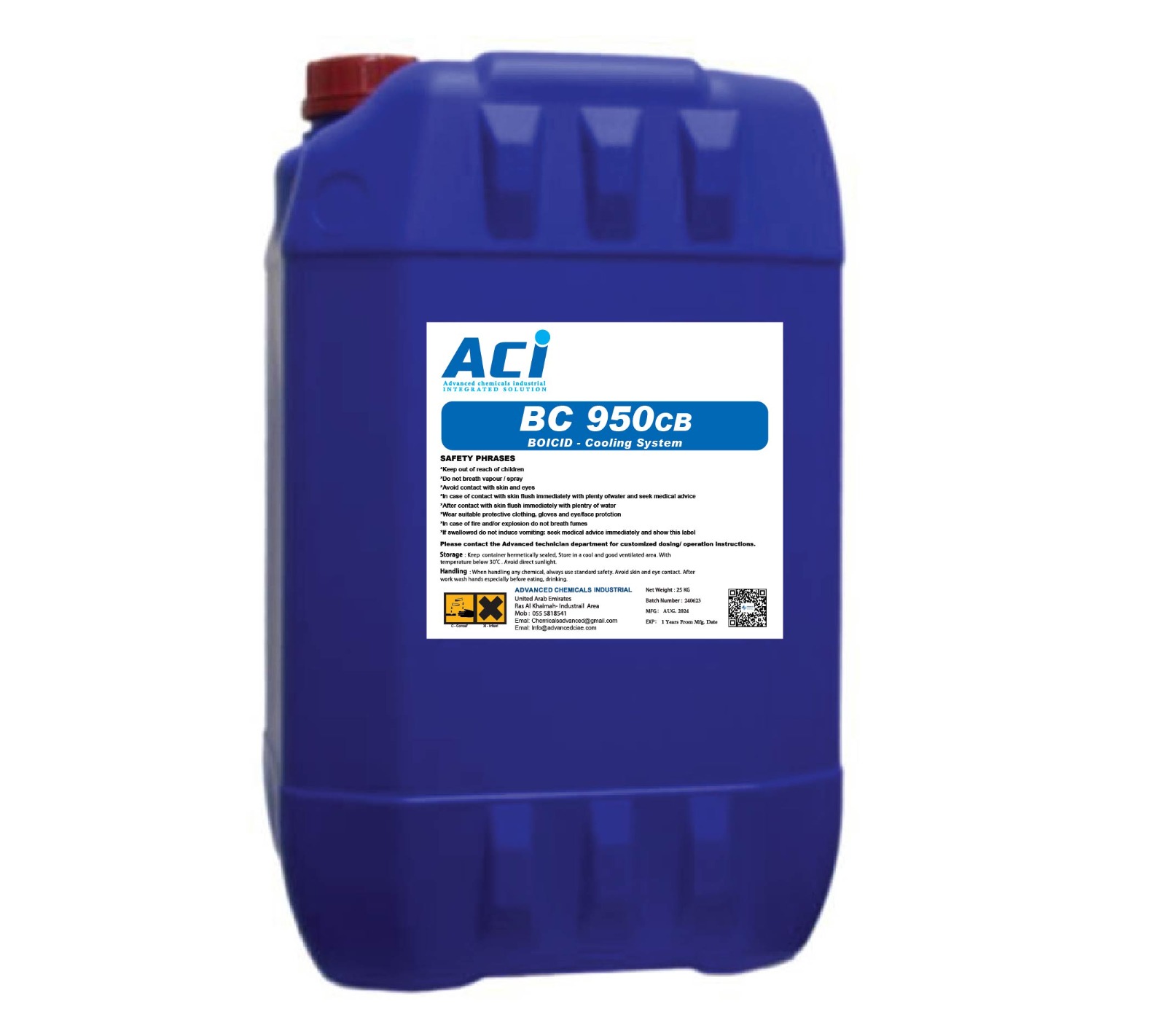
Cooling water chemicals
BC 950 CB Cooling System Biocide
Biocide that helps control bacteria, algae, fungi and slime in industrial and commercial cooling water systems.
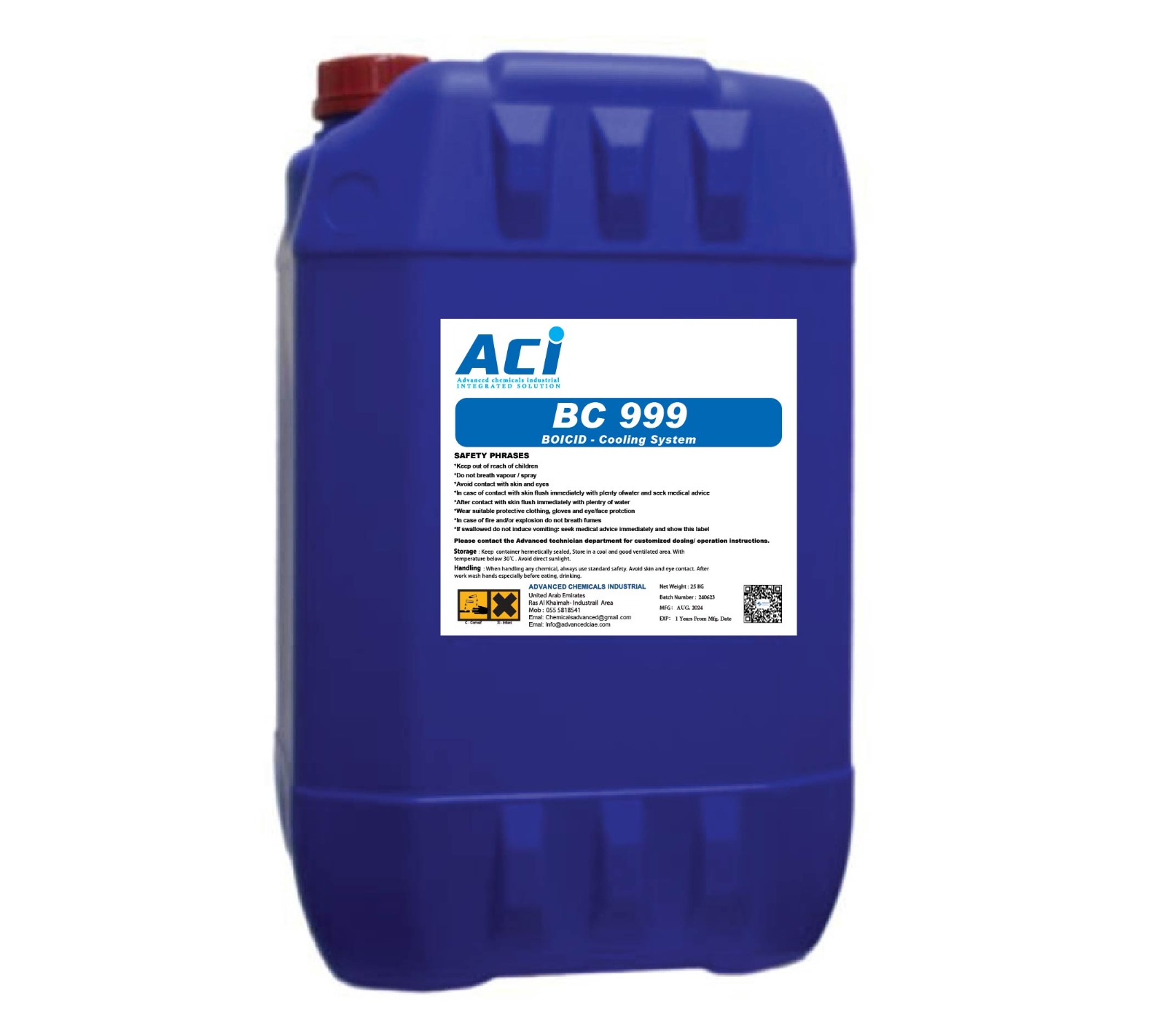
Cooling water chemicals
BC 999 Fast-Acting Cooling System Biocide (DBNPA)
DBNPA biocide for rapid control of microbiological growth in industrial and commercial cooling water systems.
Let's discuss your water system.
Share the application and operating context to start a technical review.