
What causes scale in cooling towers and how do you stop it?
Cooling tower scale forms when evaporation concentrates hardness and alkalinity beyond their solubility. See the signs, causes, checks and the scale inhibitor approach.
 Illustration
On this page (12)
Overview
Scale forms in cooling towers because evaporation concentrates dissolved hardness and alkalinity until calcium carbonate and similar salts crystallize on warm heat-transfer surfaces. It lowers heat exchange, raises energy use and restricts flow. Control combines managing cycles of concentration through blowdown, monitoring conductivity, pH and hardness, and a scale and corrosion inhibitor selected from the make-up water analysis.
Why does a cooling tower scale?
An open recirculating cooling system loses pure water by evaporation, while the salts in the make-up water stay behind. The recirculating water therefore becomes more concentrated with every cycle. Calcium carbonate is less soluble in warm water, so it deposits first on the hottest surfaces: heat exchangers, condenser tubes and chiller bundles.
What does scale cost an operation?
A thin mineral layer insulates the tube, so the chiller works harder to reject the same heat. Condenser approach temperature rises, energy use grows, flow is restricted and cleaning shutdowns become necessary. Scale also shelters bacteria and creates sites where corrosion starts beneath the deposit.
How is scale related to corrosion?
Scale and corrosion pull the treatment programme in opposite directions. Aggressive water attacks metal, while scaling water coats it. A good programme keeps the water balanced and uses an inhibitor that protects against both.
How do cycles of concentration control scale?
Cycles of concentration describe how many times the make-up water is concentrated before it leaves through blowdown. Higher cycles save water, but they push hardness and alkalinity closer to their limits. The right level is set from the make-up water analysis and the capability of the inhibitor, and conductivity is the usual tool for keeping it under control.
Frequently asked questions
What causes scale in cooling towers?
Evaporation concentrates dissolved hardness and alkalinity in the recirculating water. Where solubility is exceeded, especially on warm heat-transfer surfaces, calcium carbonate and related salts crystallize and deposit. High cycles of concentration, high pH and high temperature all raise the scaling tendency.
Why does cooling water conductivity matter?
Conductivity is a quick indicator of how concentrated the circulating water has become, so it is the usual control signal for blowdown. Too high and scale and corrosion risk rise; too low and water and chemicals are wasted. It supports, but does not replace, a full water analysis.
How can cooling tower scale be told apart from corrosion?
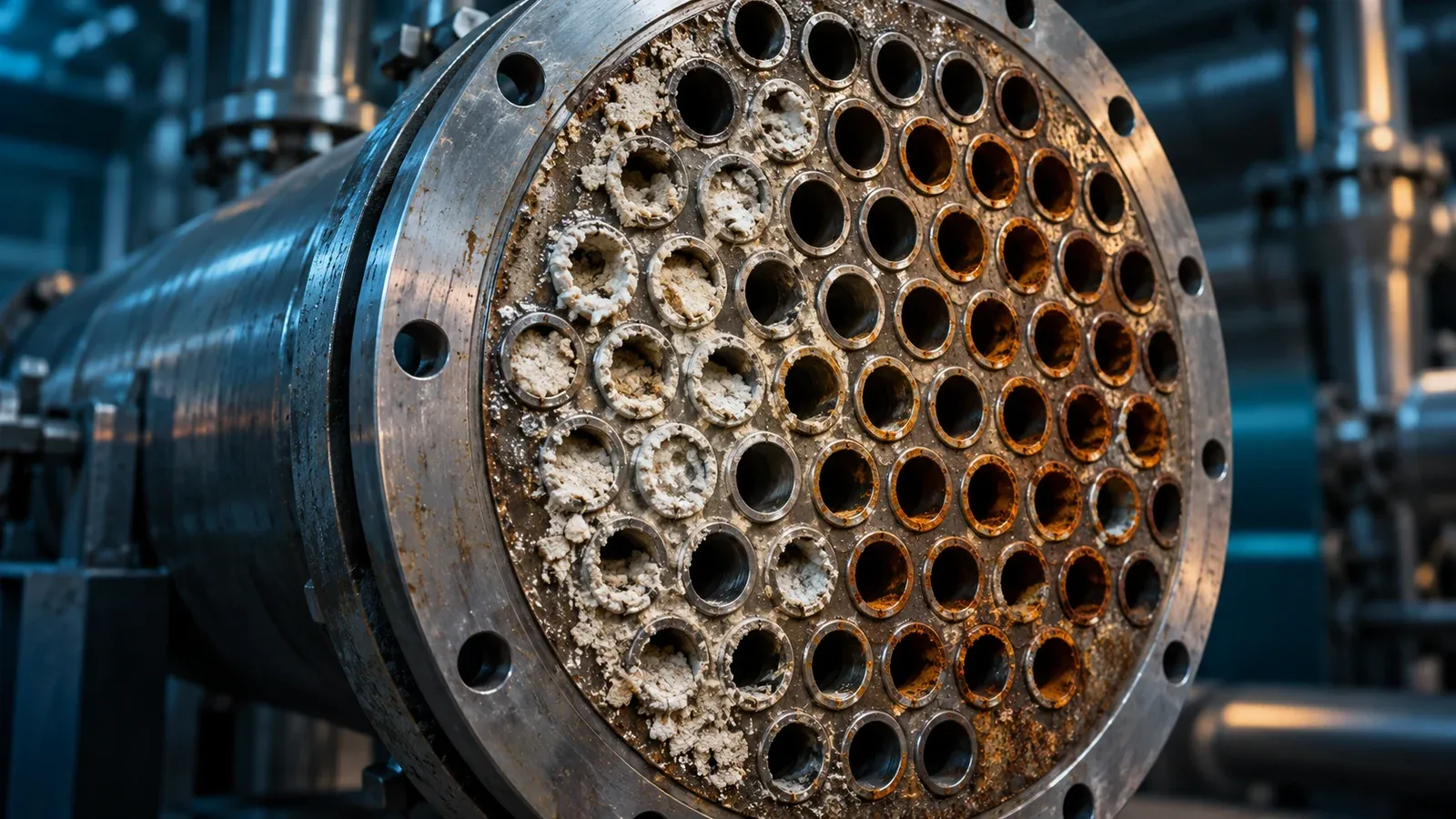
Scale appears as hard, pale, adherent crust on warm surfaces and fill, and shows up as falling heat transfer. Corrosion appears as red-brown or black tuberculation, pitting, metal loss and iron in the water. Inspection of exchanger surfaces plus water and coupon results settle which one dominates.
Symptoms
Scale is usually detected through its effect on heat transfer before it is seen:
- Condenser approach temperature or chiller condensing pressure rises over time.
- Heat-exchanger or condenser pressure drop increases as tubes narrow.
- White or off-white hard crusts appear on fill, basin surfaces, spray nozzles and distribution decks.
- Cloudy water, or flakes of deposit carried into strainers.
- Cleaning or tube inspection shows hard mineral layers, especially at the warmest points.
If conductivity drifts far above the intended control range, scaling risk is rising even before symptoms appear.
Visual signs lag behind the performance signs. By the time crusts are visible on the fill, the tubes inside the exchangers have usually been scaling for some time, so trending approach temperature and pressure drop is more reliable than inspection alone.
Cause
Scale is the result of water chemistry pushed past its solubility limits. Common underlying causes:
- Cycles of concentration run higher than the make-up water hardness and alkalinity can tolerate, usually because blowdown is too low or its control has failed.
- High hardness and alkalinity in the make-up water, with pH drifting upward.
- Scale inhibitor that is unsuitable for the water, under-fed, or interrupted by pump, tank or feed-line faults.
- High skin temperatures at heat-transfer surfaces, which lower the solubility of carbonate scales.
- Poor control of conductivity and make-up, or changes in make-up water quality that are not followed by the programme.
Often several of these combine, which is why a programme must be reviewed against the actual operation rather than an assumed one.
Seasonal changes matter as well. Higher heat loads and warmer make-up water in hot periods push the system closer to its scaling limit, so a programme that worked in cool weather may need review.
Approach in steps
Diagnosis
Diagnosis links the water chemistry to the operating pattern and to what is found on the surfaces.
- Compare make-up and recirculating water analyses: hardness, alkalinity, chloride, silica, pH and conductivity, and work out the cycles of concentration the system actually runs.
- Check that blowdown control and conductivity measurement work and are calibrated.
- Confirm the scale inhibitor residual, for example the zinc or inhibitor residual specified for the product, and check the metering pump, tank level and feed point.
- Review heat-transfer data such as approach temperature, condensing pressure and exchanger pressure drop against earlier periods.
- Analyse the deposit to separate carbonate scale from silica, phosphate or corrosion products.
Corrosion coupons or other corrosion indicators from the same system show whether the programme is leaving the metal unprotected while it controls scale.
Compare the results with the intended control ranges for conductivity and pH, and note any excursion with its date, since a short period of poor control can start deposits that persist.
Treatment approach
The approach keeps the water within its solubility limits and adds chemical protection.
- Scale and corrosion inhibitor: a zinc-based cooling tower scale and corrosion inhibitor fed continuously with a chemical metering pump keeps hardness salts in suspension and protects metal surfaces.
- Blowdown and make-up control: cycles of concentration are set against the make-up water, and conductivity is used to control bleed-off.
- Biological control: a suitable biocide programme prevents slime that would trap scale and cause deposits.
- Cleaning: an existing scale layer is removed with a suitable descaling step before the programme is restored.
The treatment rate is set by our technical team from the water analysis and operating conditions, and it is followed with regular pH, conductivity, residual and corrosion monitoring.
Results are reviewed after each change so that the programme is adjusted to the water and the season.
Send your operating data and a recent water analysis to our technical team for a technical review.
Related solutions
Programs
Cooling Water Treatment for Open Recirculating Cooling Towers
Scale, corrosion and biological control for open recirculating cooling towers, with monitoring and blowdown management built into the program.
Related products
Cooling water chemicals
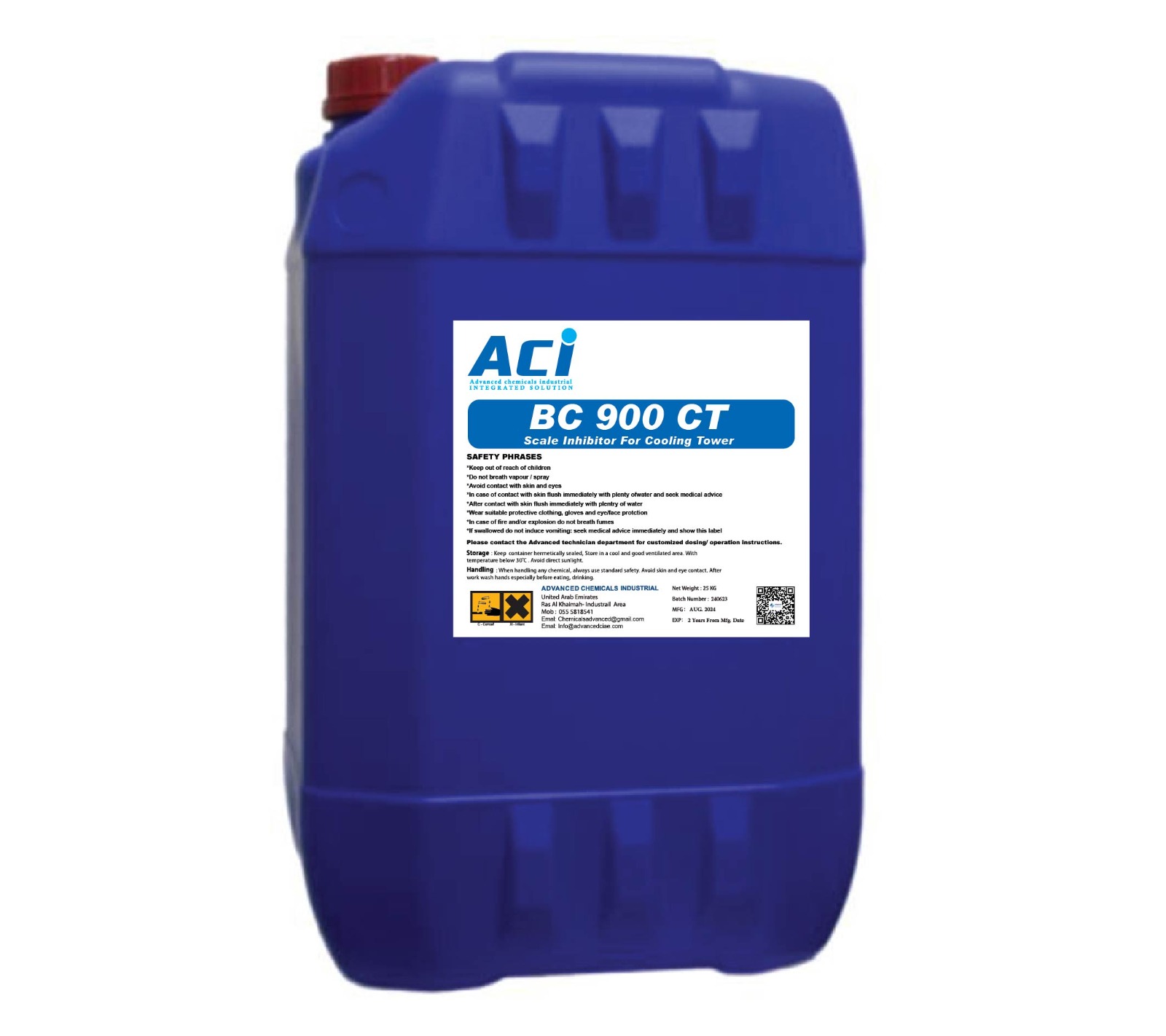
BC 900 CT Cooling Tower Scale and Corrosion Inhibitor
Zinc chloride based treatment that helps control corrosion and scale formation in open recirculating cooling water systems and cooling towers.
Cooling water chemicals
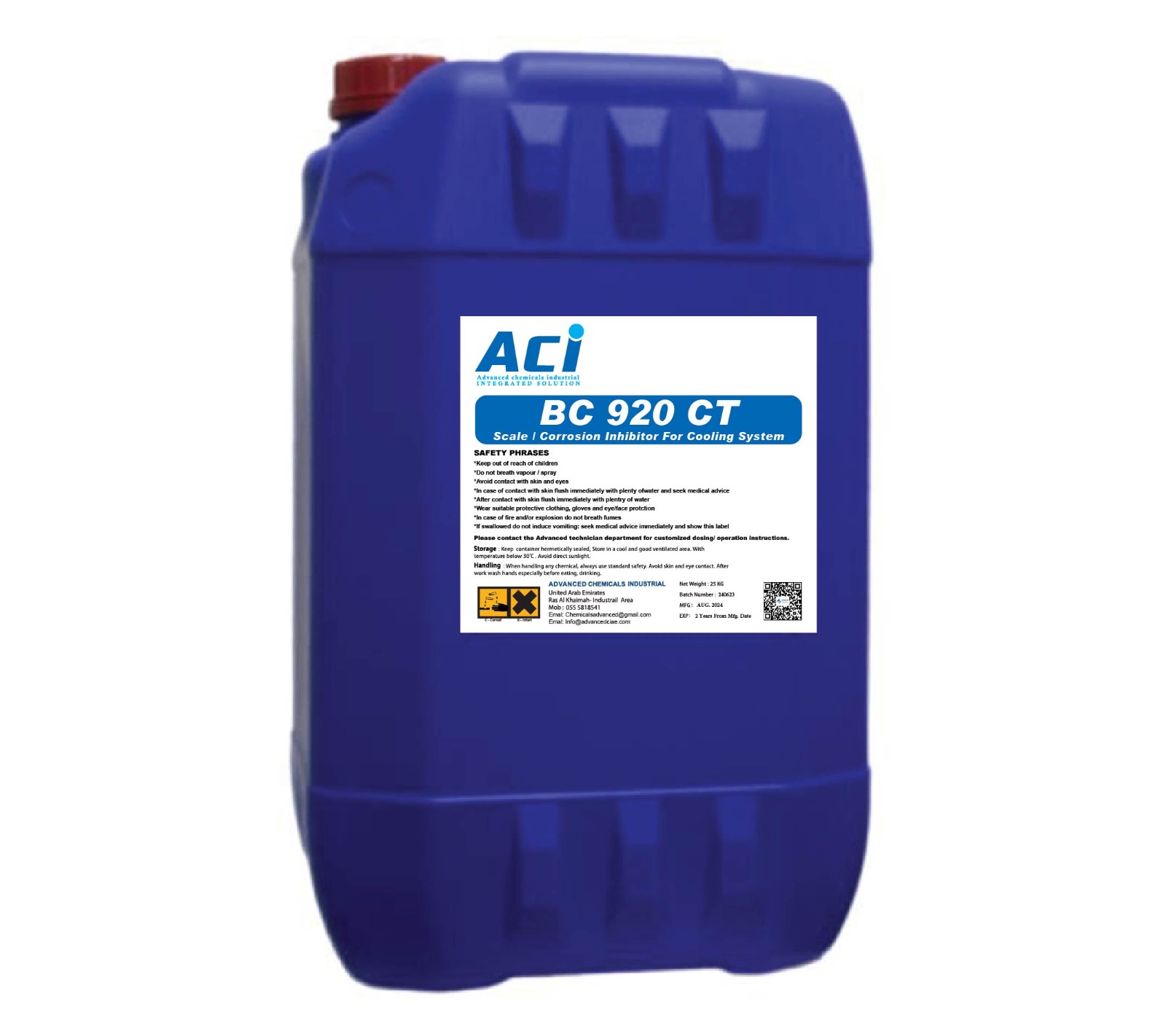
BC 920 CT Cooling System Scale and Corrosion Inhibitor
Scale and corrosion inhibitor for cooling systems, as named on the product label.
Let's discuss your water system.
Share the application and operating context to start a technical review.