
Applications
Cooling Towers
Open recirculating cooling towers reject heat by evaporation, which concentrates the water. Scale, corrosion and biological growth are the three risks to manage.
On this page (7)
Overview
An open recirculating cooling tower carries heat away from chillers, condensers and process equipment by evaporating a small part of the circulating water. The water that evaporates leaves its dissolved salts behind, so the circulating water becomes more concentrated than the make-up water. Part of it is drained as blowdown to keep that concentration in a workable range, and fresh make-up replaces both the evaporated and the drained water.
How does a cooling tower system work?
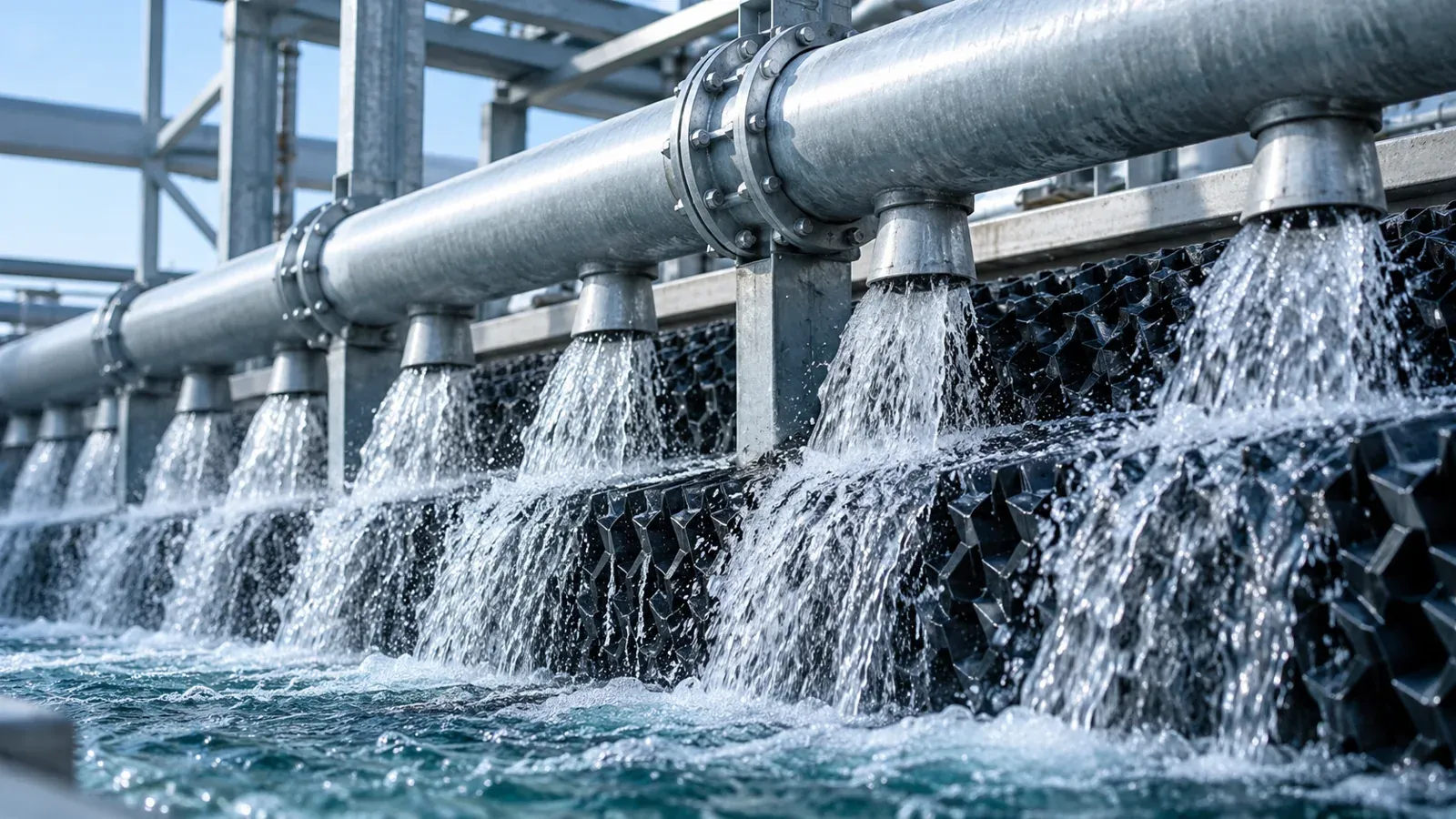
Warm water from the heat source is sprayed over fill inside the tower. Air moves through the fill, a little water evaporates, and the remaining water cools and returns to the heat exchangers. A basin collects the cooled water. Because the water is open to air, it picks up dust, oxygen and airborne microorganisms, and it is warm and well lit, which suits biological growth.
What are the water-chemistry risks?
- Scale: as water concentrates, sparingly soluble salts can come out of solution on the hottest surfaces, which insulates the exchanger and cuts heat transfer.
- Corrosion: oxygen-rich, conductive water attacks carbon steel and other metals in the circuit, and corrosion products settle as deposits.
- Biological growth: bacteria, algae and slime form biofilm that fouls surfaces, shelters corrosion and calls for routine microbiological control.
- Fouling: dust, debris and corrosion products accumulate in the basin and on fill and surfaces.
How is a cooling tower monitored?
Monitoring tracks conductivity to follow concentration and control blowdown, pH, the residual of the corrosion and scale inhibitor in use (for a zinc-based program, the zinc residual), and corrosion indicators such as coupons. Microbiological monitoring checks that biocide control is effective. Visual inspection of fill, basin and exchangers completes the picture. A recent water analysis of the make-up and circulating water is the starting point for deciding what to monitor and how often.
Which chemical categories are relevant?
Our datasheets describe a zinc-based scale and corrosion inhibitor for cooling towers, and cooling-system biocides of two kinds, isothiazolinone (CMIT/MIT) and DBNPA. Treatment rates are set by our technical team from the water analysis and the operating conditions, and are fed with a chemical metering pump, not estimated by rule of thumb.
Considerations
Points to take into account when treating an open cooling tower. These are qualitative guidance, not a treatment recommendation for a specific system.
- Make-up water quality and how it changes with season and source, since it sets the scaling and corrosion tendency.
- The balance between concentration and blowdown, which affects water use as well as scale risk.
- Compatibility between the inhibitor and the biocide, and between both and the metals in the circuit.
- Rotating or alternating biocides so that microbial control does not weaken over time.
- Where chemicals are fed, so that they mix into circulating water and not into the drain.
- Handling and storage of chemicals in the plant area, and who is trained to do it.
- The condition of the fill, basin and exchangers, which treatment cannot repair if deposits are already hard.
Our technical team reviews the water analysis and the operating description before any program is proposed.
Related industries
Manufacturing
Water systems typical of manufacturing plants, the operating problems that follow when the chemistry drifts, and how a problem-led approach keeps production loops stable.
Hospitality
Hotels and resorts depend on chilled water, cooling towers, steam and treated water for comfort and service. This page outlines their typical systems and the problems that follow.
Facility Management
Facility management teams look after HVAC water loops, cooling towers and boilers across many buildings. This page outlines the typical systems, problems and decision points.
Power and Utilities
Boilers, condensate systems, cooling towers and RO make-up treatment are central to power and utilities plants. This page outlines the typical systems and problems.
Oil and Gas
Cooling water, steam, desalination and produced or process effluent are central utilities in oil and gas facilities. This page outlines typical systems and problems.
MEP Contractors
MEP contractors install and commission the chilled-water, cooling and heating systems that need water treatment from the first fill. This page outlines the typical concerns.
Industrial Contractors
Industrial contractors build and maintain plants, RO packages, boilers and cooling systems for operators. This page outlines the typical concerns on the water side.
Related solutions
Cooling Water Treatment for Open Recirculating Cooling Towers
Scale, corrosion and biological control for open recirculating cooling towers, with monitoring and blowdown management built into the program.
Water Analysis Request
How to send a water analysis, the system type, the capacity and the current problem to our technical team so your case can be reviewed.
Related products
Cooling water chemicals
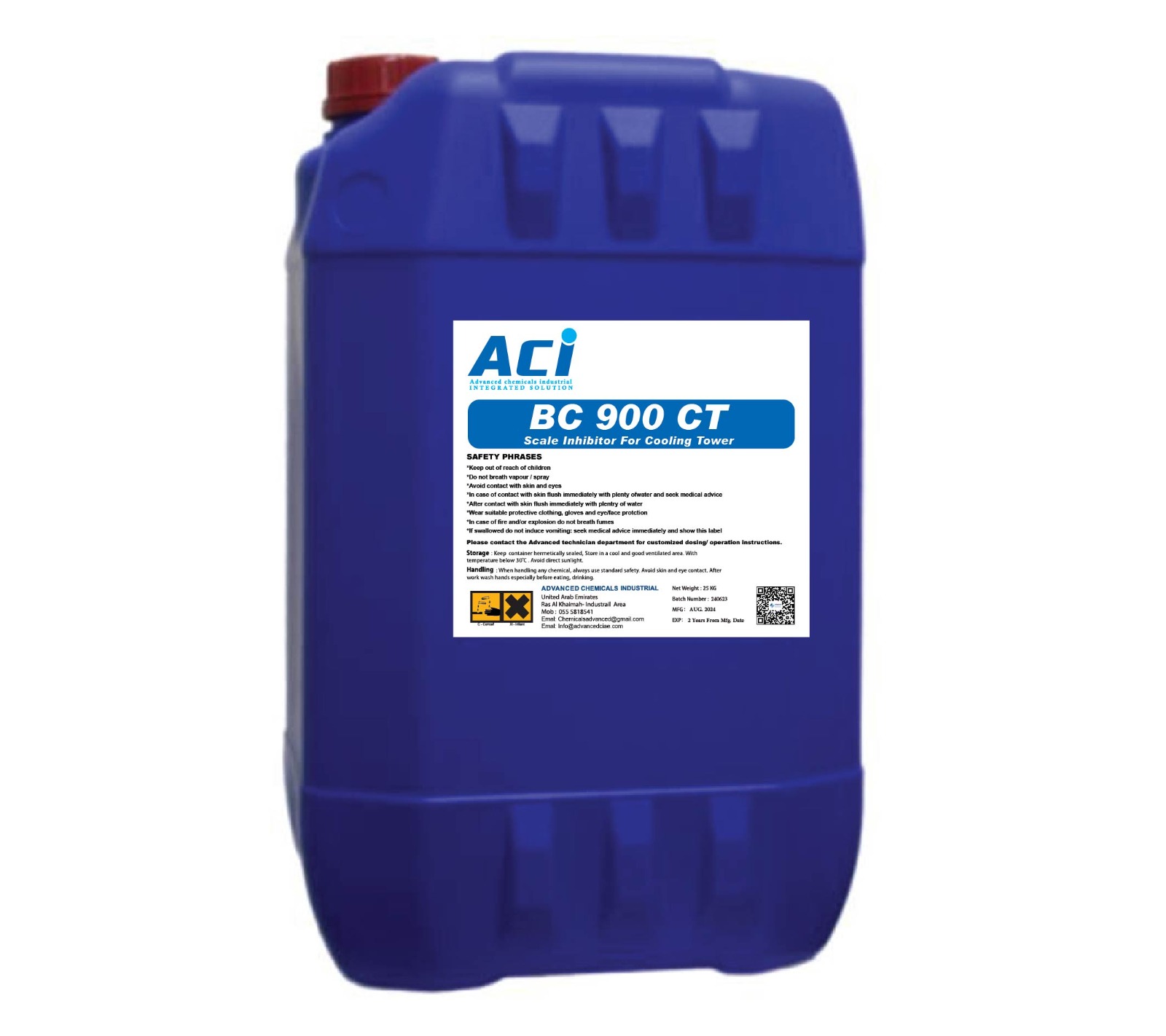
BC 900 CT Cooling Tower Scale and Corrosion Inhibitor
Zinc chloride based treatment that helps control corrosion and scale formation in open recirculating cooling water systems and cooling towers.
Cooling water chemicals
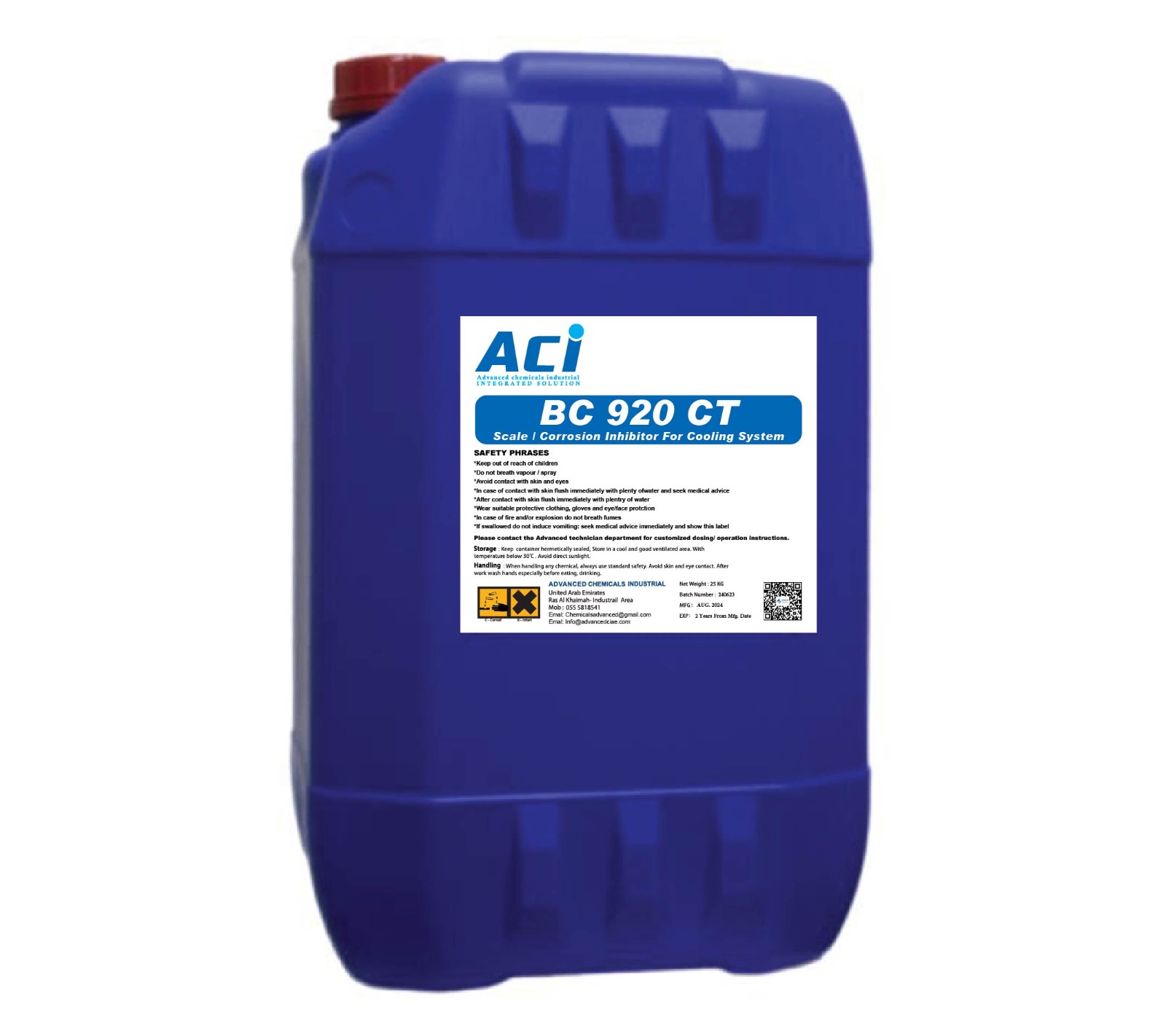
BC 920 CT Cooling System Scale and Corrosion Inhibitor
Scale and corrosion inhibitor for cooling systems, as named on the product label.
Cooling water chemicals
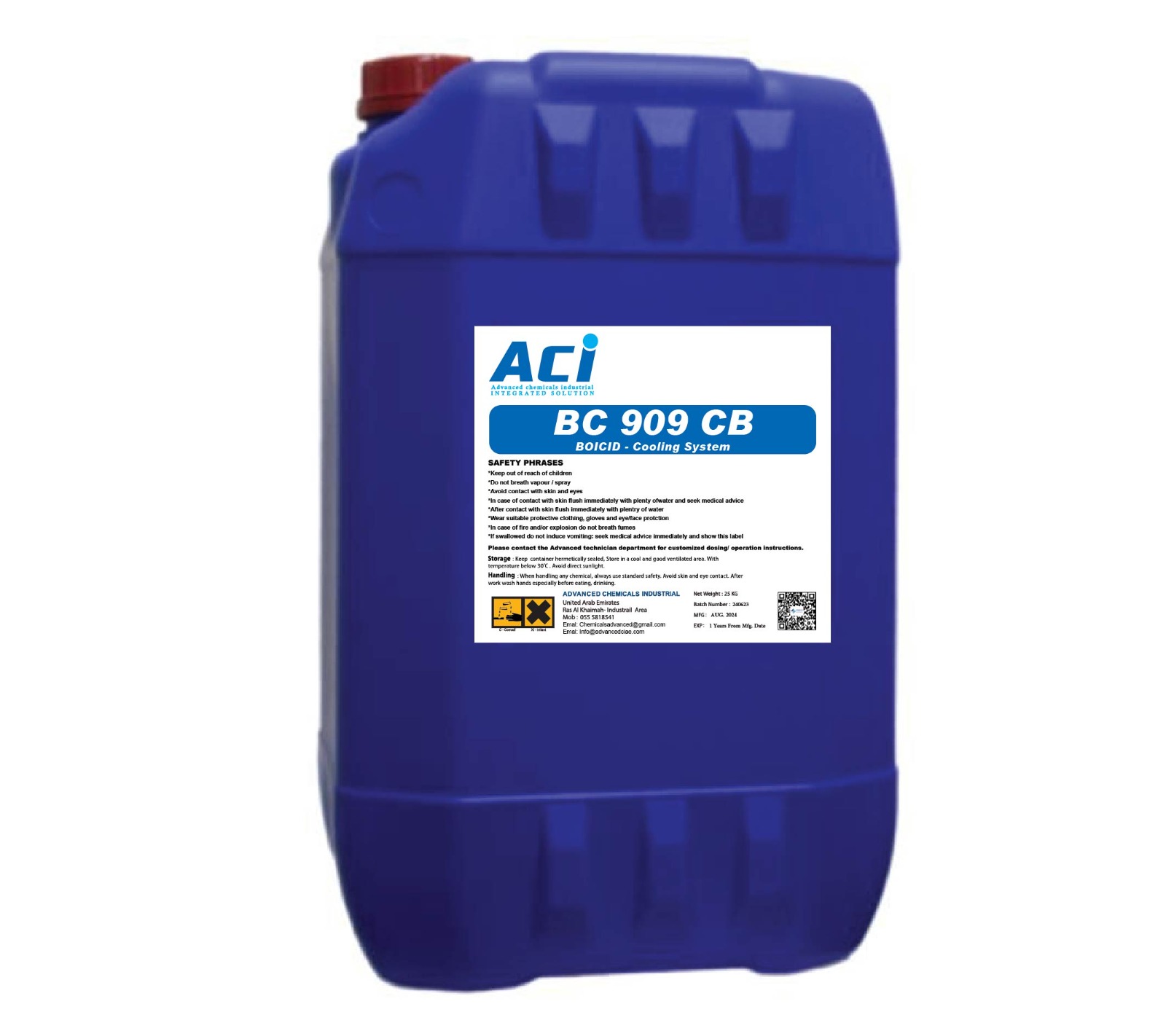
BC 909 CB Cooling System Biocide
CMIT/MIT based biocide that helps control bacteria, algae, fungi and slime in industrial and commercial cooling water systems.
Cooling water chemicals
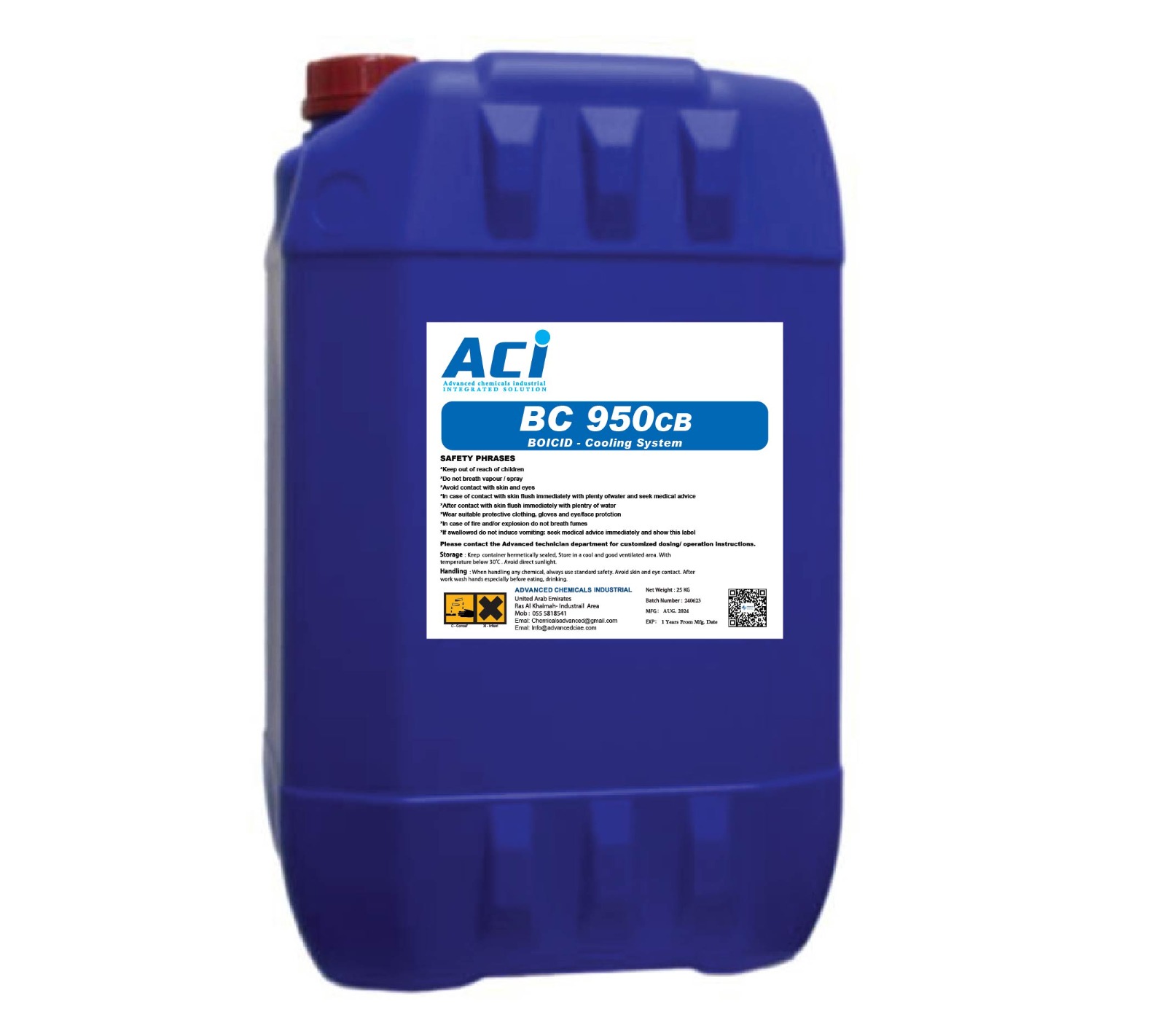
BC 950 CB Cooling System Biocide
Biocide that helps control bacteria, algae, fungi and slime in industrial and commercial cooling water systems.
Cooling water chemicals
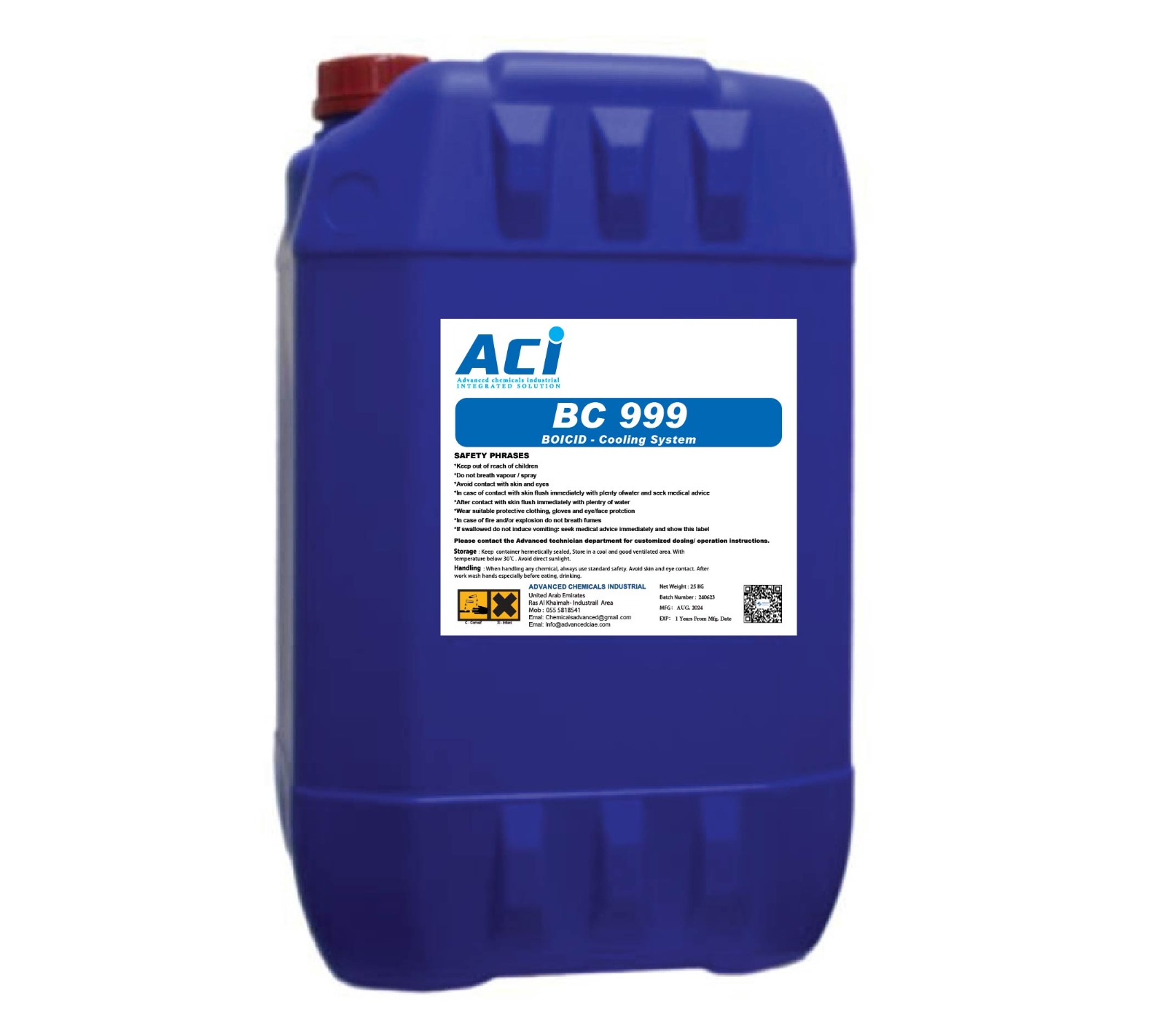
BC 999 Fast-Acting Cooling System Biocide (DBNPA)
DBNPA biocide for rapid control of microbiological growth in industrial and commercial cooling water systems.
Related problems
What causes scale in cooling towers and how do you stop it?
Cooling tower scale forms when evaporation concentrates hardness and alkalinity beyond their solubility. See the signs, causes, checks and the scale inhibitor approach.
What causes corrosion in cooling tower systems?
Corrosion in open recirculating cooling systems is driven by dissolved oxygen, salts, low pH and microbial activity. See the signs, checks and the inhibitor approach.
How do you control biological growth in cooling water?
Bacteria, algae and biofilm thrive in warm, nutrient-rich cooling water. Learn the signs, causes, microbiological checks and the biocide approach.
Related questions
What causes corrosion in cooling towers?
Corrosion follows from dissolved oxygen, low or aggressive pH, high chloride and sulfate content, galvanic contact between different metals, and deposits or biofilm that create under-deposit attack. Concentrating the water by evaporation makes each of these worse unless blowdown and inhibitor treatment keep the chemistry in balance.
What causes scale in cooling towers?
Evaporation concentrates dissolved hardness and alkalinity in the recirculating water. Where solubility is exceeded, especially on warm heat-transfer surfaces, calcium carbonate and related salts crystallize and deposit. High cycles of concentration, high pH and high temperature all raise the scaling tendency.
Why does cooling water conductivity matter?
Conductivity is a quick indicator of how concentrated the circulating water has become, so it is the usual control signal for blowdown. Too high and scale and corrosion risk rise; too low and water and chemicals are wasted. It supports, but does not replace, a full water analysis.
How is biological growth controlled in cooling water?
Control combines a clean, well-drained system, removal of deposits that shelter organisms, and a biocide programme monitored by microbiological testing. Isothiazolinone-based and DBNPA-based biocides are both used in cooling systems, and alternating them is a common way to keep microorganisms from adapting.
How can cooling tower scale be told apart from corrosion?
Scale appears as hard, pale, adherent crust on warm surfaces and fill, and shows up as falling heat transfer. Corrosion appears as red-brown or black tuberculation, pitting, metal loss and iron in the water. Inspection of exchanger surfaces plus water and coupon results settle which one dominates.
What should be monitored in a cooling tower treatment programme?
Monitor pH, conductivity, the inhibitor residual such as zinc where a zinc-based product is used, corrosion indicators from coupons or probes, and microbiological counts. Together they show whether blowdown, inhibitor and biocide are keeping scale, corrosion and growth under control.
Which product category suits my system?
Match the category to the system and the problem. RO plants use antiscalants and membrane cleaners. Open cooling towers use scale and corrosion inhibitors with biocides. Closed chilled-water loops use a closed-loop inhibitor. Boilers use oxygen scavengers, pH boosters, scale inhibitors and, for condensate, neutralizing amines.
Let's discuss your water system.
Share the application and operating context to start a technical review.