
Applications
Boiler Feedwater and Condensate
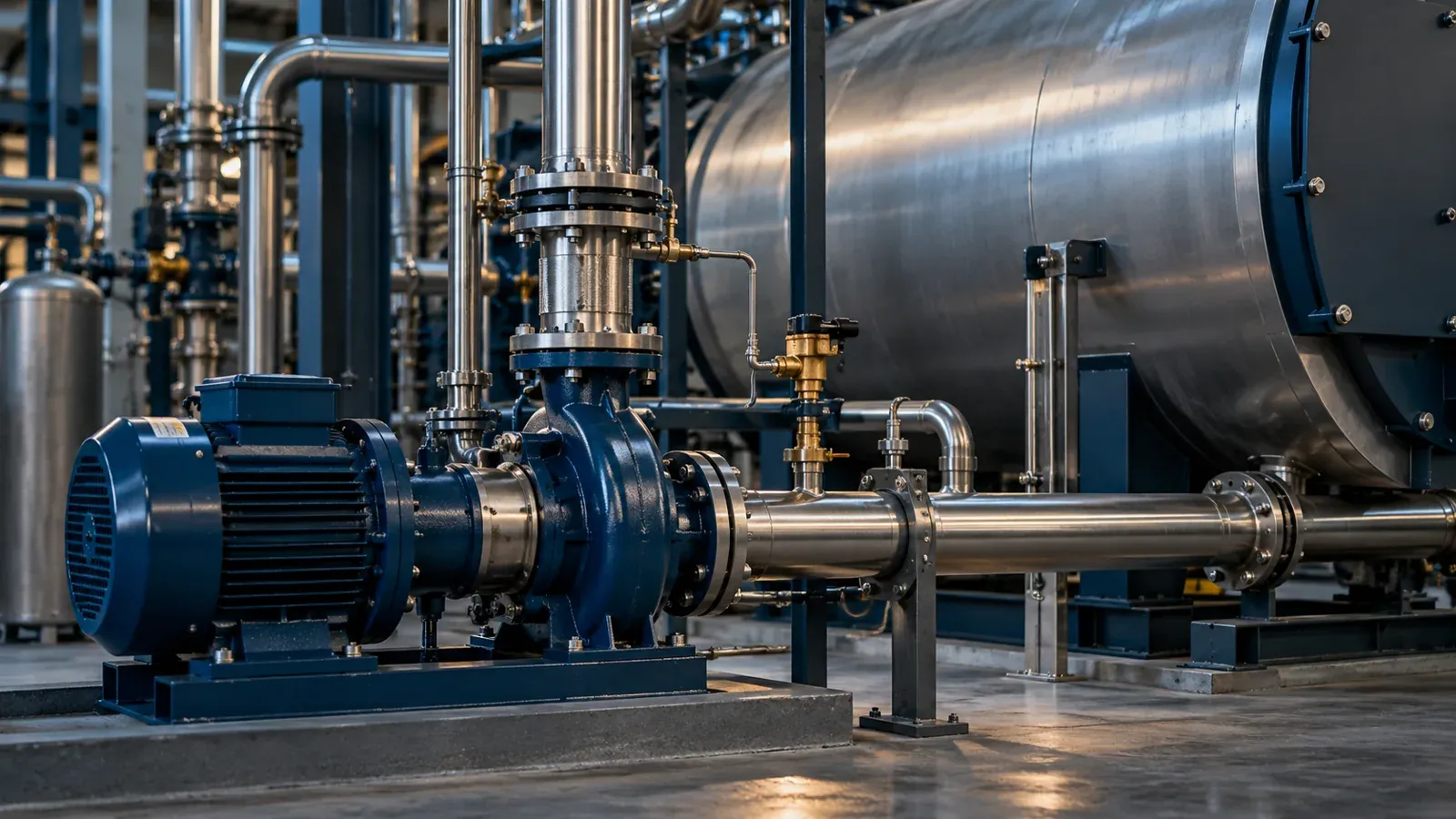
Feedwater and condensate lines carry the water to and from the boiler. Dissolved oxygen and carbon dioxide are the main corrosion drivers, and they are controlled with oxygen removal and pH management.
On this page (7)
Overview
Feedwater is the water that is pumped into a boiler, made up of treated make-up water and condensate returned from the steam users. Condensate is steam that has given up its heat and turned back into water. Together these two streams form a loop whose condition decides how much corrosion product, oxygen and hardness reaches the boiler.
How does the feedwater and condensate system work?
Steam leaves the boiler, does its work in heaters, process equipment or turbines, and condenses. Condensate drains through traps and return lines to a collection tank, where it meets make-up water. A deaerator or feedwater tank removes dissolved gases, and the feed pump sends the mixture to the boiler. The pipework is usually carbon steel, sometimes with copper alloy components in heaters and condensers.
What are the water-chemistry risks?
- Oxygen corrosion: oxygen that survives deaeration, or enters at a tank vent or through a leak, pits feed lines, economisers and boiler surfaces.
- Carbon dioxide attack: carbon dioxide released from alkalinity in the boiler dissolves in condensate as carbonic acid, which lowers pH and thins pipe walls, often as a groove along the bottom of the line.
- Iron and copper transport: corrosion products carry back to the boiler and add to deposits.
- Contamination: leaks in heat exchangers or condensers can bring process fluid or cooling water into the condensate.
- Idle corrosion: wet, stagnant lines suffer attack during shutdown.
How are feedwater and condensate monitored?
Monitoring tracks feedwater and condensate pH, dissolved oxygen where measured, the residual of the oxygen scavenger, conductivity of the condensate, which reveals contamination, and iron and copper in samples as evidence of corrosion. Inspection of traps, tank vents and line sections shows where attack is happening. Trends matter more than a single reading.
Which chemical categories are relevant?
Our datasheets describe oxygen scavengers in two forms, one DEHA based and one sodium bisulfite based, a neutralizing amine for steam and condensate, and a multipurpose boiler product. Treatment rates are set by our technical team from the water analysis and the operating conditions, fed with a chemical metering pump.
Considerations
Points to take into account when treating feedwater and condensate. These are qualitative guidance and not a recommendation for a specific plant.
- The choice between oxygen scavenger types, which depends on the boiler, the feedwater system and where the steam goes.
- Where the neutralizing amine is fed so that it reaches the whole condensate network.
- Whether steam contacts product, which limits the chemicals that may be considered.
- The metals in the system, particularly copper alloys, which react differently to amines and to pH.
- Dissolved oxygen entering at tanks, pump seals and vents, which treatment alone cannot offset.
- Idle periods and lay-up practice.
- Condensate return share and the reliability of traps and lines.
Our technical team reviews the water analysis and system description before any program is proposed.
Related industries
Power and Utilities
Boilers, condensate systems, cooling towers and RO make-up treatment are central to power and utilities plants. This page outlines the typical systems and problems.
Food and Beverage
Steam, chilled water, RO-treated process water and effluent shape food and beverage operations. This page outlines the typical systems, problems and decision points.
Manufacturing
Water systems typical of manufacturing plants, the operating problems that follow when the chemistry drifts, and how a problem-led approach keeps production loops stable.
Oil and Gas
Cooling water, steam, desalination and produced or process effluent are central utilities in oil and gas facilities. This page outlines typical systems and problems.
Related solutions
Boiler Water Treatment for Low and Medium Pressure Boilers
Oxygen control in feedwater, pH control in the boiler, internal scale and corrosion inhibition, and neutralizing amines to protect condensate lines.
Water Analysis Request
How to send a water analysis, the system type, the capacity and the current problem to our technical team so your case can be reviewed.
Related products
Boiler water chemicals
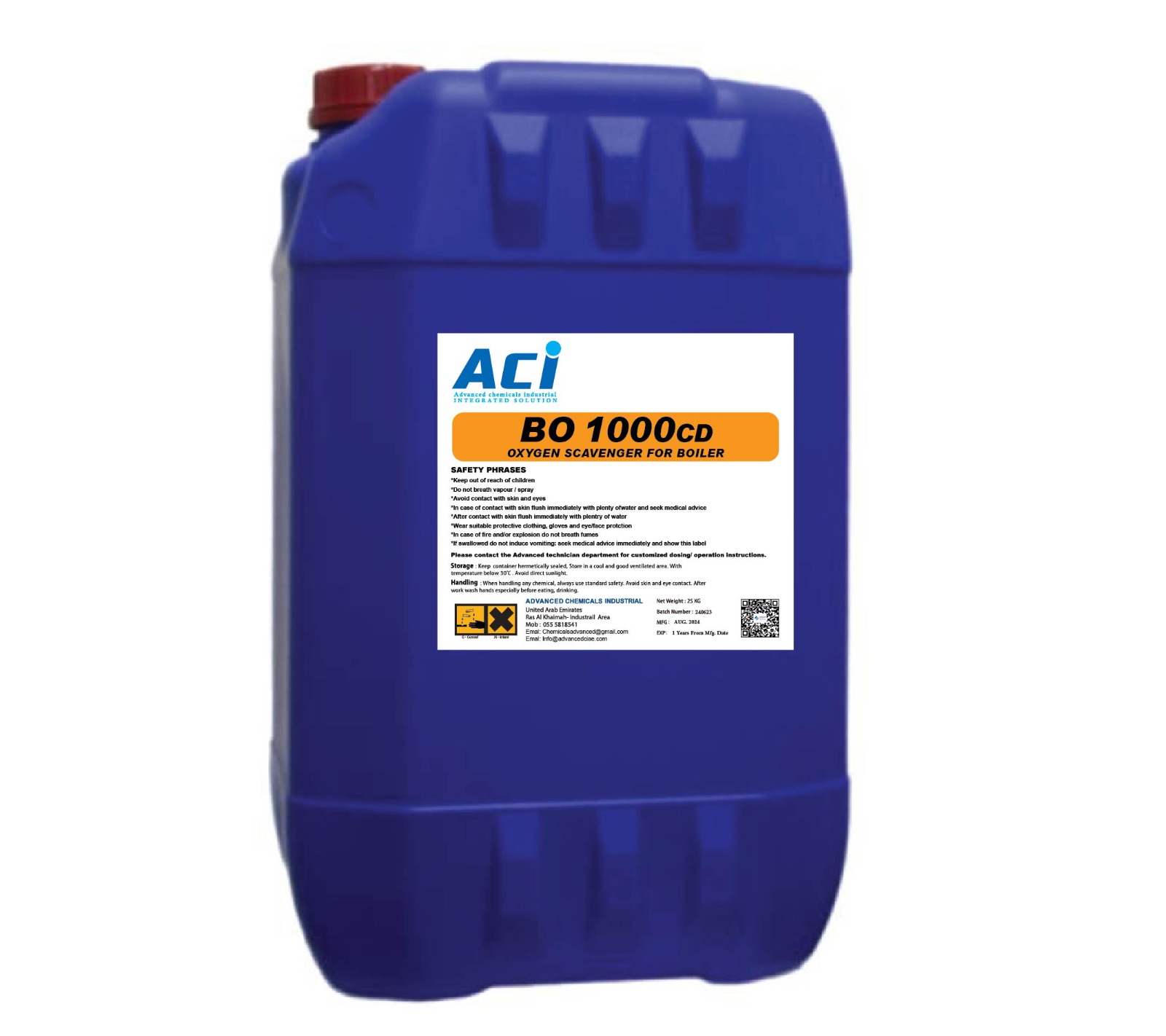
BO 1000 CD Boiler Oxygen Scavenger (DEHA)
DEHA based oxygen scavenger that helps control dissolved oxygen and minimise corrosion in boiler feedwater and condensate systems.
Boiler water chemicals
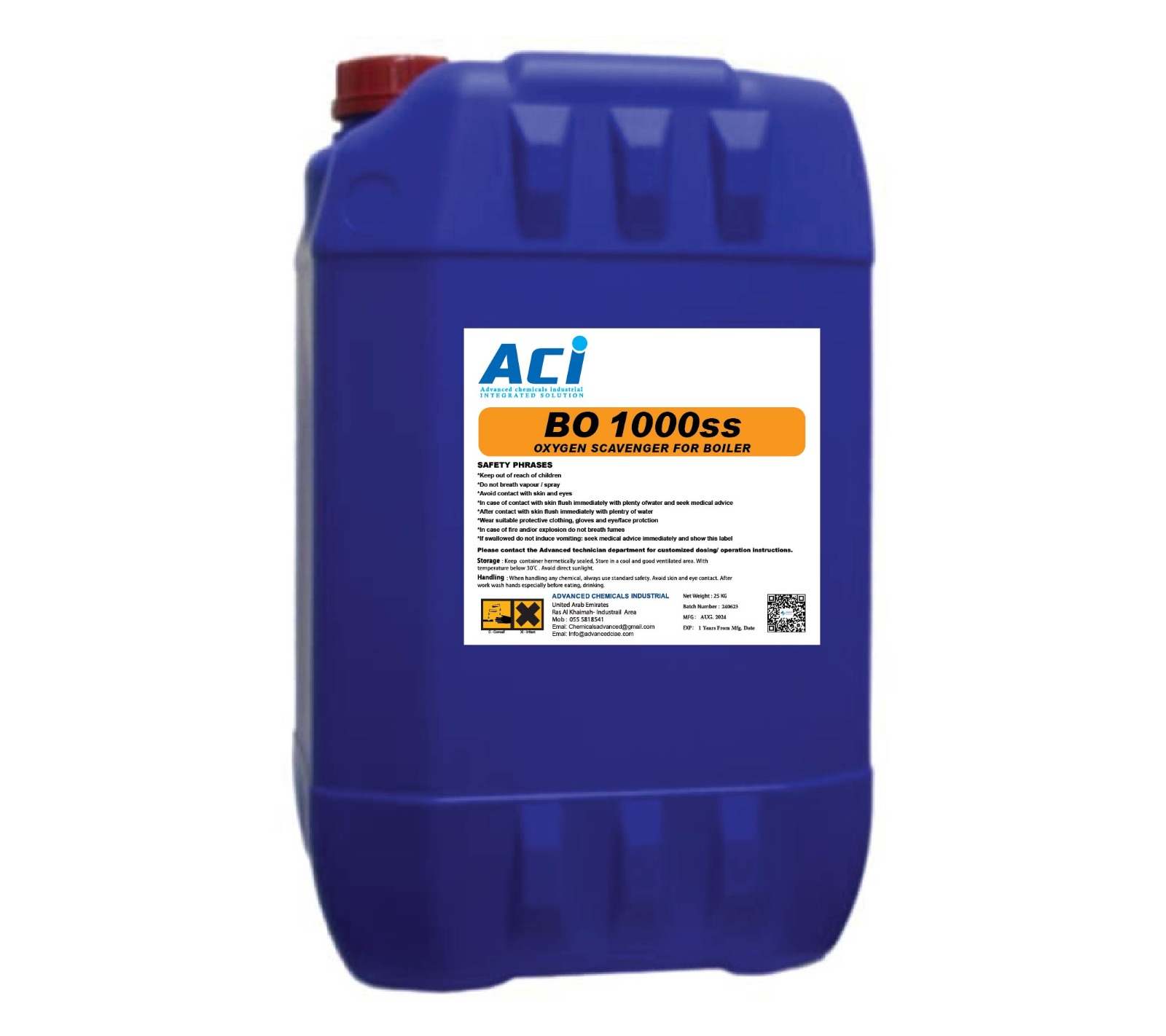
BO 1000 SS Boiler Oxygen Scavenger (Sodium Bisulfite)
Sodium bisulfite based treatment that helps remove dissolved oxygen from boiler feedwater and reduce the risk of oxygen-related corrosion.
Boiler water chemicals
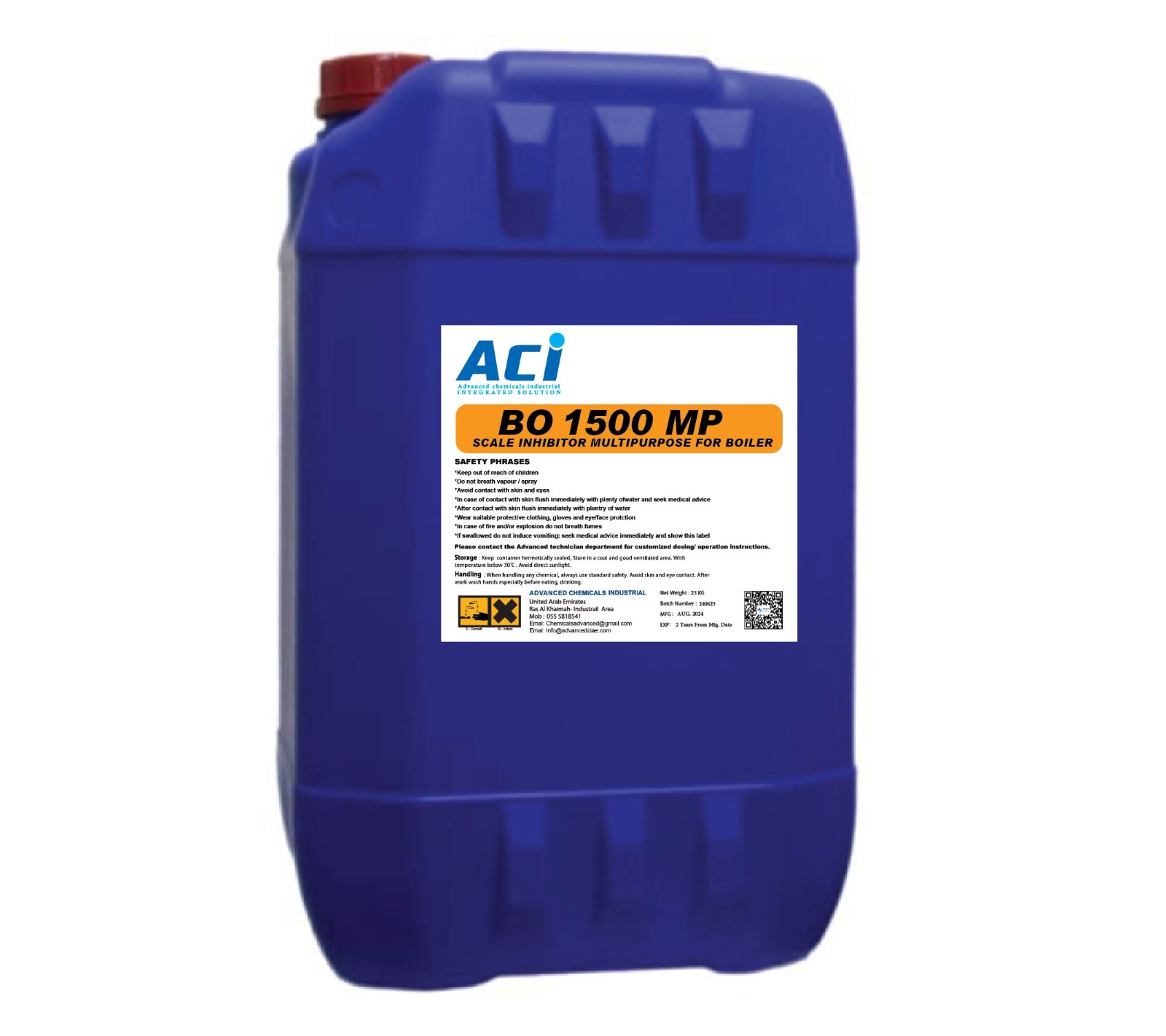
BO 1500 MP Neutralizing Amine for Steam and Condensate Systems
Neutralizing amine treatment that helps control acidic condensate corrosion in steam and condensate return systems.
Boiler water chemicals
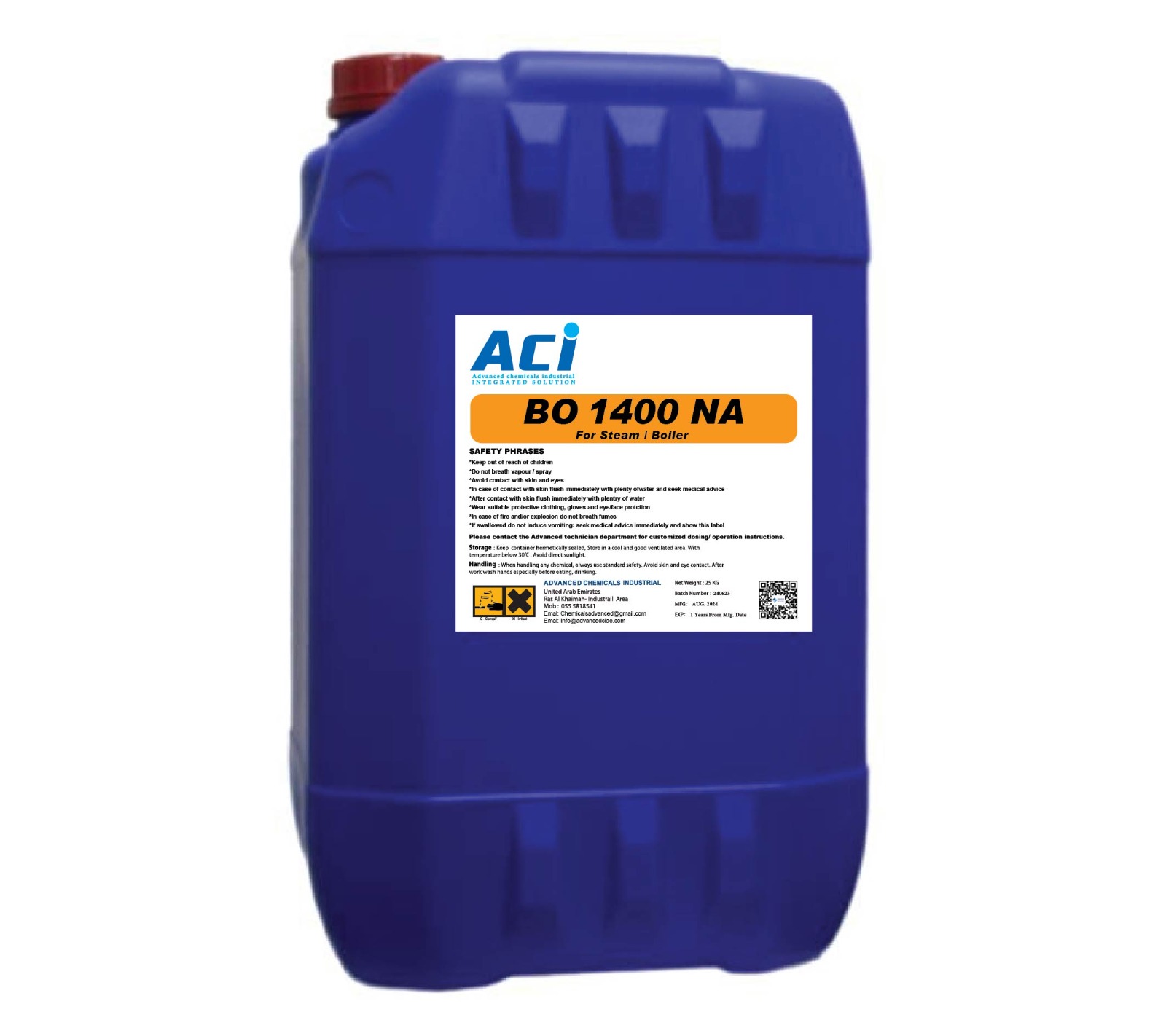
BO 1400 NA Steam and Boiler Treatment
Treatment for steam and boiler systems, as named on the product label.
Related problems
How does dissolved oxygen corrode boilers and how do you stop it?
Dissolved oxygen in boiler feedwater causes pitting of feed lines, economisers and boiler surfaces. Learn the signs, checks and the oxygen scavenger approach.
What causes condensate line corrosion in steam systems?
Condensate lines corrode from carbonic acid and dissolved oxygen. See the signs, the checks to run and the neutralizing amine approach for steam and condensate.
Related questions
What causes scale in boilers?
Hardness salts and silica carried in with feedwater lose solubility as the water heats and concentrates, and bake onto hot heat-transfer surfaces. Poor feedwater softening, high concentration without enough blowdown, and metal oxides from corroding condensate lines all add to deposits that insulate the tubes and cause overheating.
What causes oxygen corrosion in boilers and feedwater systems?
Dissolved oxygen in feedwater attacks steel quickly when the water is hot, causing pitting in the feedwater heater, economizer and boiler. Incomplete mechanical deaeration, air leaks into the condensate return and a missing or underfed oxygen scavenger leave the oxygen free to react with the metal.
How do DEHA-based and sulfite-based oxygen scavengers differ?
Both remove dissolved oxygen from boiler feedwater. Sulfite-based scavengers react quickly but add dissolved solids and are usually limited to lower-pressure boilers. DEHA-based scavengers add no dissolved solids and also help passivate metal surfaces, so the choice follows boiler pressure, water quality and feedwater system design.
What causes corrosion in steam condensate lines?
Carbon dioxide from decomposing alkalinity dissolves in condensate to form carbonic acid, which lowers pH and eats away the pipe wall, often as grooving. Oxygen entering the return system adds further attack. A neutralizing amine raises condensate pH so the acid is neutralized along the line.
Why does boiler feedwater pH matter?
Steel is protected by a stable oxide film only in mildly alkaline water. If feedwater or boiler water pH is too low, the film dissolves and corrosion accelerates; if it is too high, caustic attack and carryover become risks. A pH booster adjusts the water into the protective range.
Why is boiler water conductivity monitored?
Conductivity tracks the dissolved solids that build up as steam leaves and feedwater replaces it. It guides blowdown: too high invites scale, foaming and carryover into the steam, too low wastes heat and treated water. It is read together with pH and the treatment residuals.
Let's discuss your water system.
Share the application and operating context to start a technical review.