
Applications
Seawater RO
Seawater RO produces fresh water from sea water through high-pressure membranes. High salinity, marine biology and scaling tendency make pretreatment and antiscalant control central.
On this page (7)
Overview
Seawater reverse osmosis (RO) turns sea water into fresh water by forcing it through semi-permeable membranes at high pressure, leaving a concentrated brine behind. It is a route to drinking water, boiler make-up and process water where fresh supplies are limited. Sea water is highly saline and rich in marine organisms, so the system must be designed and operated with both the salt and the biology in mind.
How does a seawater RO system work?
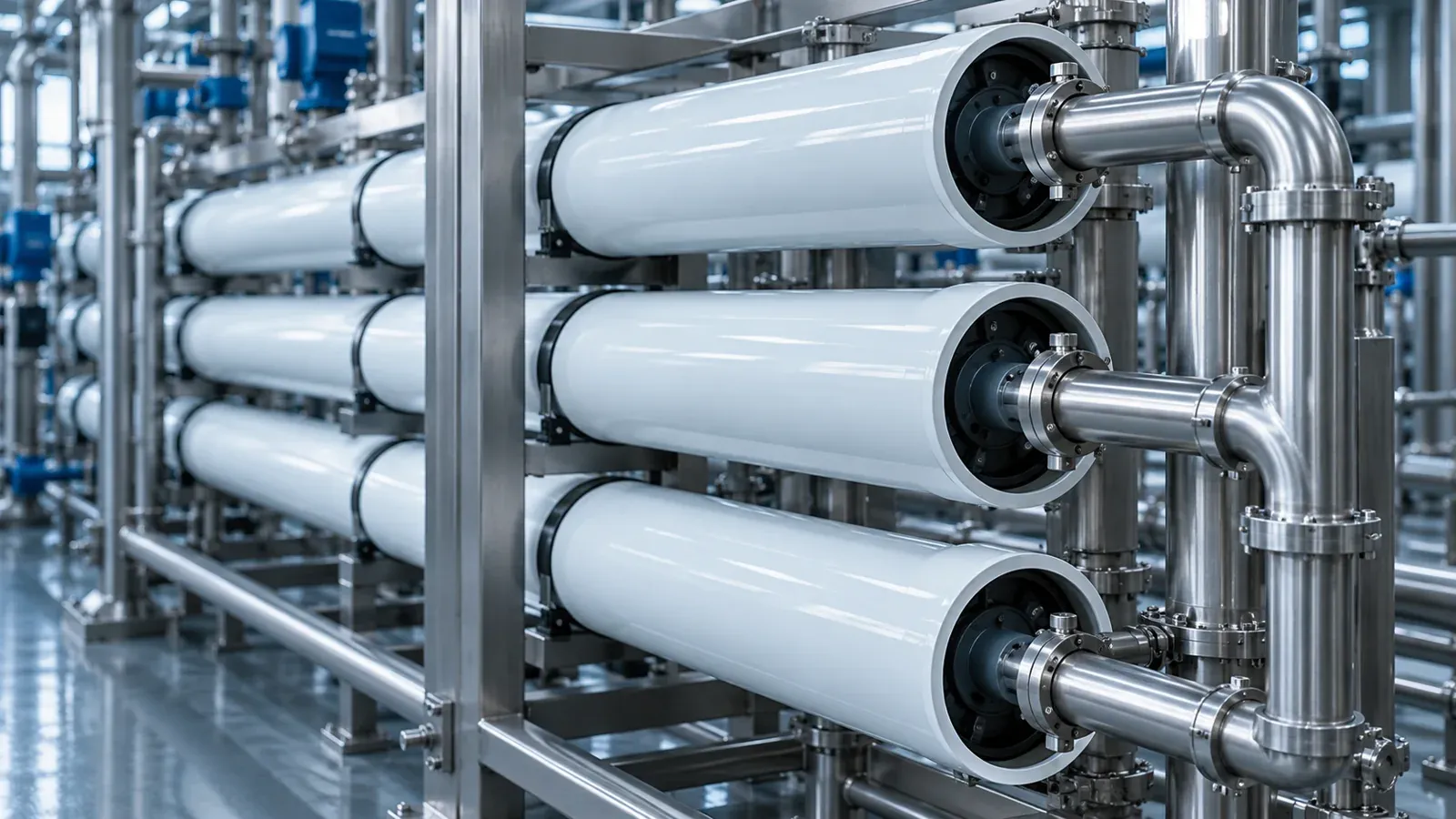
An intake draws sea water from an open intake or a beach well. Pretreatment removes suspended matter and controls biological growth, often through media filtration and cartridge filters, and may include coagulation and chemical conditioning. A high-pressure pump drives the feed through the membranes. Permeate is collected as product water, and the brine is returned to the sea, usually through an outfall that disperses it. Energy recovery devices may recapture pressure from the brine.
What are the water-chemistry risks?
- Scaling: sparingly soluble salts in the concentrated brine can crystallise on the membrane, particularly at higher recovery or temperature.
- Biofouling: marine bacteria and algal material form a film on pretreatment media and membranes, raising differential pressure.
- Particulate and colloidal fouling: silt, clay and fine organic matter coat the membrane, especially after storms or changes in the intake.
- Organic fouling: algal bloom products and dissolved organics adsorb on the surface.
- Oxidant damage: chlorine used to control growth in the intake must be removed before the membranes.
- Corrosion: the high chloride content attacks unsuitable metals in the system.
How is seawater RO monitored?
Monitoring follows differential pressure across each stage, permeate flow and conductivity, feed pressure and normalised performance trends. Feed quality indicators, such as the tendency of the water to foul, show how well pretreatment is working. Records of cleaning, cartridge filter changes and seasonal changes in the intake complete the view, and a rising differential pressure is read as an early sign of fouling.
Which chemical categories are relevant?
Our RO chemical range includes antiscalants for sea and brackish water, membrane cleaners and a disinfectant. Treatment rates are set by our technical team from the feed analysis and the system design, and the cleaning approach follows the foulant that the symptoms indicate.
Considerations
Points to take into account when treating a seawater RO system. These are qualitative guidance and not a recommendation for a specific plant.
- Intake type and location, which determine how much silt, algae and oil reach the plant.
- Seasonal and event-driven changes in sea water quality, such as algal bloom or storm turbidity.
- Pretreatment capacity and how it responds to a changing feed.
- Recovery, temperature and brine concentration, which together set the scaling tendency.
- Materials of construction suited to high chloride water.
- Compatibility of antiscalants, cleaners and disinfectant with the membrane.
- Brine disposal and the handling of cleaning wastes.
Our technical team can review a feed water analysis and the operating data before discussing a program.
Related industries
Oil and Gas
Cooling water, steam, desalination and produced or process effluent are central utilities in oil and gas facilities. This page outlines typical systems and problems.
Municipal
Municipal water supply, desalination and sewage treatment depend on steady membrane and chemical processes. This page outlines the typical systems, problems and decision points.
Power and Utilities
Boilers, condensate systems, cooling towers and RO make-up treatment are central to power and utilities plants. This page outlines the typical systems and problems.
Hospitality
Hotels and resorts depend on chilled water, cooling towers, steam and treated water for comfort and service. This page outlines their typical systems and the problems that follow.
Industrial Contractors
Industrial contractors build and maintain plants, RO packages, boilers and cooling systems for operators. This page outlines the typical concerns on the water side.
Related solutions
RO Chemicals: Antiscalants, Membrane Cleaners and Disinfectant
A treatment program for seawater and brackish RO plants: antiscalants to control scale, membrane cleaners to restore performance, and a disinfectant to limit biological growth.
RO Systems: Supply, Installation, Commissioning and Maintenance
Reverse osmosis systems supplied with installation, commissioning and maintenance, matched to the feed water and the water quality the process requires.
RO System Maintenance
What maintenance of an RO system involves: monitoring normalized data, deciding when to clean, replacing consumables and keeping the chemical supply continuous.
Water Analysis Request
How to send a water analysis, the system type, the capacity and the current problem to our technical team so your case can be reviewed.
Related products
Antiscalants
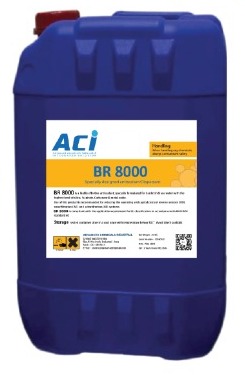
BR8000 Reverse Osmosis Antiscalant
Antiscalant for seawater and brackish water reverse osmosis, for controlling carbonate, sulphate, metal oxide and silica scale.
Related problems
What causes RO membrane scaling and how is it controlled?
RO membrane scaling is the crystallisation of sparingly soluble salts on the membrane as the concentrate becomes saturated. See the signs, causes, checks and the treatment approach.
What is RO membrane biofouling and how do you control it?
Biofouling is the growth of a bacterial biofilm on RO membranes and feed spacers. Learn the signs, causes, checks and the cleaning and disinfection approach.
Why is RO differential pressure increasing?
A rising differential pressure across an RO system points to restricted feed channels. Learn how to tell fouling, scaling and pre-treatment problems apart before cleaning.
Related questions
How often should RO membranes be cleaned?
There is no fixed calendar interval. Clean when normalized performance shows a clear change from the commissioning baseline: a rising differential pressure, falling normalized permeate flow or rising salt passage. Cleaning earlier, while the deposit is still thin, recovers performance more fully than waiting until the loss is severe.
What does an RO antiscalant do?
An antiscalant keeps sparingly soluble salts, such as carbonates and sulfates, in solution as the feed water is concentrated along the membrane train. It delays crystal growth and deposition on the membrane surface, so recovery can be run without scale forming in the concentrate stream.
Which cleaner suits scale and which suits biological or organic fouling?
Mineral scale is normally removed with an acidic cleaner, while biological and organic deposits respond to an alkaline cleaner. The right order depends on what the deposit is, so identify the foulant from the performance trend and a cleaning analysis first, and rinse thoroughly between the two steps.
What causes biofouling on RO membranes?
Microorganisms in the feed attach to the membrane and spacer surfaces, multiply on the nutrients present and build a slimy biofilm that raises differential pressure and lowers flow. It is usually worse after warm weather, a weak pretreatment barrier or a period of idle stagnation.
Why record baseline data when an RO system is commissioned?
Baseline readings of pressures, flows, conductivity and temperature taken at start-up show what clean membranes do on the actual feed water. Later trends are judged against them, so fouling and scaling can be identified early instead of being mistaken for normal seasonal change.
What does RO maintenance involve?
RO maintenance covers routine performance logging and normalization, cartridge filter and pretreatment checks, chemical feed checks, membrane cleaning when the trend calls for it and a review of operating data.
How can fouling be told apart from normal changes in RO performance?
Normalize permeate flow, differential pressure and salt passage for feed temperature, pressure and recovery, then compare them with the start-up baseline. Raw readings move with the seasons and load. A steady drift in the normalized values, not a swing in the raw ones, points to fouling or scaling.
Why does pretreatment matter for an RO system?
Pretreatment removes or controls what would otherwise foul the membranes: suspended solids, oxidants that attack the polymer, dissolved organics and microorganisms. A weak pretreatment stage shows up downstream as faster fouling, more frequent cleaning and a shorter membrane life.
How are RO membranes protected during a long shutdown?
Flush the system with suitable quality water, then keep the membranes wet and preserved with a suitable disinfectant solution so that biological growth cannot establish. Membranes must never be allowed to dry out. Follow the membrane supplier instructions for the preservation solution and for restart.
Let's discuss your water system.
Share the application and operating context to start a technical review.